A recent research project led by Illinois-Indiana Sea Grant analyzed seafood-related online posts to better understand public attitudes toward seafood, including both fish and shellfish. The analysis revealed a wide range of sentiments toward seafood in the United States across most regions and fish categories. During the COVID-19 pandemic, researchers noted an upward trend in positive sentiment, suggesting increased public appreciation for seafood during that time.
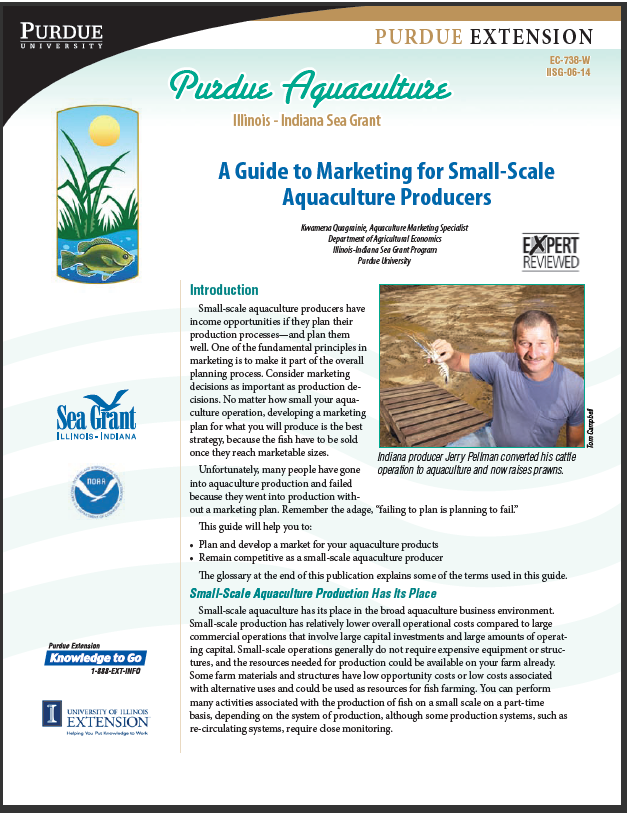
Small-scale aquaculture producers have income opportunities if they plan their production processes—and plan them well. One of the fundamental principles in marketing is to make it part of the overall planning process. Consider marketing decisions as important as production decisions. No matter how small your aquaculture operation, developing a marketing plan for what you will produce is the best strategy, because the fish have to be sold once they reach marketable sizes.
ADA Compliance Information
Some linked publications may not fully meet current ADA accessibility standards and are provided for historical and archival purposes. If you need a plain-text screen or reader-friendly version of any document on our website, please contact us and we will do our best to provide one.
The brochure is an overview of what a fish producer thinking about small-scale fish processing needs to know. The overview includes training requirements, available facilities and highlights of select farmers who have gone through the process.
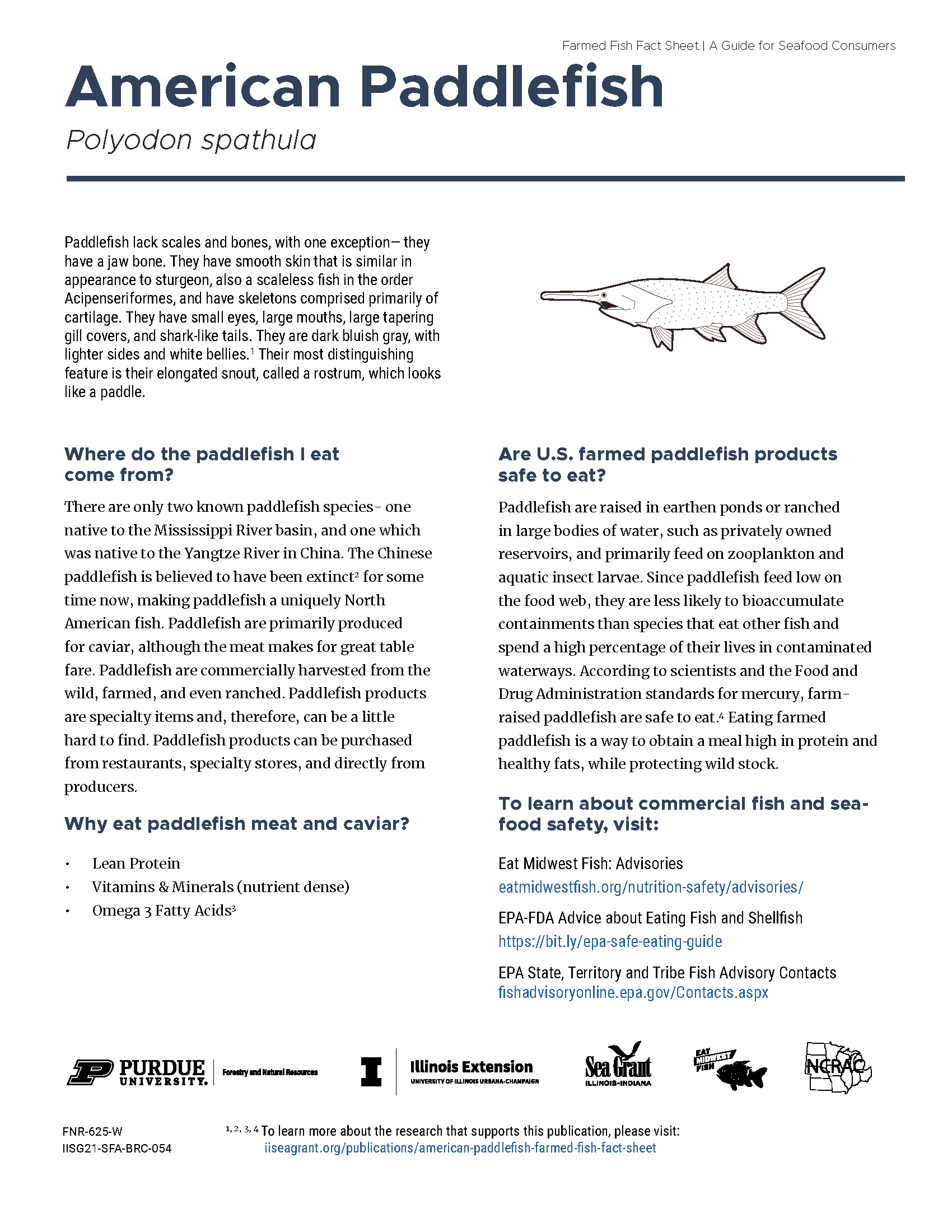
National Audubon Society. 2002. National Audubon Society Field Guide to Fishes. Chanticleer Press, Inc.
Stickney, R.R. 1996. Aquaculture in the United States, A Historical Survey. John Wiley & Sons, New York, 372.
Zhang, H., Jarić, I., Roberts, D.L., He, Y., Du, H., Wu, J., Wang, C., and Wei, Q. 2020. Extinction of one of the world’s largest freshwater fishes: Lessons for conserving the endangered Yangtze fauna. Science of The Total Environment, 710, 136242. Available online: https://doi.org/10.1016/j.scitotenv.2019.136242.
Herring, J. L., & Mims, S. D. (2015). Paddlefish Food Products. In Paddlefish Aquaculture (pp. 179-208). Hoboken, NJ, USA: John Wiley & Sons, Inc.
Dasgupta, S., Onders, R.J., Gunderson, D.T. and Mims, S.D. (2004), Methylmercury Concentrations Found in Wild and Farm-raised Paddlefish. Journal of Food Science, 69: fct122-fct125.
Whether you are an aquaculture producer or you are thinking of starting an aquaculture business, this site provides you the best information to ensure a productive, innovative, and profitable aquaculture business.
Some linked publications may not fully meet current ADA accessibility standards and are provided for historical and archival purposes. If you need a plain-text screen or reader-friendly version of any document on our website, please contact us and we will do our best to provide one.
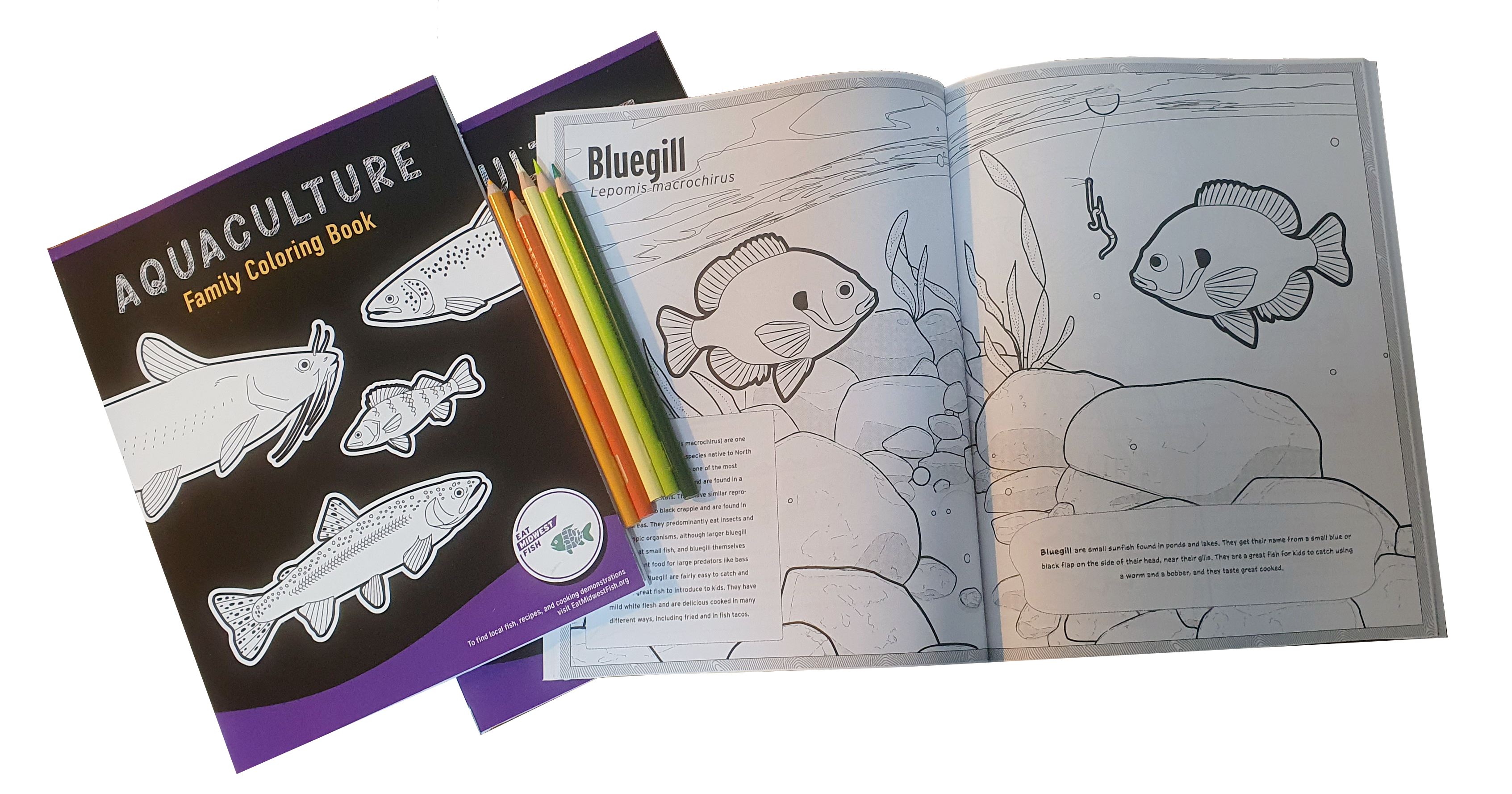
This print-your-own coloring book provides a fun and active way for children and adults to learn about the many kinds of aquatic animals that are raised on farms for aquaculture. Each spread highlights one species, pairing a beautifully illustrated coloring page with accompanying text for both advanced and beginning readers with information about aquaculture, fisheries, recreational fishing and cooking tips.
Professionally printed coloring books are also available while supplies last. Requests can be submitted to iisg@purdue.edu.
Watch and read along with IISG’s communications coordinator, Hope Charters, as she reads the beginning reader sections in the Aquaculture Family Coloring Book. Each spread of the coloring book is separated into two sections: an advance reader section on the left (for grown-ups and advanced readers) and a beginning reader section on the right. We hope that you will enjoy reading along.
ADA Compliance Information
Some linked publications may not fully meet current ADA accessibility standards and are provided for historical and archival purposes. If you need a plain-text screen or reader-friendly version of any document on our website, please contact us and we will do our best to provide one.
En Español
Acuicultura Libro Para Colorear En Familia en español está aquí.
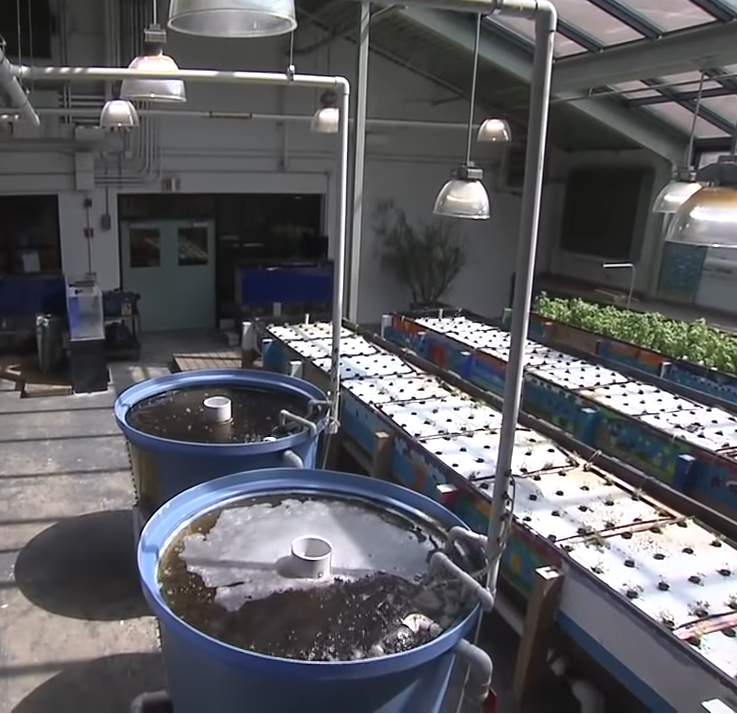
An informational video about Aquaponics, the practice of combining fish farming and hydroponics. The program is an introduction to the recommended practices and guidelines for starting a successful aquaponics operation . The video was supported by Purdue Extension, National Oceanographic and Atmospheric Administration (NOAA) and Illinois-Indiana Sea Grant.
Some linked publications may not fully meet current ADA accessibility standards and are provided for historical and archival purposes. If you need a plain-text screen or reader-friendly version of any document on our website, please contact us and we will do our best to provide one.
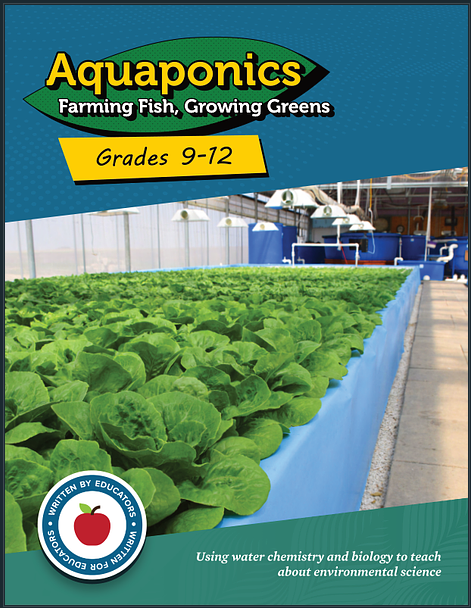
Aquaponics: Farming Fish, Growing Greens teaches STEM through aquaponics, a water-based agricultural system that combines aquaculture and hydroponics. This 9-12 grade curriculum was designed to be used along with an onsite aquaponics system. Curriculum topics include an Introduction to aquaculture, fundamental parts of an aquaponics system, the nitrogen cycle, water quality, population dynamics, our modern food system and more. Lessons were developed to build on each other and be delivered in sequence but can also be used individually.
If you would like to access to all the Aquaponics: Farming Fish, Growing Greens curriculum resources such as slide decks, submit your requests to iisg@purdue.edu.
Jensen IJ, Eilertsen KE, Otnæs CHA, Mæhre HK, Elvevoll EO. 2020. “An Update on the Content of Fatty Acids, Dioxins, PCBs and Heavy Metals in Farmed, Escaped and Wild Atlantic Salmon (Salmo salar L.) in Norway.” Foods,19;9(12):1901. Available online: https://www.mdpi.com/2304-8158/9/12/1901.
Foran, J, Hites, R, Carpneter, D, Hamilton, C, Mathew-Amos, A, and Schwager, S. 2004. “A Survey of Metals in Tissue of Farmed Atlantic and Wild Pacific Salmon.” Environmental Toxicology and Chemistry, Vol 23 (9), pp. 2108–2110.
Lundebye, A, Lock, E, Rasinger, J, Nøstbakken, O, Hannisdal, R, Karlsbakk, E, Wennevik, V, Madhun, A, Madsen, L, Eide Graff, I, Ørnsrud, R. 2017. “Lower levels of Persistent Organic Pollutants, metals and the marine omega 3-fatty acid DHA in farmed compared to wild Atlantic salmon (Salmo salar).” Environmental Research, Vol 155: 49-59. Available online: https://doi.org/10.1016/j.envres.2017.01.026.