
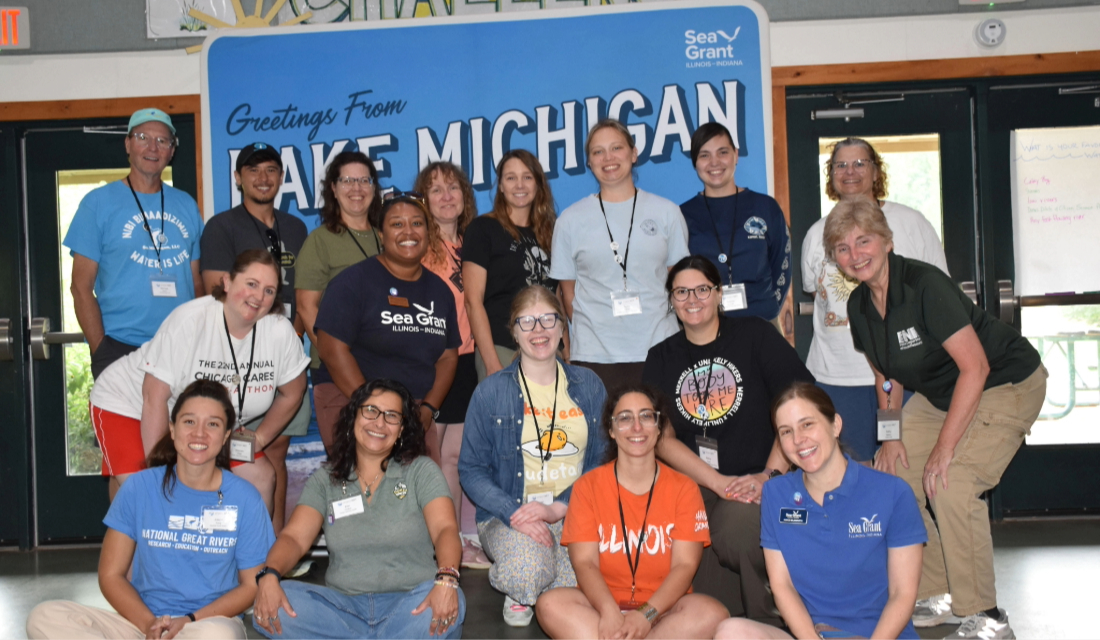
Before they could teach their students about watersheds, the Great Lakes, and water quality, educators became students themselves.
On July 30–31, more than a dozen educators gathered at the Dunes Learning Center in Chesterton, Indiana, for *Earth Systems: A Great Lakes Perspective*, a two-day Project WET professional learning workshop. Project WET is an environmental education program that uses hands-on activities to teach about water resources and the role water plays in various ecosystems and human life.
The water-themed workshop was hosted in partnership by Dunes Learning Center, Indiana Department of Natural Resources/Division of Fish & Wildlife, National Great Rivers Research and Education Center, and Illinois-Indiana Sea Grant.
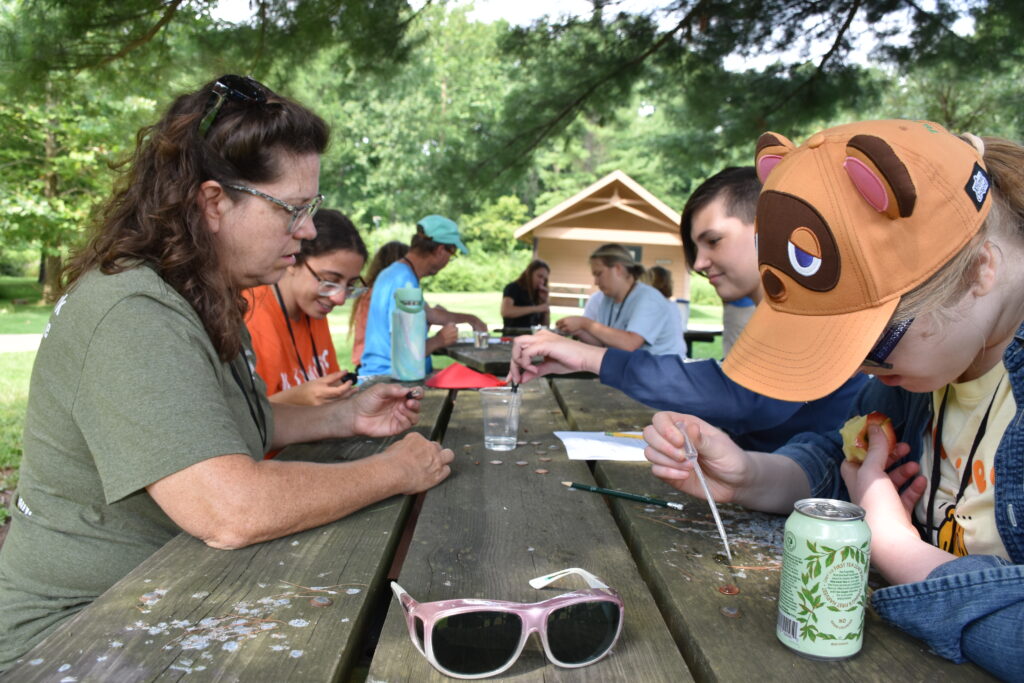
Participants worked through 15 Project WET activities, built Great Lakes basins from Play-Doh, simulated the movement of water through a watershed, explored Indiana Dunes National Park, and reflected on how to adapt the lessons for their own classrooms.
The educators also received a Project WET Water in Earth Systems guidebook. The newly published guide includes 22 updated activities from the Project WET 2.0 guide, all tied to Common Core and the Next Generation Science Standards (NGSS).
Megan Gunn, IISG’s aquatic education associate and one of the workshop facilitators, explained the benefits of allowing teachers to experience these activities rather than simply reading about them.
“When you have seen it and practiced it, you’re more likely to use it versus being handed a book or a resource and then finding time on your own,” Gunn said. “It’s like you’ve already gone through the mental processes of how this would work, how you would incorporate it, and then just put it into action.”
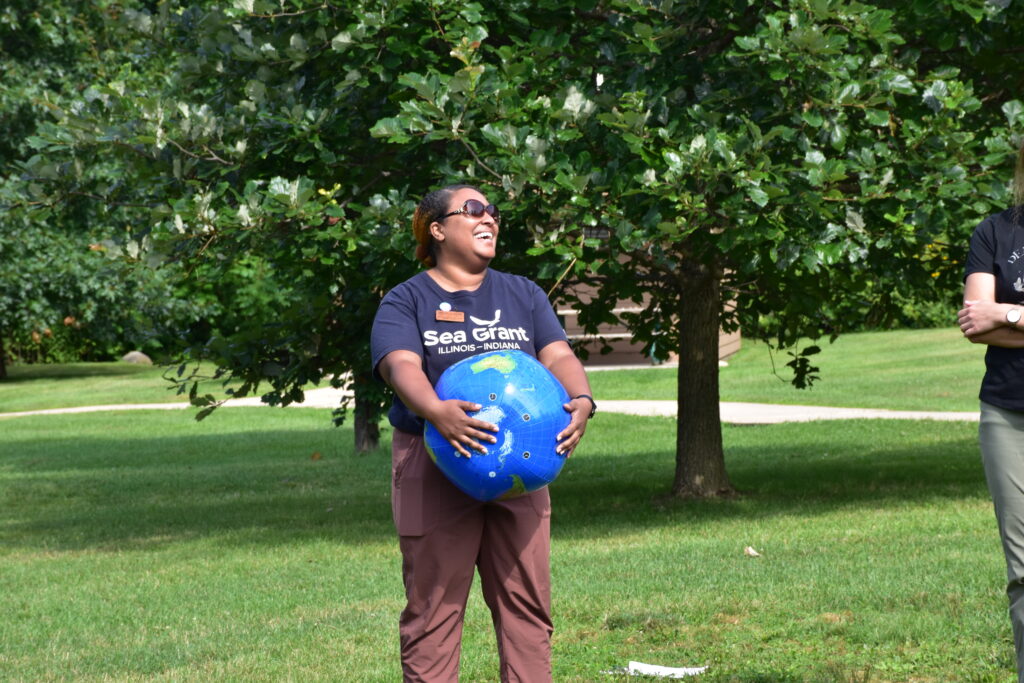
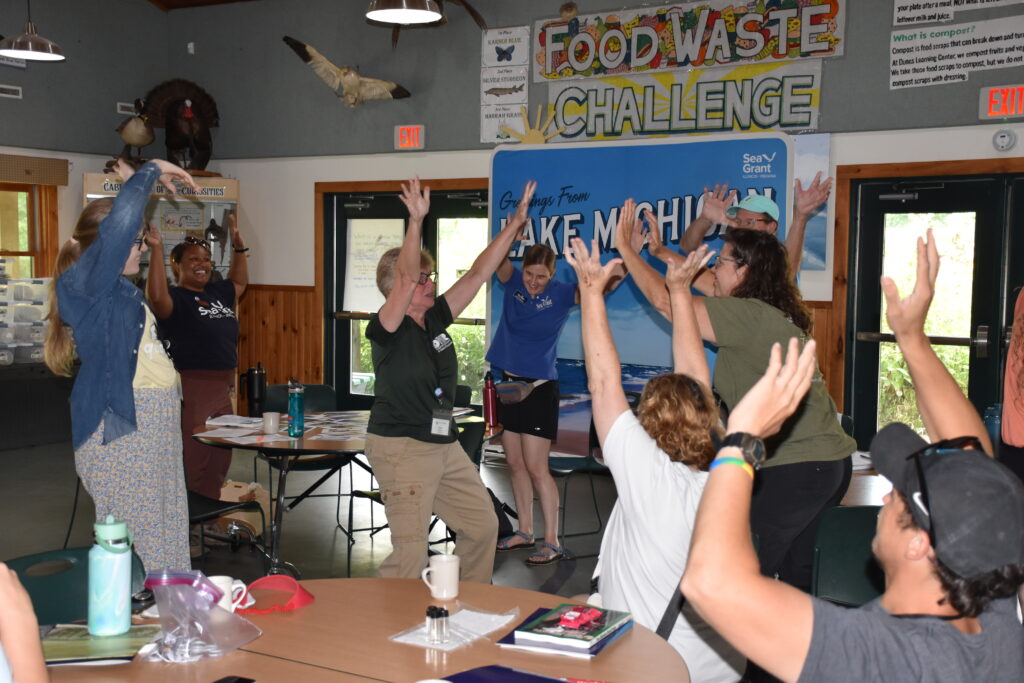
Hands-on learning wasn’t the only focus of the workshop. Organizers also intentionally built collaboration into the experience. During each segment, attendees were encouraged to work through the steps as teams. Gunn said the decision to include these group-learning opportunities came directly from educators who had asked for more opportunities to learn from one another.
“They want to be able to talk to the other teachers in the room,” she said. “So, we intentionally set aside time for them to talk amongst their smaller groups.”
Those conversations gave educators opportunities to discuss challenges they’d encountered in their classrooms and share how they’d worked through issues such as funding and classroom management.
Janice Milanovich, IISG’s great lakes educator and another workshop facilitator, agreed, noting that opportunities for collaboration extended beyond the scheduled activities.
“The Dunes Learning Center facility provided a unique opportunity to stay overnight and build community and connections,” she said. “These workshops also provide educators with a chance to network and learn from one another.”
The workshop also took participants off site, trading the grounds of the Dunes Learning Center for the shores of Lake Michigan. Although an incoming storm forced organizers to quickly rearrange the schedule, Gunn said educators were excited to still have time at the beach.
“We didn’t get to see the sunset, but we were still able to go to the lake,” Gunn said. “Some of them hadn’t seen Lake Michigan before.”
After learning about the geology of the region earlier in the workshop, participants put that knowledge into context, searching the shoreline for rocks as they experienced firsthand the landscape they had been studying.
Experiences like these are intended to extend well beyond the two-day workshop. Through a train-the-trainer approach, professional learning opportunities allow IISG and its collaborators to reach educators who can then bring what they learned to the youth they work with.
Next year, the same team hopes to plan another two-day workshop to explore Project WET’s newest guidebook, focused on people and water and how our actions can influence water resources.
For Gunn, however, the workshop’s support for educators doesn’t end when they leave the Dunes Learning Center.
“You’re not alone. Use us as your resources,” Gunn said. “Even though the workshop is done, we’re always here to support you.”
___________________
To learn more about upcoming Project WET workshops in Indiana, visit: https://www.in.gov/dnr/fish-and-wildlife/education-programs/project-wet/
To learn more about Project WET in Illinois, visit: https://www.ngrrec.org/education/project-wet.html