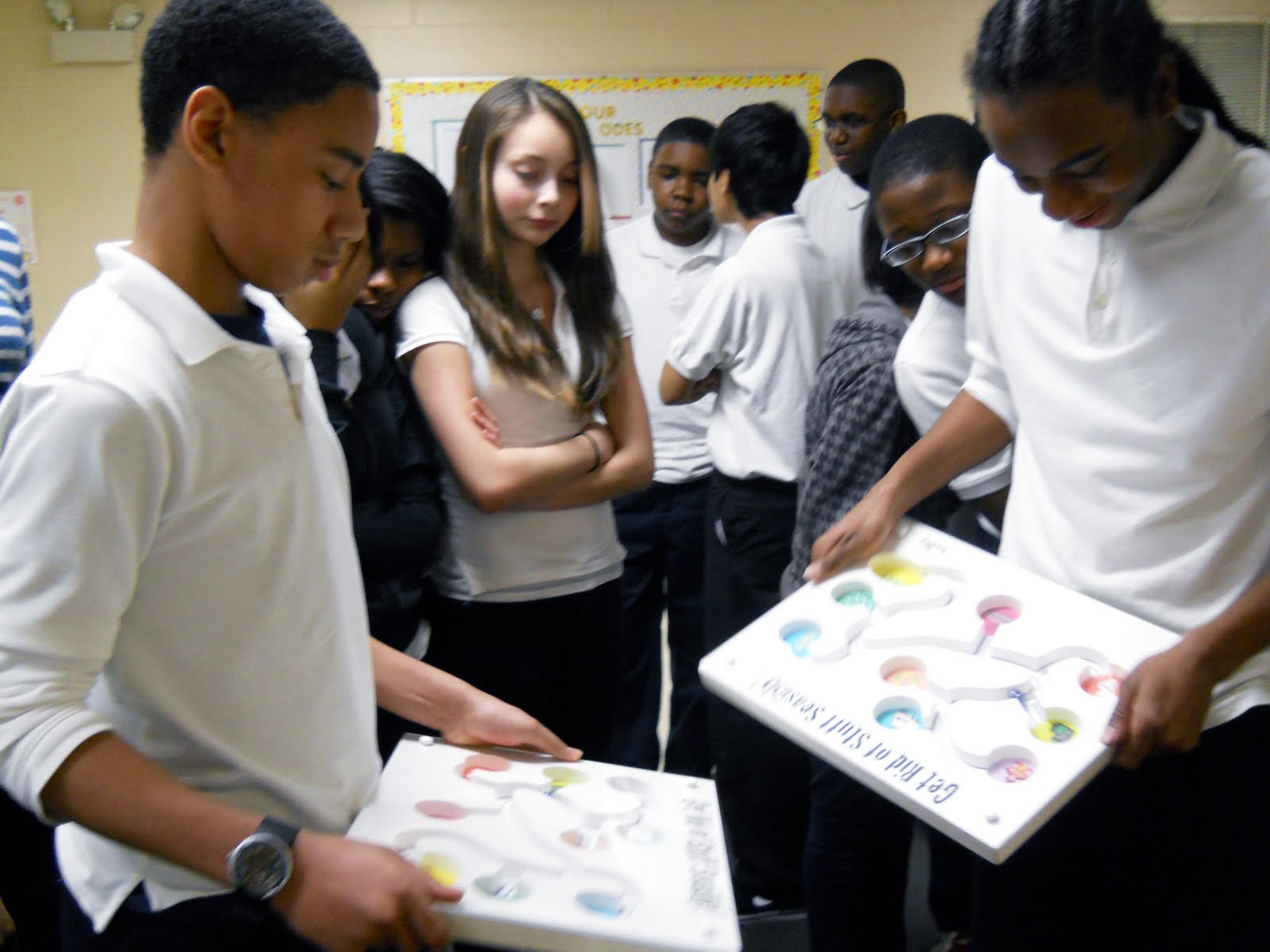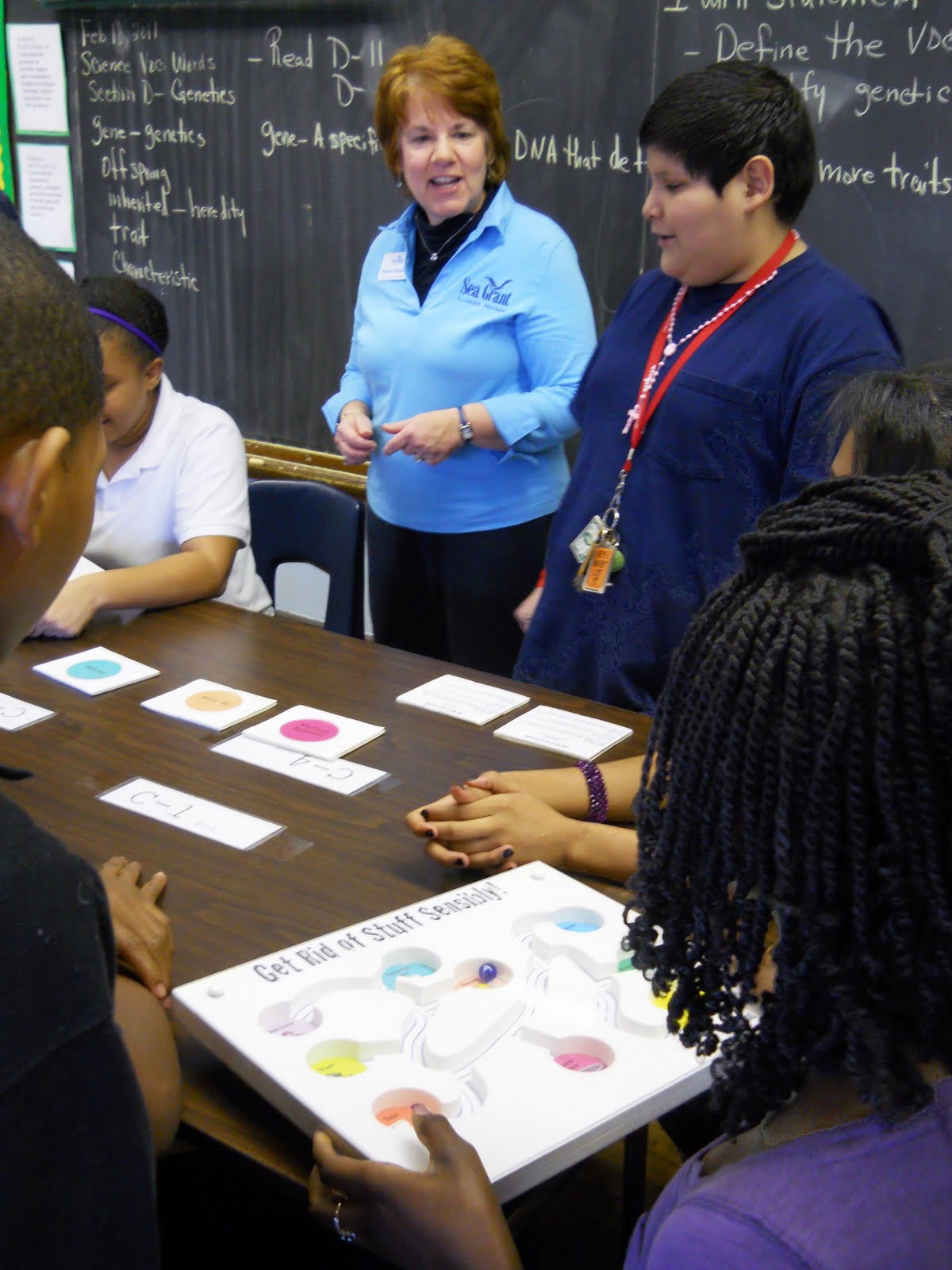
IISG’s education team, Robin Goettel and Terri Hallesy, visited Laura Senteno’s 7th and 8th grade classroom at Niños Heroes Elementary School and Rosemary Reddice’s 7th grade classroom at George Pullman Elementary School on February 18. Angie Viands, Windy City Earth Force coordinator, asked Terri and Robin to visit these two classrooms to enrich students’ understanding of the pharmaceutical disposal issue and to help the teachers and students come to a decision regarding which Earth Force community issue they plan to tackle. This process is integral to the Earth Force-Sea Grant partnership in which students are led through a six-step process of community action and problem solving to address important community issues.
After talking to students about the problems posed by improperly disposed of medicines and good alternatives, they engaged the youth in a Jeopardy game, a vocabulary word scramble game, and a marble labyrinth game, Get Rid of Stuff Sensibly. Activities were selected from IISG’s Medicine Chest curriculum materials. Once the students select their issue, they will work on projects that will be exhibited at a culminating youth summit, coordinated by Earth Force.
Following this visit, Laura Senteno commented on the students’ response: “The information you presented helped very much, especially in terms of motivation. After you left, quite a large group of them really got busy with their personal care product assignment, and I overheard them discussing some of the information from your workshop.”
This effort is part of a larger project funded by the U.S. EPA Great Lakes Restoration Initiative.