Sea Grant-supported research is consistently published in high quality journals and is highly cited in local, regional and international publications, according to a recent study. This assessment of over 6,500 peer-reviewed publications from 2001-2015 also shows that while Sea Grant research projects typically address local issues, the work is often cited well beyond that, in fact, sometimes worldwide.
The Sea Grant program, which was established by Congress in 1966 to enhance the practical use and conservation of coastal, marine and Great Lakes resources, accomplishes its mission with a three-pronged approach focused on research, outreach and education. At a federal level, Sea Grant is part of NOAA and local programs are typically situated in land-grant universities in coastal states.
With more than a third of program resources dedicated to fund research, a team of scientists came together to assess the impact of that work. The researchers were Carolyn Foley, Illinois-Indiana Sea Grant research coordinator, Mona Behl, Georgia Sea Grant associate director and Rebecca Briggs, National Sea Grant Office research coordinator.
They used well-established tools to analyze the types of journals that have published Sea Grant research, the frequency these articles are referenced by other researchers, and, in a limited scope, the geographic range of these citations.
Sea Grant research is consistently published in a range of journals, from “high impact” prestigious publications to regional or state journals.
“The diversity of journals in which Sea Grant-supported research is published suggests that these researchers are advancing the program’s goals—to share timely results with those who stand to benefit most from them,” said Foley.
From 2001 to 2015, Sea Grant-supported publications have been steadily cited, with the oldest publications more than 43,000 times. This indicates that over time, Sea Grant publications are consistently consulted by other scientists to support their research, benefitting both local stakeholders and the broader scientific community. Analysis of the geographic reach of the two most frequently-cited articles—both over 5,000 times—revealed that the articles have been informing work done by scientists around the world.
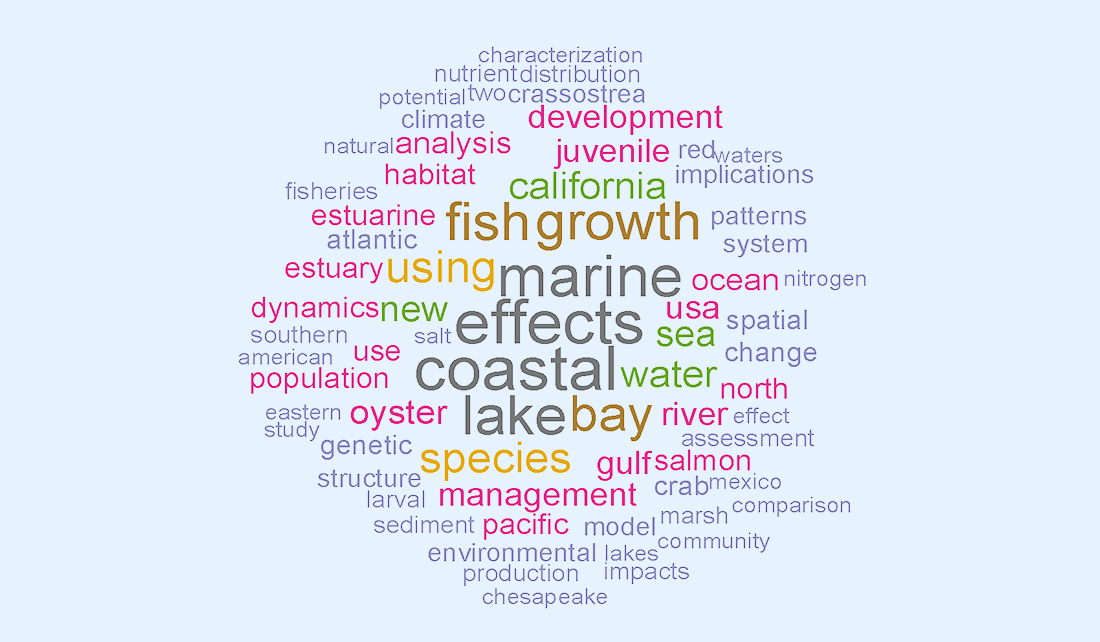
In addition, by analyzing commonly used words in article titles, the research team found further indication of the place-based aspect of Sea Grant supported projects as well as the applied nature of the work. This was illustrated through the frequent use of the words management, use and effect, for example.
“Sea Grant is well known for funding research topics in their infancy—for example, harmful algal blooms, aquatic invasive species, and microplastics—and investigating causes and supporting stakeholder needs at the local level before they because widespread topics of focus,” said Foley.
Illinois-Indiana Sea Grant is a part of University of Illinois Extension and Purdue Extension.
Writer: Irene Miles