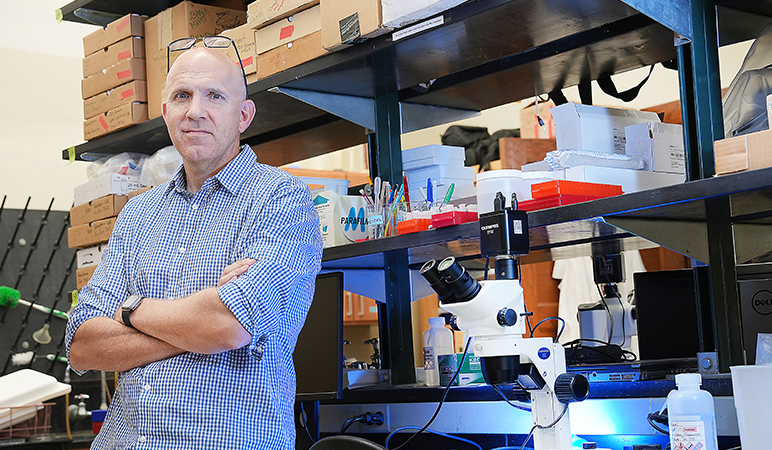
Illinois–Indiana Sea Grant’s former director, Tomas Höök, reflects on milestones, collaboration, and what he’ll carry into his new role as Head of Purdue’s Department of Forestry and Natural Resources, effective July 14, 2025.
Reflecting on your time as director of Illinois–Indiana Sea Grant, what accomplishments or milestones are you most proud of?
We really worked to broaden our programming. Aquaculture grew into a much larger part of what we do—not just in research but in outreach and communications around aquaculture. We also expanded into coastal resilience, which wasn’t a major focus before. Communities have experienced big swings in Lake Michigan water levels––first people worried about “mudflats” when levels were low, then flooding and erosion when levels were high––and we engaged to help people make sense of that.
Our education programs grew, too. The internship program we helped start when I was associate director evolved into a broader professional development experience, not just project work. We’ve supported more Knauss fellows working in D.C., and we launched a Graduate Scholars program. We tried a faculty scholars track as well, but grad scholars were far more engaged, so we kept that going.
Big picture, I’m proud that we broadened the communities we serve. Sea Grant has historically supported boating and fisheries, which are important audiences, but we’ve made real progress reaching more of the totality of communities which depend on Lake Michigan and have tried to address more needs across the region.
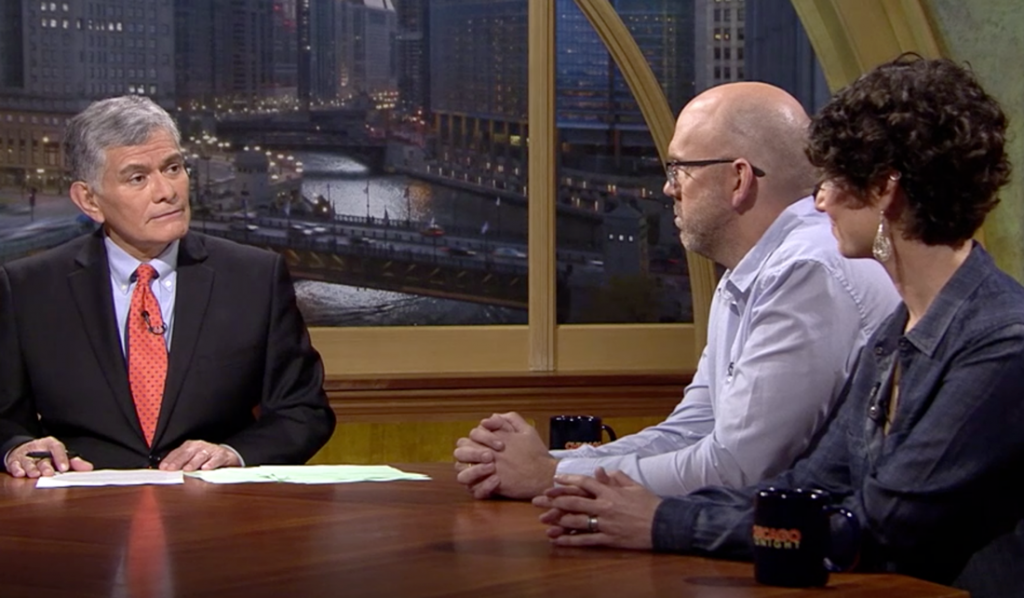
Chicago Tonight host Phil Ponce speaks with Tomas Hook and Elena Grossman
How has working with Sea Grant shaped your approach to research, outreach, or leadership?
Before I came to Purdue, I wasn’t in a land-grant setting, and I didn’t fully appreciate extension. Sea Grant deepened my understanding of the three missions––extension and outreach, teaching, including K-12 education, and applied research—and how they reinforce each other.
My research has always leaned applied, so that didn’t change much. But my appreciation for designing work that communities can actually use did. On leadership, helping move a complex program forward gave me a strong foundation for department leadership.
You’ve worked closely with a wide range of people and organizations. What have you learned about collaboration and community through Sea Grant?
Sea Grant is a healthy, collaborative network. Inside IISG and across programs, people are genuinely cheering each other on. If one effort succeeds, it tends to lift everyone.
One of the biggest leadership lessons came from moving IISG’s program administration from the University of Illinois to Purdue in 2018. There was uncertainty around roles, processes, and lots of new hires, and we had to build trust quickly. Then came COVID, which layered on different rules across two universities and a federal lab, and we still needed to keep people supported and coordinated. We also navigated federal funding uncertainty, which pushed us to learn congressional engagement and to communicate clearly inside the program. Those experiences reinforced how much relationships, transparency, and steady communication matter.
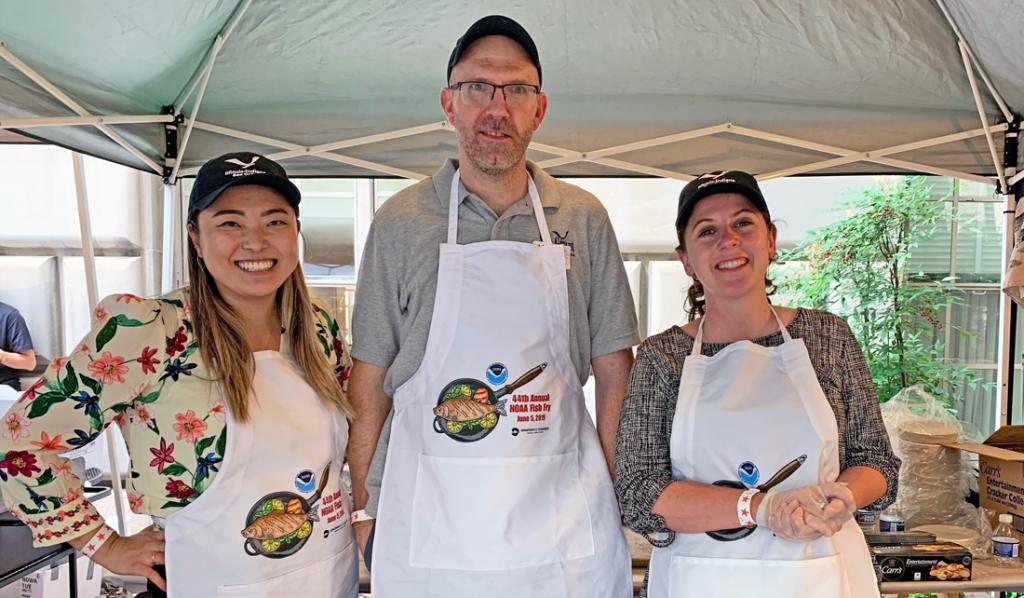
Tomas serves up Asian carp at NOAA’s fish fry along with Lisa Kim and Hollis Jones.
What do you hope your colleagues and partners remember most about your time at IISG?
Stability. Despite real challenges, funding questions, an administrative move and a pandemic, we kept people in their roles, maintained our core work and grew programs at the same time. I hope folks remember steadiness while we continued to deliver impact.
As you transition to your new role as Head of the Department of Forestry and Natural Resources, what lessons or experiences will you carry forward?
In leadership, you have to think beyond your own lab or program and focus on what’s best for the whole unit. I’ve learned the value of clear, consistent, and sometimes repetitive communication. It taught me how people hear messages differently, and that consistency builds trust. I also believe in defensible decisions: people may not agree, but if they understand the “why,” they’re more likely to give you the benefit of the doubt. I’ll bring that mindset and commitment to transparency where possible to FNR.
What are you most excited about in this next chapter at Purdue?
It’s a challenging time for higher education. There are funding pressures, limits on what we can do and the need to serve a broad community. These challenges and constraints are not “exciting” in the flashy sense, but it’s important. I’m focused on navigating constraints thoughtfully and improving how the department works, because many improvements may not require big financial investments. I tend to break complex problems down and get to work; I’m not freaked out by hard problems.
Any final words you’d like to share with the Sea Grant team or collaborators?
Illinois–Indiana Sea Grant—and Sea Grant nationally—is a model for how university units can operate when they’re serious about bringing together applied research, education, and extension to reach positive outcomes. At a time when some people question the value of universities and research, Sea Grant can point to real impacts—economic, cultural, environmental, and human health—across a huge region. IISG just marked 40 years; I hope it keeps working this way for the next 40.
*This interview has been edited for length and clarity.