Illinois-Indiana Sea Grant (IISG) has created another resource for students in the Great Lakes region to engage with real-world, professional water quality testing equipment. Currently, the Know Your H₂O Kit is being pilot tested in five classrooms, and for one Ohio teacher, it’s a hit for her and her students.
“The lessons have been incredibly useful,” said Shari Insley, a science teacher in North Olmsted, Ohio. “They not only aligned well with our Ohio 7th-grade science curriculum but also brought concepts to life in a way that deepened students’ understanding. For many students, this was their first time using scientific tools to test real water samples, and it sparked curiosity about local water systems and environmental stewardship.”
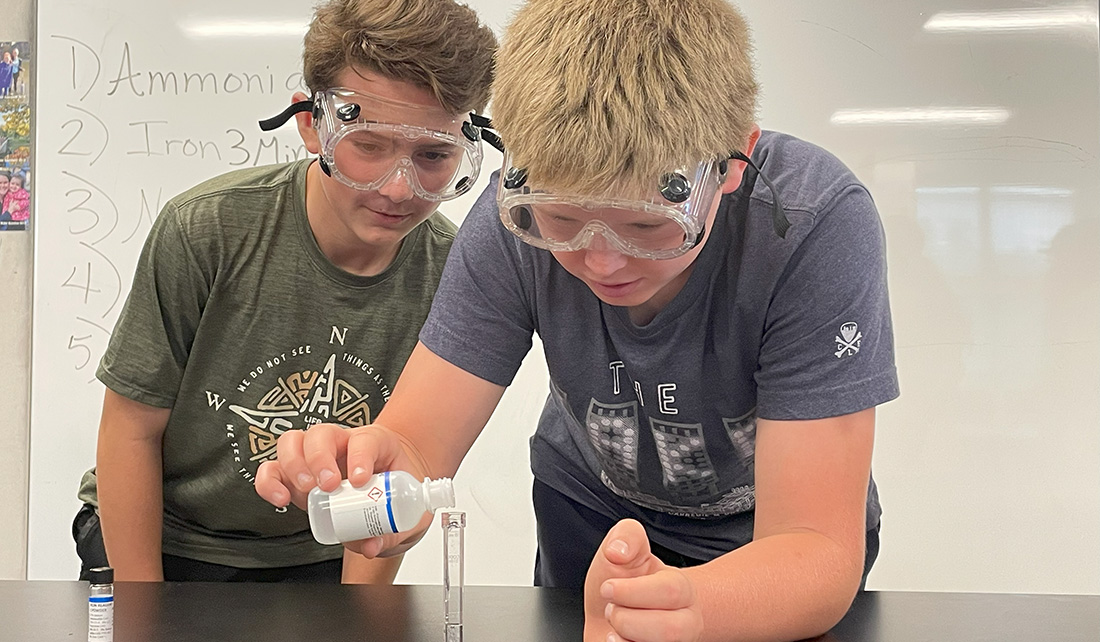
Over several weeks, her students collected and analyzed water from different areas around the school campus, testing tap water and aquarium water, they checked for ammonia, iron, nitrites, pH, and temperature. The students also engaged in a series of mini labs focused on water’s physical properties. From surface tension to cohesion, these labs helped students understand why water behaves the way it does in nature.
“The water testing activity was a clear favorite—it was hands-on, data-driven, and allowed students to act like real scientists,” said Insley.
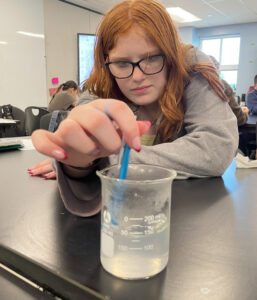
Photo courtesy of Shari Insley.
The Know Your H₂O Kit provides the opportunity for educators to borrow water monitoring equipment that is also used by aquaculture farmers—IISG developed this kit to provide farmers with technical support. In the classroom, it provides the opportunity for students to experience hands-on activities that reinforce concepts they are learning from books and lessons.
“Water quality is such an important factor in the health of water-based ecosystems, whether they are in the wild, on the farm or in the classroom,” said Amy Shambach, IISG aquaculture marketing outreach associate. “Supporting educators and farmers with the resources to learn about water quality monitoring is a perfect fit for what Sea Grant does well—science-based outreach and extension.”
Each kit comes with tools to measure dissolved oxygen, temperature and pH; chemical tests to measure other important water quality parameters such as ammonia, nitrite, and alkalinity; and a lab pack.
The kit is free to borrow for up to nine weeks. Preference is given to educators who have attended the IISG Aquaponics/Aquaculture Teacher Training or completed the IISG Water Quality Teacher Training. If you would like more information about upcoming trainings or want to schedule an online session, email iisg@purdue.edu.
To borrow the kit, visit the IISG website. If you would like to take part in the pilot testing, contact Amy Shambach or Julie Fiorito.