 Sea Grant Illinois-Indiana
Tracking provides insight into Chicago River fish
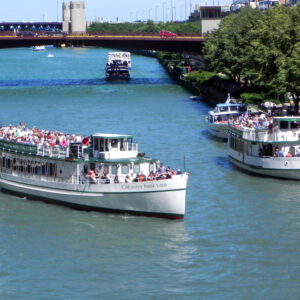 While pollution levels in the Chicago River are low compared to historical levels, the environment still poses challenges for fish. For example, in places, high rises and concrete walkways line much of the river and most of the downtown river’s edge is comprised of steel walls. Efforts to improve habitat have led to the development of the Wild Mile in the North Branch and floating islands in the south, but the extent to which fish use these habitats is unclear.
Illinois-Indiana Sea Grant was part of an ongoing study with Shedd Aquarium and other partners to monitor Chicago River fish to learn where they go and what habitats are important. Scientists, including a Sea Grant-supported graduate student, set up 32 receivers along the river and equipped 80 fish with sensor tags, including largemouth bass, common carp, some panfish species, and walleye. The acoustic telemetry receivers can hear and identify unique tracking sounds emitted from each tagged fish.
Focusing on the study’s largemouth bass, the student found that the fish mostly spend time in areas of the river that have more natural habitat and minimal boat traffic. The sites most populated by the bass, especially over the winter, were offshoots of the river’s South Branch—the waters at Chicago’s Park 571 and a nearby site with barge slips. During spawning season, many migrated to several North Branch locations, including the Wild Mile.