Last week, IISG’s Anjanette Riley and Laura Kammin set sail on Lake Michigan to learn more about plastic pollution in the Great Lakes. Anjanette wrapped up the trip by writing about the experience:
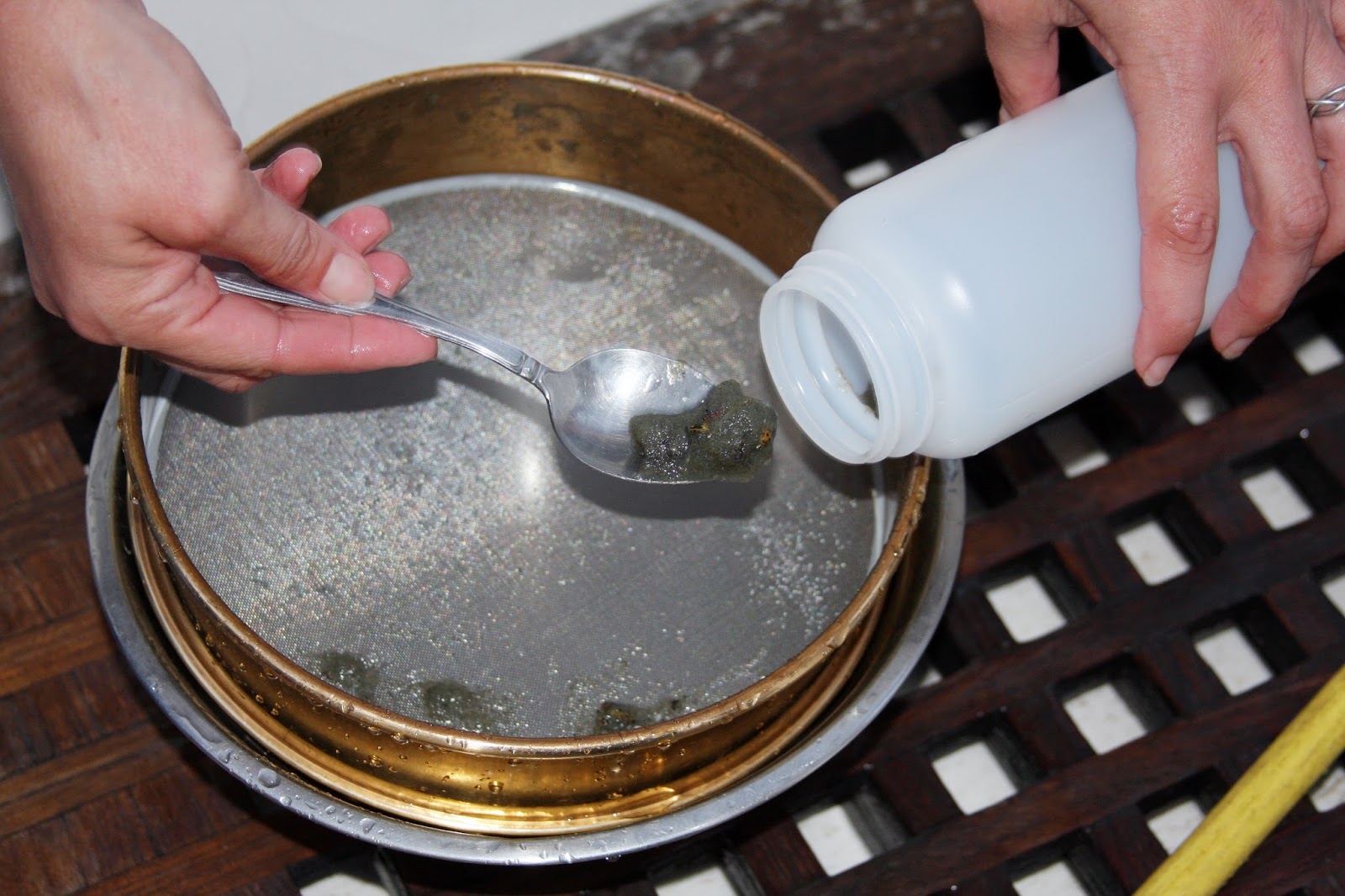
 The sampling process started like many do – with a countdown that sets off a whirlwind of action. On three, some in the 5-person crew would hoist a 4-foot-long trawl overboard while another recorded the time, the boat’s location and speed, and the direction and force of the wind. Another person was responsible for adjusting the sails and the boat’s direction to keep it moving at a slow-but-steady speed. The next 30 minutes—as exact as possible—would be a bit calmer. The trawl skimmed the surface of Lake Michigan, trapping everything that crossed its path in a narrow net. And the crew got ready to process the sample. The real work started when the trawl was pulled from water. Everything caught in the net—large and small, natural and man-made—had to be moved to a plastic bottle so its contents could be examined later. It sounds simple enough, but the netting is small and getting tiny beads of plastic or nearly-microscopic animals into the bottle required a multi-step process that took time. Step 1: use a spray gun to get everything out of the net and into a tightly-woven sieve. Step 2: spray everything to one side of the sieve. Step 3: spoon the larger contents into a plastic bottle. Step 4: drain everything else into the bottle. Step 5: pour in some rubbing alcohol. Step 6: label the plastic bottle with the sample number and tape it up to prevent it from spilling. And repeat.

During the three days Laura and I were aboard the sailboat Free at Last, the crew collected 16 samples from all across southern Lake Michigan. With us on the boat was Stiv Wilson, communications director for the plastics research group 5 Gyres, Nick Williamson, an undergraduate research assistant at SUNY Fredonia, and Conor Smith, the ship captain. Together, we made a triangle from the Chicago area to just south of the Wisconsin border to South Haven, Michigan and back, collecting water samples about every hour and a half.
We found bits and pieces of plastic in several of the samples. Most of what we saw were tiny microbeads, like the kind used as exfoliants in face and body washes. On the second day, though, we pulled a plastic cigarette wrapper from the lake. Beyond the reach of the trawl, we also saw balloons, plastic bags and bottle lids, a straw, and a couple other pieces of unrecognizable plastics riding the waves. But these were just the things large enough to be seen. We won’t know for sure how much plastic is in the lake until Sherri Mason and her research team at SUNY Fredonia examine the samples under a microscope over the next few months.
The findings from this trip will be added to the results of previous research excursions on northern Lake Michigan and each of its sister lakes to get a more complete picture of plastic pollution in the Great Lakes. Initial results have already revealed that the lakes have a higher concentration than some parts of the world’s oceans, where plastics have been a major environmental concern for years.
Because plastics float and break down very slowly over time, everything from chemical contaminants to bacteria and invasive species can latch on and catch a ride to new ecosystems. These sampling trips are the first to examine whether the Great Lakes may be facing the same ecological threat.