
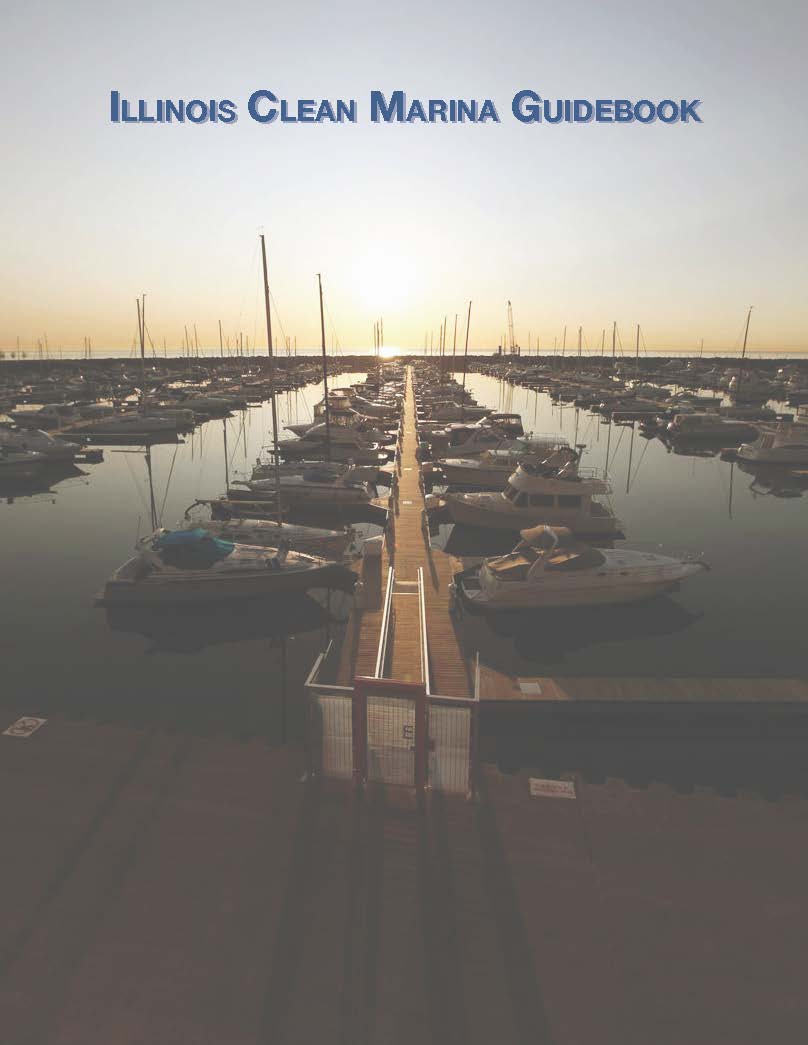
 This month Illinois joined a number of other Great Lakes states by instituting a Clean Marina program. Designed to reduce and prevent pollution, the program provides best management practices for marina operators to help protect waterways and the environment. Illinois-Indiana Sea Grant created the Clean Marina guidebook (PDF) in collaboration with Illinois DNR to offer a comprehensive manual for marina operators with important environmental protection and best practice information.
From our latest edition of The Helm:
“Nearly a quarter of Illinois’ 70 marinas sit along Lake Michigan, making the Illinois shoreline the most active in the Great Lakes region. Millions of people in the Chicago area rely on that same stretch of Lake Michigan for drinking water. Here, even small levels of pollution from marinas can have a significant impact on the lake and the communities that rely on it.
At the heart of the Clean Marina Program are best management practices that make marina operations and boater activities more efficient and environmentally friendly. Practices cover a range of topics, from marina construction to vessel maintenance, and most are easy and affordable. Some recommendations, such as how to protect nearby habitats during construction, will help new or expanding marinas develop greener sites from the beginning. And others will help marina personnel educate boaters on what they can do to protect and improve the state’s water quality. Marinas that adopt the practices will be certified as a clean marina by the Illinois Department of Natural Resources (IDNR) Coastal Management Program.”
Read the complete article at the link above, and learn more about the Clean Marina Program at the program website and on Facebook.




