
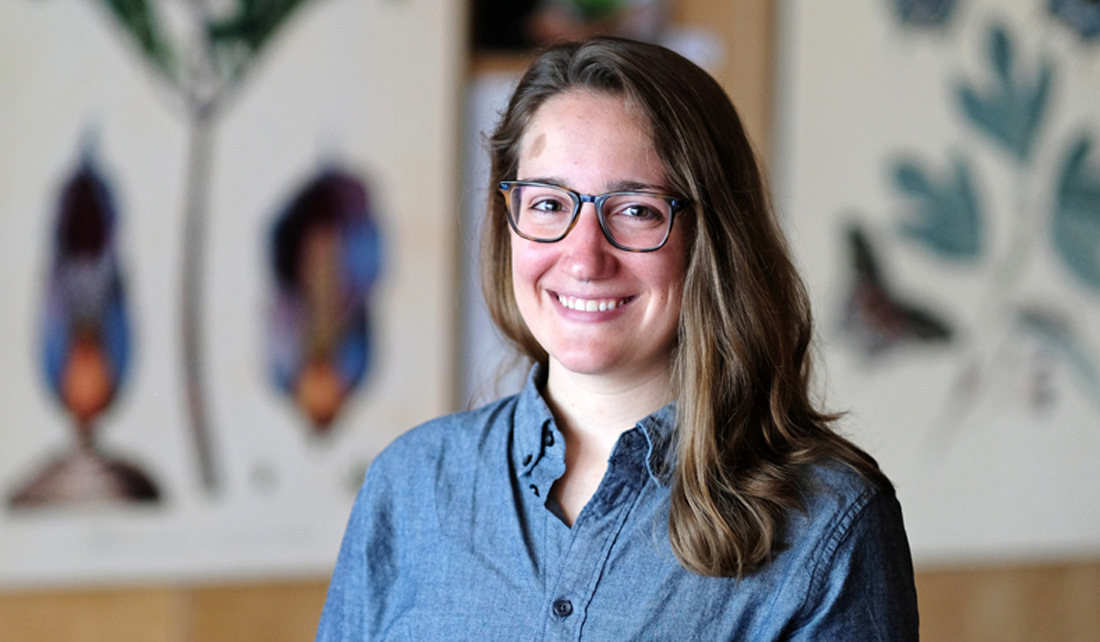
Emma Young’s staring down a deadline these days as she wraps up her research and types away at her dissertation.
To be fair, it’s self-imposed. The biology doctoral candidate at the University of Missouri–St. Louis is aiming to be ready to defend her work exploring parasite dynamics in an assemblage of neotropical birds in Gamboa, Panama, before the end of the semester.
“It’s hard for me to imagine something stopping me,” Young said confidently.
She already has plans for the new year, and the last thing she wants is the dissertation still hanging over her.
Young will be relocating to Washington, D.C., where, come February, she’ll begin work as an executive fellow through the National Oceanic and Atmospheric Administration and Sea Grant John A. Knauss Marine Policy Fellowship Program.
The program provides educational and professional experience for graduate students who have an interest in ocean, coastal and Great Lakes resources and in the national policy decisions affecting them through a one-year paid fellowship with a host in either the legislative or executive branch.
Young, who was nominated by Illinois-Indiana Sea Grant, is the first to admit those parameters make her an unusual fit among the 69 finalists selected for the 2020 class.
“There isn’t really a big aquatic component to my research,” Young said. “I felt like this odd duck coming into this policy program. A lot of people I know who have had this fellowship, you see pictures of them standing on boats holding fish or they’re wearing waders out in wetlands, stuff like that.”
But any concerns she might have had about being out of her habitat were put to rest after conversations with people she knows who have gone through the program. All the fellows are likely to be navigating new terrain from their graduate research – and on land.
“A lot of what I’m going to be doing is taking a large breadth of scientific topics and distilling it down for legislators or for members of the public or some combination thereof,” Young said. “I love doing that. That’s my favorite thing.”
Read the full story on the University of Missouri-St. Louis website.
Writer: Steve Walentik, UMSL Daily




