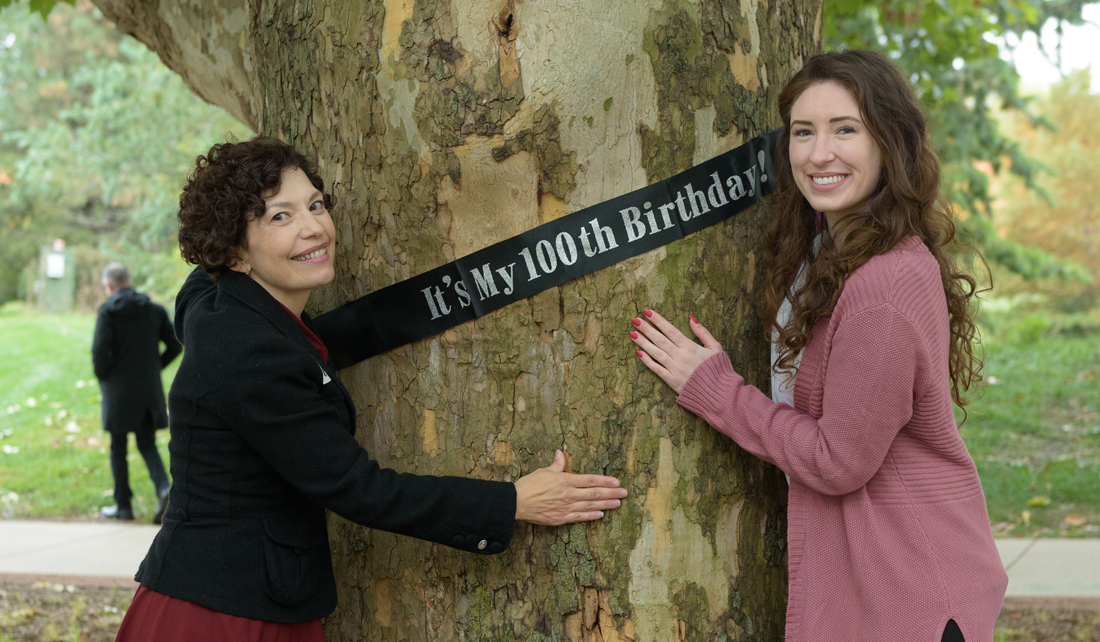
The Red Oak Rain Garden (RORG) was the first rain garden on the University of Illinois at Urbana-Champaign campus, and the two red oak trees that the garden’s name honors—fondly called the RORG sisters—have just turned 100 years old. To commemorate this occasion, the RORG team, led by Stormwater Specialist Eliana Brown of University of Illinois Extension, threw a surprise birthday party and created a video to celebrate the milestone and highlight the importance of green infrastructure in stormwater management.
The two red oak trees work with the 9,000 plants in the rain garden to soak up roughly 10,000 gallons of water per year. Rain gardens like the Red Oak Rain Garden, built in 2006, help reduce polluted stormwater runoff and flooding.
“This is really important,” said Brown, “because in our cities and towns, we create more impervious surfaces [like roads, roofs and parking lots]. They’re really great at doing things like letting us drive on them, but they shed off water, and so they’re not so good at soaking up water. So, we end up with a lot more water, and our streams just really aren’t designed to handle all of that, and it creates some problems with water quality. Rain gardens are a great way to combat that and make things better.”
The RORG team is managing a renovation of the rain garden, involving design and build phases of the project to help improve both aesthetics and functionality. The Red Oak Rain Garden website describes the purpose of the garden on UIUC’s campus: RORG provides flood protection, improves water quality and serves as a model for ecologically healthy landscapes. Prior to the garden, rainstorms limited sidewalk use and impaired the red oak. The updated design enhances the garden’s ability to absorb rainwater in a beautiful, educational way.
Layne Knoche worked on the landscape design, and Tony Heath completed the engineering design. Kate Gardiner organized the whimsical birthday celebration for the RORG sisters.
Illinois-Indiana Sea Grant is a part of University of Illinois Extension and Purdue Extension.
Writer: Hope Charters
Videographer: Matt Wiley, University of Illinois Extension