
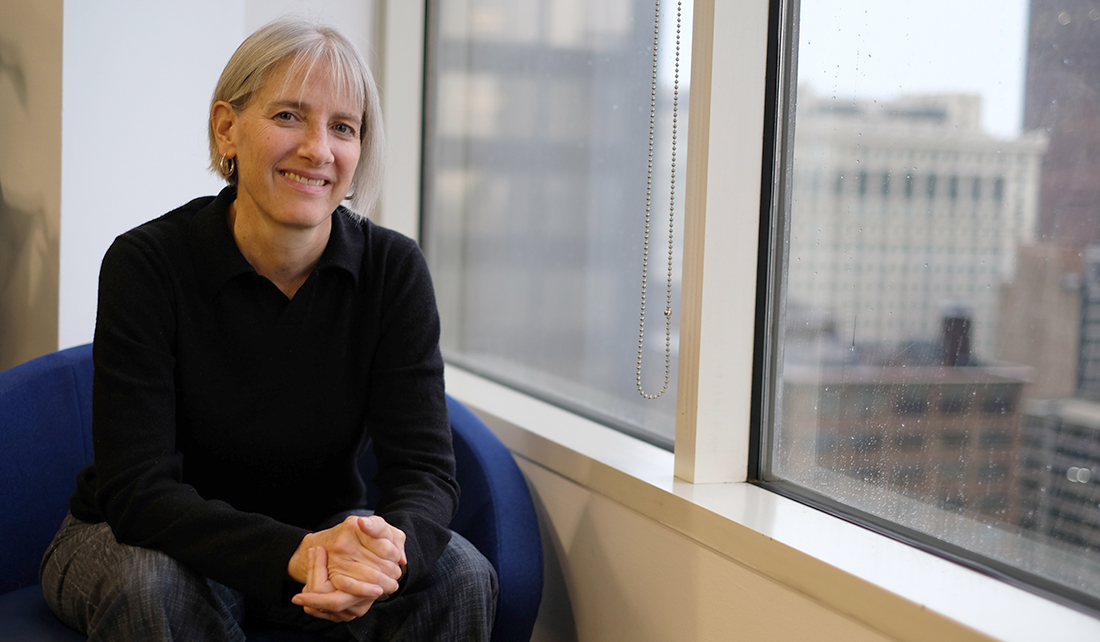
Pat Charlebois sitting in a chair
After 20 years as an aquatic invasive species specialist, Pat Charlebois is taking on a leadership role in Illinois-Indiana Sea Grant's outreach program. (Illinois-Indiana Sea Grant Photo/Irene Miles)

After an intensive hiring process with outstanding candidates, Pat Charlebois has been selected to lead Illinois-Indiana Sea Grant (IISG) outreach program efforts. Before taking on this new role, Charlebois was IISG’s aquatic invasive species outreach specialist and coordinator for over 20 years.

“Pat has great experience as a highly successful outreach specialist and coordinator of Illinois-Indiana Sea Grant’s aquatic invasive species program,” said Tomas Höök, director of IISG. “We’re excited to work with her as she builds on this experience to collaboratively oversee IISG’s diverse outreach programs.”

As the outreach program leader, Charlebois will lead the development, expansion and delivery of science-based outreach programming that helps communities and individuals make informed choices when managing and interacting with natural resources. She will help connect IISG’s specialists with scientists and potential partners and enhance our existing partnerships with Illinois ExtensionPurdue Extension and the Prairie Research Institute.

“As I move into the role of outreach program leader, I’m excited by the prospect of using my experience to help IISG improve upon the great outreach programming that we’re known for,” said Charlebois. “I’m looking forward to mentoring our new staff as they build their own outreach programs, and I’m pleased to be helping lead the program as we continue to address Great Lakes issues.”

Charlebois has been acknowledged with several awards throughout her career, including an APEX Award for Publication Excellence, Professional Merit Awards from the Illinois Department of Natural Resources and Illinois Lake Management Association, and a National Sea Grant Blue Ribbon Award. She received both her B.S. and M.S. degrees in biology with a concentration in aquatic ecology from the University of Notre Dame.

IISG Instagram

Looking for a fun way to teach about marine debris? Check out Me and Debry, which is a whimsical, 30‑minute, audience‑participation play created for @UWiscSeaGrant. It helps students explore what marine debris is, why it matters, and how we can make a difference in the Great Lakes.The full script (English) and participation scripts (English, Spanish, and Hmong) are free to use, along with marketing materials for performances.Bring learning to life and start a conversation about litter in our waters!Check it out at the link in bio.#TeachingTuesday
Do you work or live along the Great Lakes coasts? Watch our newly released video series collection, containing several short videos that overview the range of coastal protection options in the Great Lakes, including:- Natural processes in the Great Lakes- Hard coastal protection structures and how they interact with/alter natural processes- Nature-based coastal solutions in the Great Lakes, ranging from green to gray approachesFind our two new video series at the link in bio.
Located in Washington, D.C., the Sea Grant Knauss Fellowship provides a unique educational and professional experience to graduate students who have an interest in ocean, coastal and Great Lakes resources, and in the national policy decisions affecting those resources. This is a one-year fellowship open to any student, regardless of citizenship, who is enrolled toward a degree in a graduate or professional program on the day of the deadline.Students enrolled at an Illinois or Indiana university or college should submit their applications through Illinois-Indiana Sea Grant by emailing Angela Archer at amcbride@purdue.edu. Students in surrounding states without a Sea Grant program should contact the National Sea Grant College Program at oar.sg.fellows@noaa.gov for a referral. Application deadline: June 3, 2026.To learn more about the fellowship, visit the link in bio.