
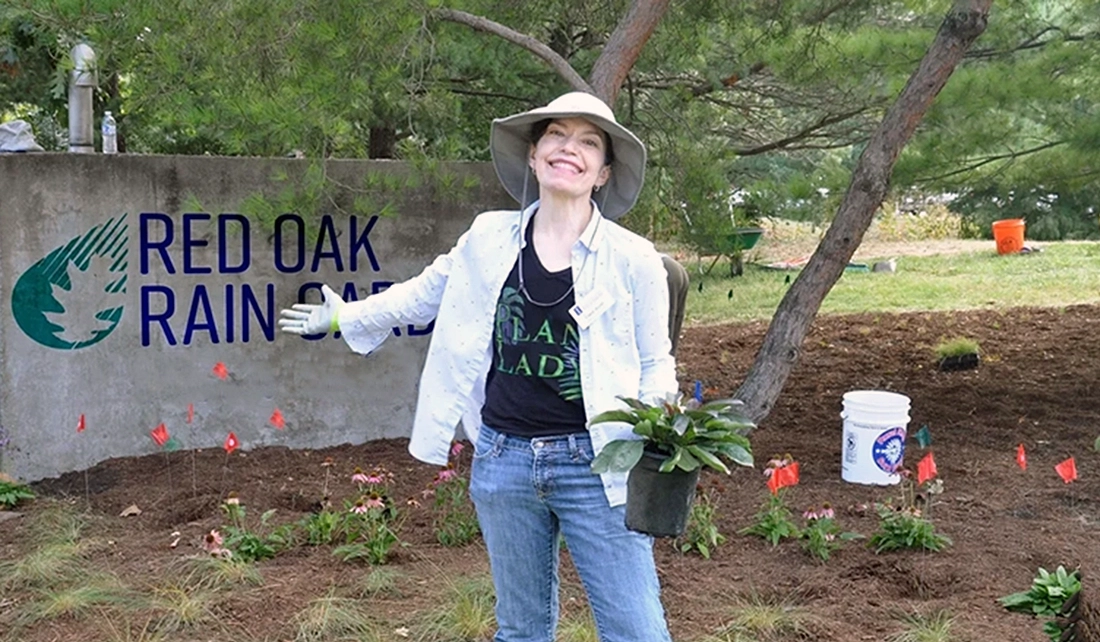
In November, at the University of Illinois Extension Annual Conference, Eliana Brown, Illinois-Indiana Sea Grant stormwater specialist, won an Individual Extension Excellence Award. Through her leadership and innovation, she has expanded Extension’s statewide stormwater and water quality education and community engagement. Brown spearheaded the Red Oak Rain Garden renovation and, through projects such as Illinois Groundwork, Rain Garden Rumble, and a new green infrastructure curriculum, she has reached tens of thousands and obtained nearly $300,000 in new grants.
The Red Oak Rain Garden, the first rain garden on the University of Illinois campus, was established in 2006, but a decade or so later, neglect and time had all but erased the efforts of the previous decade. Less than 10% of the original plants survived, and bare patches exposed tattered landscape fabric. The rain garden still soaked up excess rainfall, but when larger storms hit, sidewalks started to flood again.
Initiated by Brown’s focus and determination, the rain garden was renovated and expanded to improve both its aesthetics and functionality. The 12,000-square-foot garden now has more than 10,000 plants, representing dozens of species. It also serves as a demonstration site for landscape architecture, engineering and other university classes. Brown pioneered a stewardship model that combines community and student volunteers along with the campus Department of Facilities & Services Grounds. The garden is supported through a variety of funding sources and has partnerships with Master Gardeners and Master Naturalists.
Brown’s related green infrastructure education efforts include Illinois Groundwork, a one-stop shop for local decision makers and others who are interested in addressing stormwater problems through rain gardens and related options, and Illinois’ participation in the Rainscaping Education Program, which she leads. Coming soon is a new curriculum for green infrastructure maintenance training.