
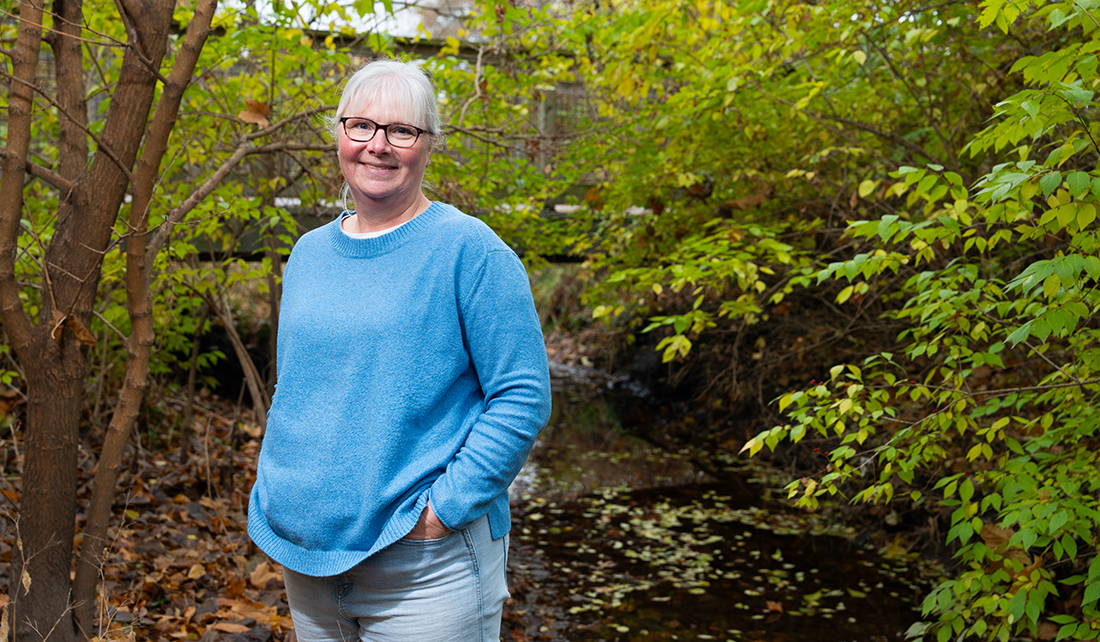
Illinois-Indiana Sea Grant (IISG) welcomes a new member to the team—Laura Esman is now the program’s research and reporting coordinator. Located at Purdue University, Esman will oversee research competitions and manage IISG’s research portfolio.
She will also spearhead IISG data collection and lead the program’s annual reporting process.
Esman brings over 30 years of experience in research, project coordination and grant administration. Her most recent positions include managing director of the Indiana Water Resources Research Center, and lab manager and research associate in the Natural Resources Social Science Lab in Purdue’s Department of Forestry and Natural Resources.
In these roles, she developed and oversaw budgets as well as managed dozens of research projects, often comprised of interdisciplinary teams at multiple universities. In addition, Esman communicated with key stakeholders to develop partnerships and inform target audiences.
Her research and outreach background at the federal, state, and local level cover a range of relevant topic areas and issues in the two states as well as the Great Lakes region, including water pollutants, aquatic invasive species, green infrastructure, and harmful algal blooms.
“Laura’s breadth and depth of experience make her a perfect fit for IISG, said Stuart Carlton, IISG director. “She is skilled at working with scientists to help identify and disseminate high-quality, highly relevant applied research.”
Esman has a master’s degree in environmental toxicology from Clemson University, and she earned her bachelor’s from Albion College.



