
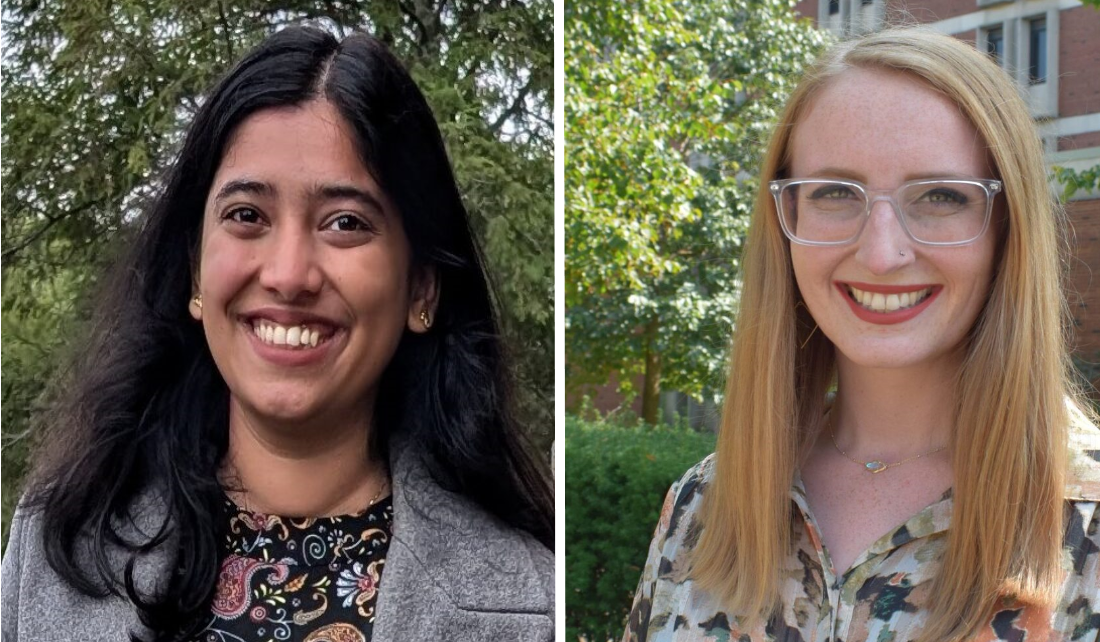
The Sea Grant program has selected 48 finalists for the 2026 Sea Grant Knauss Fellowship program. Two of those finalists were submitted by Illinois-Indiana Sea Grant, with the rest from 25 other state Sea Grant programs.
The Knauss Fellowship places early-career professionals in legislative and executive branch offices in the Washington, D.C., area, where they contribute scientific and technical expertise to the federal policymaking process for critical marine, coastal and Great Lakes issues. Established in 1979, the program has supported more than 1,762 fellows, many of whom have gone on to careers in public service, academia, nonprofit organizations, and the private sector, and have significantly contributed to environmental policy and management.
As part of their fellowship, the 2026 finalists will participate in professional development and mentorship opportunities and build their networks. This spring, the finalists will participate in the placement process, during which they will connect with one another and potential host offices. Sea Grant’s 47th class of Knauss fellows will officially begin their year in D.C. in June of 2026.
Both Illinois-Indiana Sea Grant finalists will be placed in the executive branch; they are Anupama Chandroth, a PhD candidate in geobiology at Indiana University, and Laura Gray, PhD candidate in environmental engineering at the University of Illinois Urbana-Champaign.
The 2026 finalists represent 40 universities across the country, and include 17 master’s candidates, 29 Ph.D. candidates and two J.D. candidates. They are biologists, resource managers, engineers, ecologists, lawyers, and more. They represent communities across the nation and are committed to making meaningful contributions to marine policy.



