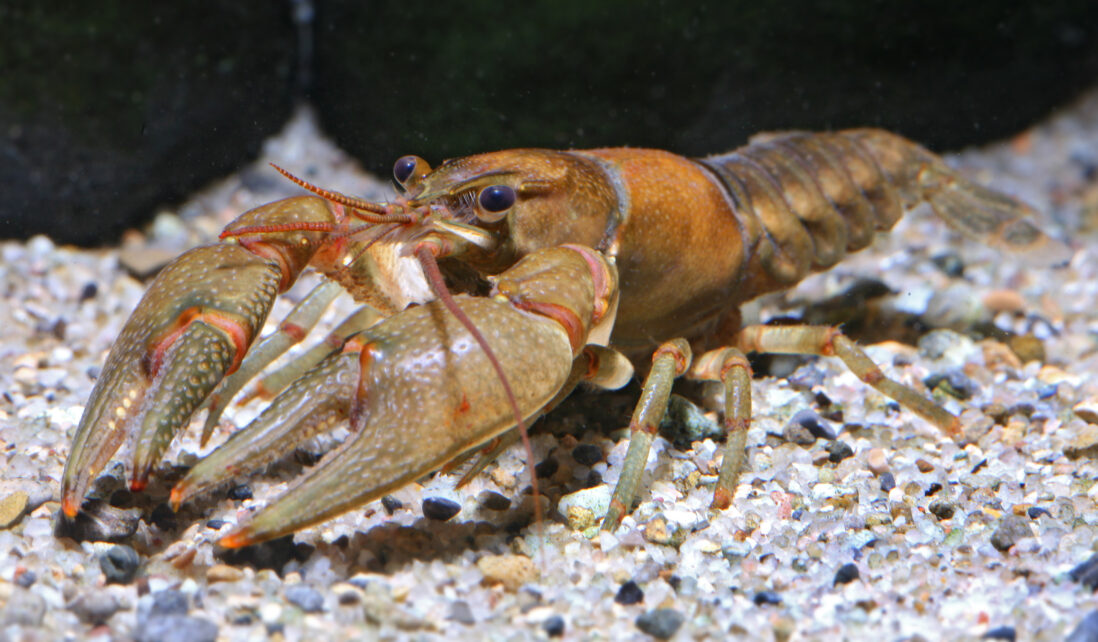
Crayfish can frequently be found in the role of classroom pet, but as with many school critters, they can pose a threat if they are released into local waters—non-native species can prove to be invasive, pushing out native crayfish. A new curriculum brings that lesson directly to students, and teachers too.
Illinois-Indiana Sea Grant introduces Investigating Crayfish and Freshwater Ecosystems, a curriculum that is full of information about the importance of native crayfish, and the dangers posed by invasive ones and about Great Lakes ecosystems. The lessons are designed for grades 6–12 but include adaptations for grades 2–5. They are aligned with Next Generation Science Standards, Common Core State Standards, and the Center for Great Lakes Literacy Principles.
The curriculum is a product of IISG’s Invasive Crayfish Collaborative, an initiative focused on improving collective management and outreach capabilities through new crayfish research and outreach projects. The new curriculum can help educators across the Great Lakes region engage students in thinking critically about crayfish and freshwater ecosystems.
It’s comprised of nine hands-on lessons that engage students in activities in the classroom and then out in the field where they can take part in real-world identification and monitoring of crayfish species. With their new skills and knowledge of crayfish, students can report their sightings with photos to iNaturalist, an app used by a network of naturalists, community scientists, and biologists to share images from the field.
“In my experience of more than 30 years of working with kids, the magic is really there for teaching and learning when you can connect to nature and to real things happening in the community,” said Rick Reynolds who is founder of Engaging Every Student and author of the original version of the curriculum, focused on the crayfish population in the Pacific Northwest.
Working with Natalia Szklaruk, IISG aquatic invasive species educator, they adapted the lessons for the Great Lakes region.
Beyond classwork opportunities, the lessons also prepare educators and their students to participate in the Invasive Crayfish Collaborative’s crayfish study–this community science project is aimed at collecting data to help managers understand the crayfish distribution across the Great Lakes region.
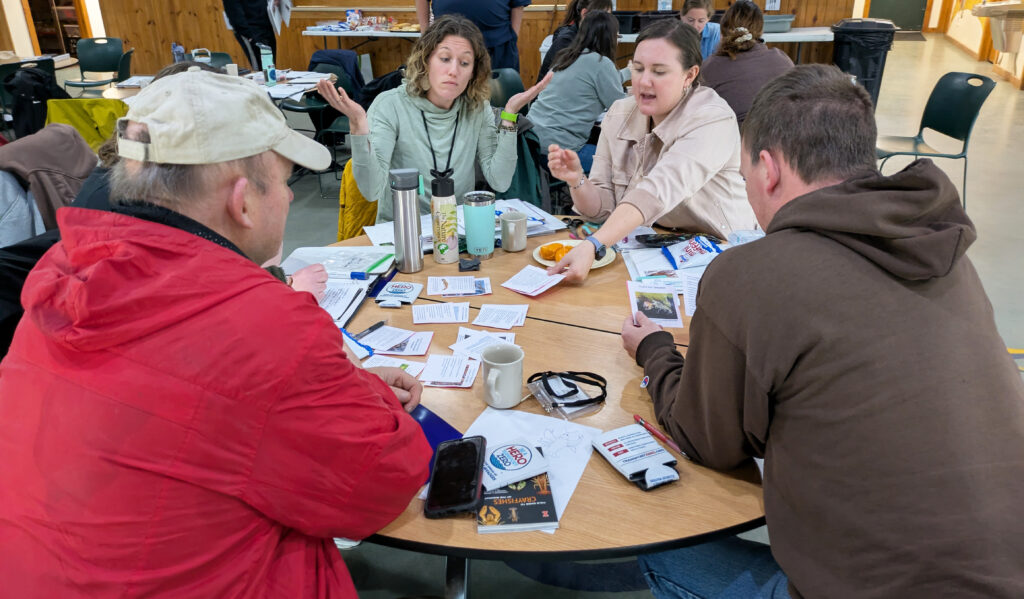
At the recent workshop, these educators are exploring Lesson 4 of the crayfish curriculum, working together to match photo cards with crayfish species descriptions.
In April, IISG held a workshop at the Indiana Dunes National Park where about 20 formal and non-formal educators from Illinois and Indiana came to spend the day learning about and exploring the new curriculum.
“We practiced several lesson plans and activities, including an introductory activity called The Web of Life to learn more about the educators and about how when one species exits, it really causes a ripple effect across the whole web,” said Szklaruk. “Later, the educators engaged in sampling in a nearby creek, which was the day’s high point. They even caught a few small crayfish.”
To learn more about the curriculum or to download it, visit the Invasive Crayfish Collaborative website.