
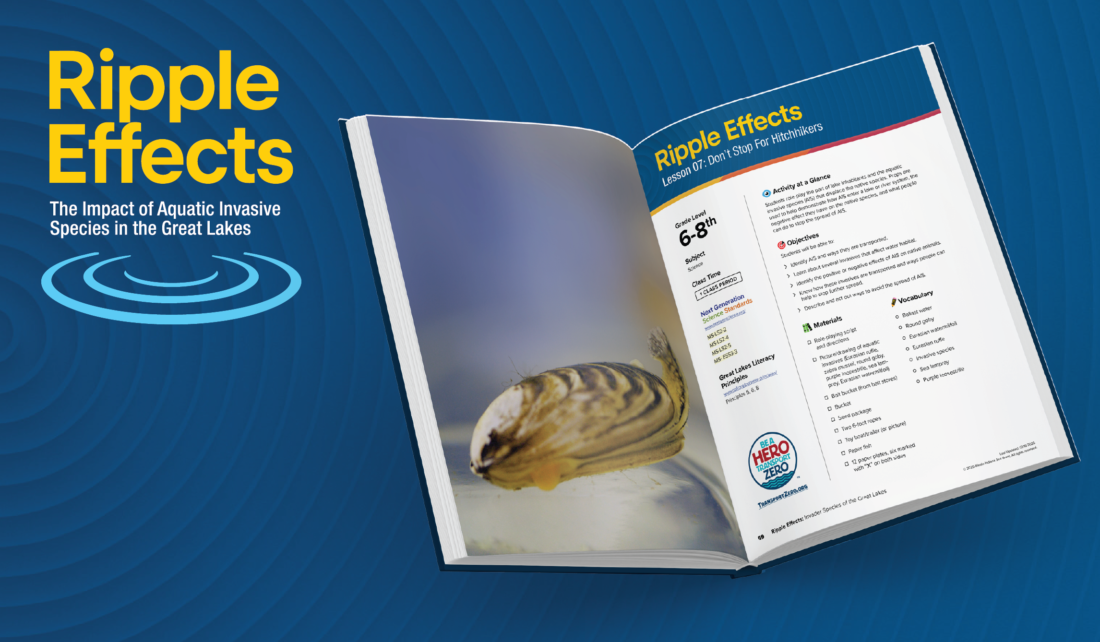
Illinois-Indiana Sea Grant (IISG) announces a new curriculum—”Ripple Effects” is a newly updated collection of hands‑on, inquiry‑based lessons that immerse 6–12 grade students in the science and real‑world challenges of the spread of aquatic invasive species (AIS) in the Great Lakes region.
This curriculum provides opportunities for students to engage in research, reporting, and role-playing games and activities to learn why these non-native species threaten native ones, how they came to the region, and their impact on Great Lakes ecosystem dynamics.
“Through activities that explore how AIS are introduced, spread, and managed, students gain a deeper understanding of their impact on Great Lakes ecosystems, and the role young people can play in protecting them,” said Julie Fiorito, IISG Great Lakes K-12 education specialist.
The role-playing activity provides an engaging way for students to experience how invasive species can impact an ecosystem. As students, as part of a group, take on native or invasive species’ needs and behaviors, resources diminish, and the picture becomes clear. Other activities include developing research and analytical skills, as well as preparing and presenting information to the class.
Aligned with the Next Generation Science Standards and Great Lakes Literacy Principles, the lessons can be used individually or combined as a comprehensive, progressive curriculum.
“As future leaders and decision makers, students benefit from learning how environmental issues like AIS shape the health, resilience, and sustainability of their communities,” added Fiorito.