Illinois-Indiana Sea Grant (IISG) plans to award $675,000 to four new research projects that will help inform decision makers as they address some of the region’s pressing environmental issues, including managing stormwater, restoring stream habitats and protecting beachfronts. The research will take place in 2018-2019.
Two projects will focus on green infrastructure as part of stormwater management, but using different approaches. At the University of Illinois, landscape architect Mary Pat McGuire will lead a diverse team that includes David Grimley with the Illinois State Geological Survey (ISGS) to create a soils database for the Calumet region southeast of Chicago to assess soil health and appropriateness for effective green infrastructure. The researchers will evaluate green infrastructure planning in the region and work with municipalities in pilot projects to help integrate their findings into site selection and design strategy decisions.
Bernie Engel and colleagues in the Purdue University Department of Agricultural and Biological Engineering will enhance their simulation software to include the long-term effects of green infrastructure on reducing and preventing flooding. Their model is part of the Tipping Point Planner online toolbox, which helps local decision makers plan for future development in their communities. This new project will be closely tied to a south side Chicago neighborhood—Washington Park. There, using their updated model, the research team hopes to demonstrate the impact of optimally-places green infrastructure on flooding. Akilah Martin, in DePaul University’s School for New Learning, will help share these results with students and local residents.
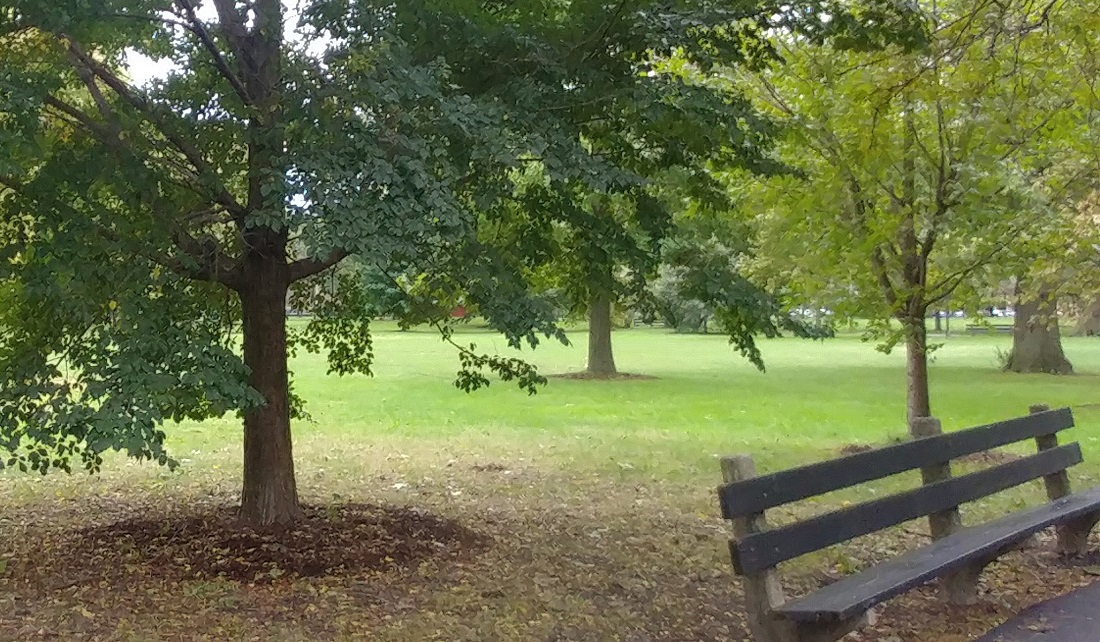
Washington Park, Chicago, Illinois
At the University of Illinois, hydrogeologist Piotr Cienciala and ecological physiologist Cory Suski will lead a multi-disciplinary project to study the effect of turbulence on fish swimming behavior. By studying how the physiology of various fish species is affected by water movement, the researchers can help inform the placement of fish passage structures as part of stream restoration projects. The findings will likely be transferable to stream projects beyond the Great Lakes region and may help inform simulations to explore restoration outcomes under various projected climate or land use change scenarios that alter water movement and fish habitat.
U of I researchers will also use historical documents of the geology of the Illinois shoreline to help beach managers predict and address future conditions. Through old photos and reports, ISGS’s Ethan Theuerkauf will lead an effort to tell the story of land changes and environmental conditions over the last century at Illinois Beach State Park. Experts from the Prairie Research Institute, Midwest Regional Climate Center, and Great Lakes Integrated Sciences and Assessment Center are also taking part in this research. Working closely with beach managers, the researchers will develop future coastal change scenarios to help inform the decision making process.
“Illinois-Indiana Sea Grant is excited to support these new research efforts,” said Tomas Hook, IISG associate director for research. “They are targeting issues that have been identified as priorities for the Lake Michigan region of Illinois and Indiana and they have great potential to yield solution-based results for our region. Collectively, these projects should also contribute to informing infrastructure and environmental management in coastal regions throughout the United States.”
Illinois-Indiana Sea Grant is a part of University of Illinois Extension and Purdue University Extension.