
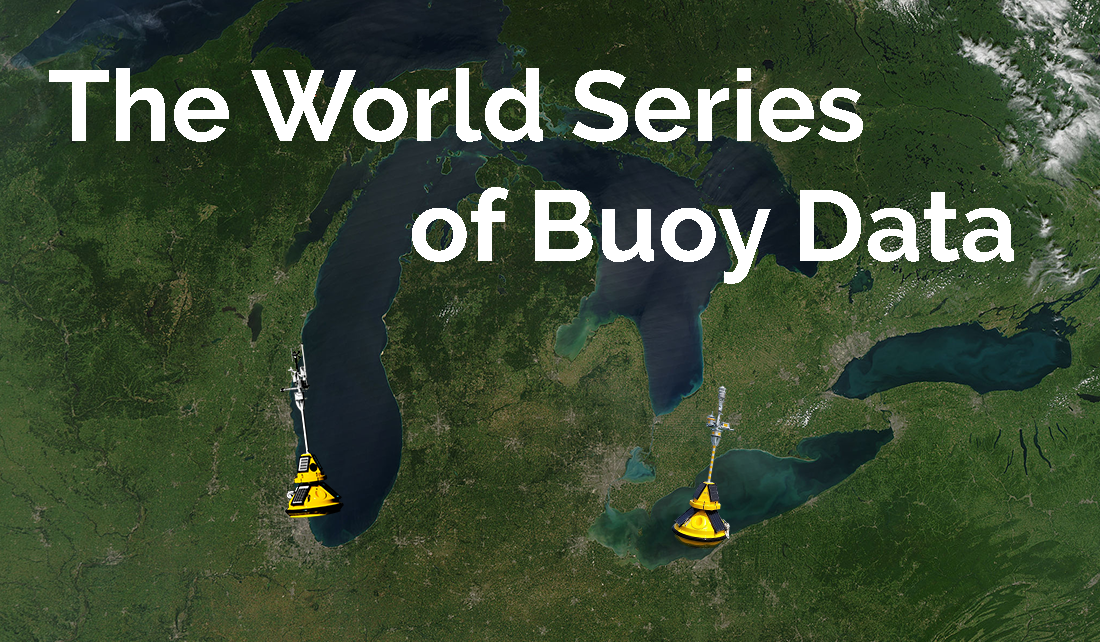
The Chicago Cubs versus the Cleveland Guardians isn’t the only Great Lakes World Series happening this October!
Illinois-Indiana Sea Grant’s Wilmette buoy (45174) has been pitted against the City of Cleveland’s Cleveland Crib buoy (45176) in the World Series of Buoy Data. The match-up is playing out on Twitter. It’s a best of seven series and will last up to seven days. Questions are posted in the morning and answers are posted in the afternoon. After three days of competition, Wilmette is in the lead 2-1, winning both the highest wave and strongest wind gust recorded between July 1 and October 24 of this year. Cleveland saw the warmest water temperature.
Starting tomorrow: #GreatLakes #WorldSeries of #buoy #data. Meet the players. @greatlakestoday @PurdueToday @ourmaninchicago @EdRussoWSBT pic.twitter.com/45yFoBnJ3p
— Two Yellow Buoys (@TwoYellowBuoys) October 24, 2016
Quick reminder of the Rules and Players for the #WorldSeries of #buoy #data. Day 3 today! @ClevelandWater @A4GL @NWIndianaLife @ILINSeaGrant pic.twitter.com/iGW24wo3zs
— Two Yellow Buoys (@TwoYellowBuoys) October 27, 2016
Q3. #GreatLakesWorldSeries of buoy data. Who recorded the warmest water temperature in 2016? Answer later today. #LakeErie #LakeMichigan
— Two Yellow Buoys (@TwoYellowBuoys) October 27, 2016
See the rest of the series play out on Twitter by following @TwoYellowBuoys, and let us know who you’re rooting for in this best of seven series!
Illinois-Indiana Sea Grant is a part of University of Illinois Extension and Purdue Extension.