
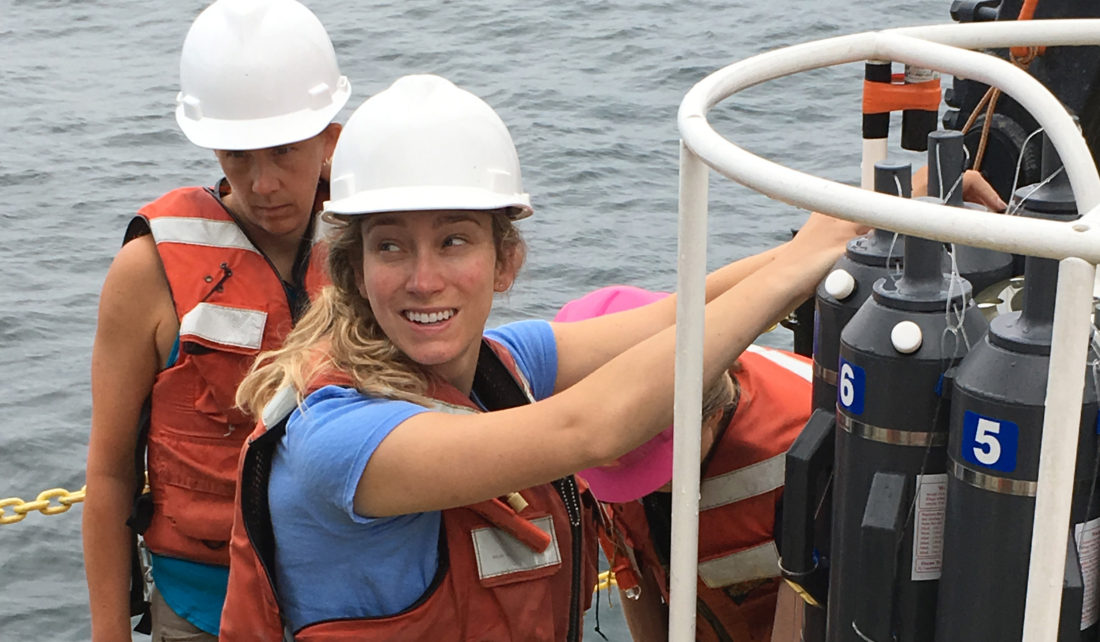
Lake Guardian Research Vessel

Each summer on one of the Great Lakes, 15 educators set sail for a week on the Lake Guardian, an Environmental Protection Agency research vessel, where they work side by side with scientists and fellow educators, growing their knowledge and confidence in bringing Great Lakes science to their students.

The Shipboard Science Workshop is the centerpiece project of the Center for Great Lakes Literacy, a collaborative of education specialists from Sea Grant programs in the region and funded through the Great Lakes Restoration Initiative. Since 2006, 207 educators have taken part in this adventure.

The hands-on, immersive nature of this experience fosters a broader and deeper understanding of science—the educators onboard are developing research skills as they engage in real world scientific investigation. They also expand their “treasure box” of lessons, teaching strategies, and network of like-minded colleagues. Participants of the workshops have described them as once-in-a-lifetime professional development opportunities.

Educators from every Great Lake state described how participating in the Shipboard Science Workshop has impacted them and their students. You can read their experiences in a new story map: Educators Onboard for Learning.


IISG Instagram

Coastal protection is not limited to concrete, rocks, and steel. Coastal protection solutions exist on a spectrum, ranging from softer “green” solutions to harder “gray” structures.Nature-based coastal solutions fall between green and gray techniques, providing multiple benefits to people and habitats.Our three-part video series, Nature-Based Coastal Solutions in the Great Lakes, is now available to watch. Learn how nature-based coastal solutions, including nature-driven and hybrid approaches, can protect shorelines while supporting ecosystems and communities.Watch the 3-part video series at the link in bio.(Photo credit: Liz Spitzer, Illinois State Geological Survey, Coastal Research Group)
Managers and researchers can be faced with a need to classify the risk of new crayfish invaders. Rapid assessment tools, such as the Science-based Tools for Assessing Invasion Risk (STAIR), can assist in this process by providing a streamlined framework for analysis and decision-making.Join us for an ICC webinar with John Bieber from Loyola University Chicago to learn how rapid assessment tools are used to classify invasive species risk and how STAIR can support invasive crayfish management.Learn more at the link in bio.