
Illinois communities face increasingly complex environmental and energy challenges that require more resources and fresh thinking about solutions. To help Illinois residents and businesses navigate these complicated issues, Illinois Extension has created a new pathway to connect campus resources with clients and partners across the state.
Shiba Kar has been named the inaugural assistant dean and program leader for natural resources, environment, and energy for University of Illinois Extension. Kar will provide strategic and functional leadership for Extension staff serving Illinois food, agriculture, and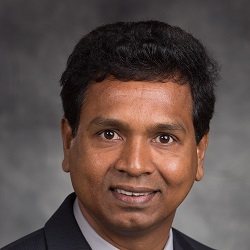 outdoor industries.
The appointment underscores Extension’s renewed commitment to building more resources that support clients and stakeholders across the state. Over the past decade, natural resources and environmental content has been in high demand, particularly programming exploring sustainable energy, air and water quality, land usage and accessibility, and the outdoor economy.
One of Kar’s early priorities will be a strategic assessment of capacity and coverage of vital content areas. While much of the team’s efforts are linked to innovation and advancement, Kar will also administer a portfolio of legacy programs, including the Master Naturalist program, Illinois-Indiana Sea Grant and the Energy Education Council. Kar will also oversee the University of Illinois Arboretum, the planned home of Extension’s expanded on-campus presence.
“Dr. Kar’s expertise brings a new dimension to the multidisciplinary approach Illinois Extension uses to evaluate and address statewide issues,” says Shelly Nickols-Richardson, associate dean of the College of Agricultural, Consumer and Environmental Sciences (ACES) and director of Illinois Extension. “We are excited to see how he leverages his technical knowledge and environmental policy experience to drive momentum and bring new vision to both our emerging and heritage content areas.”
As a long-term advocate for natural resource sustainability and its connection to community development, Kar’s work aligns with Extension’s mission to put learning and discovery into practice. He is an experienced researcher and program development specialist. He can also design and evaluate strategies that encourage adoption of energy and environmental best practices among farmers and rural communities.
Kar’s professional and educational experience spans three countries – Bangladesh, Australia, and the U.S. – so he brings a global perspective to this role. He also has a wealth of experience in understanding social and economic impacts of energy and environmental policy. Because local issues are often shaped by both state and federal policy, Kar is well suited to lead a team of experts in nutrient loss reduction, invasive species, sustainable communities, and soil and water quality, among other topics.
“Dr. Kar brings a diverse, global perspective that strengthens our ability to understand, adapt, and model best practices in energy and environmental sciences across the state,” says ACES Dean Kim Kidwell. “His work with state and federal energy, climate, and environmental policy is a significant asset for the communities and clients we serve.”
Kar is one of two new assistant dean positions created by Illinois Extension to increase high-level resource development for the organization. Travis Burke will serve as assistant dean and program leader for agriculture and agribusiness. Both will focus on collaboration as a key to expanding Illinois Extension’s network of committed faculty specialists, community partners, and trained volunteers.
Illinois-Indiana Sea Grant is a part of University of Illinois Extension and Purdue Extension.
Writer: Samantha Koon, Illinois Extension Director of Communications