
temp chain buoy

Our Michigan City buoy has a lot of sensors on it, but none are quite so popular as the temperature chain.

Every 10 minutes, 17 loggers, all at different depths, record and transmit the average water temperature of the lake.

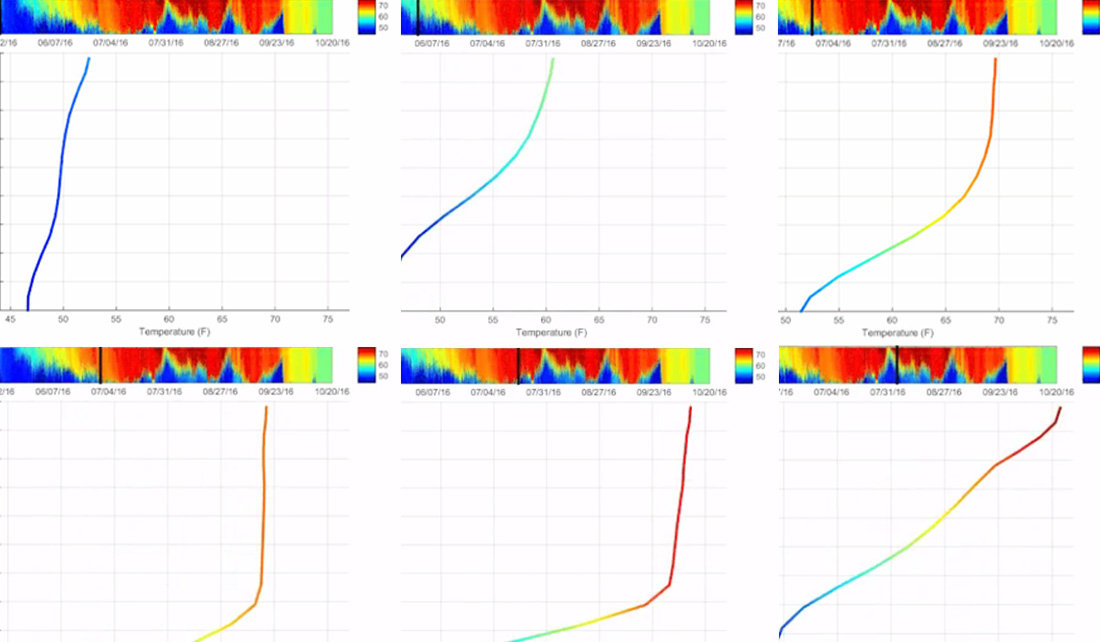
Using data collected in 2016, Purdue University School of Civil Engineering student David Cannon visualized what happened in the top 45 feet of Lake Michigan, 3.5 miles northwest of Michigan City, Indiana.

The results shows just how variable the nearshore water is: one day it can be warm all the way to the bottom, and a week later it can be very cold way up at the surface.

For more information on buoys, winds, waves, and how they affect water temperature in nearshore Lake Michigan, see Lake Michigan By the Numbers.

Illinois-Indiana Sea Grant is a part of University of Illinois Extension and Purdue Extension.

IISG Instagram

Register Now for HASTI 2026! The early bird registration rate expires tomorrow!We’re excited to be presenting The Watershed Game at the conference. The game is a hands-on activity that helps educators and students explore water quality, land use, and community decision-making.✅ Don’t miss this opportunity to connect with fellow educators and bring new tools to your classroom!📅 Event Details & Registration at the link in bio.
Keeping on top of your farm finances can be a daunting task, but knowing what numbers to track, what the numbers mean, when to spend, and when to save can be critical for the long-term health of your aquaculture business finances. This webinar series will provide you with an overview of practical information for managing your farm’s finances. All webinars begin at 12pm ET. Registrants will be sent a webinar recording. All recordings will be added to a YouTube playlist on Ohio Sea Grant and Illinois-Indiana Sea Grant YouTube pages.Learn more at the link in bio.
Educators—this is for you!Unlock the potential of Great Lakes education with the latest issue of the Center for Great Lakes Literacy newsletter. Explore exciting opportunities like vessel-based learning, an aquaculture competition, and classroom-ready resources on maritime heritage, harmful algal blooms, invasive species, and more!Learn more at the link in bio.