
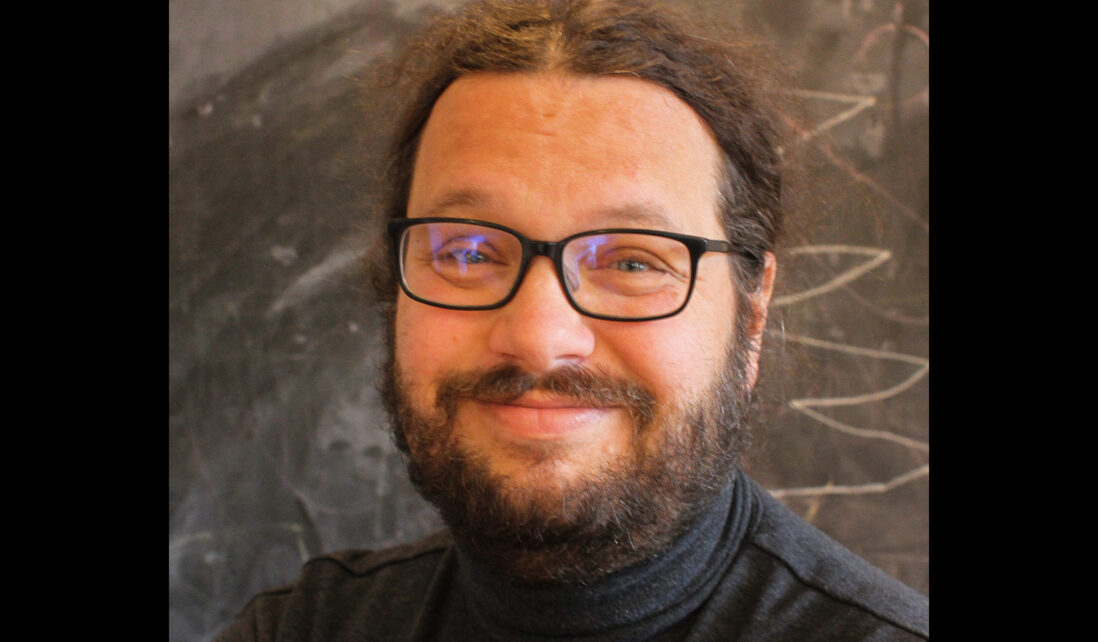
Illinois-Indiana Sea Grant (IISG) announces that Stuart Carlton will be the program’s new director as of July 14, 2025. He will replace Tomas Höök who will become the head of Purdue University’s Department of Forestry and Natural Resources. Höök has been with IISG for 14 years, seven of those serving as director.
Carlton has been IISG’s assistant director since 2018—as part of this role, he has provided guidance and support for program personnel and projects as well as led overall coordination and day-to-day management. Before coming to IISG, he spent four years as a healthy coastal ecosystems and social science specialist at Texas Sea Grant and three years as a communications program assistant at Florida Sea Grant.
Carlton is a natural resources social scientist who holds a PhD in interdisciplinary ecology from the University of Florida and a master’s degree in fisheries biology from the University of Georgia. In addition to his role with IISG, he is also a research assistant professor and head of the Coastal and Great Lakes Social Science Lab at Purdue, where he and his students research the relationship between knowledge, values, trust, and behavior in complex or controversial environmental systems.
“I am thrilled to see Dr. Carlton named as the new IISG director,” said Zhao Ma, interim head of Purdue’s Department of Forestry and Natural Resources. “Having known him for many years, I am confident that he will bring a wealth of knowledge and experience from his work across various aspects of the Sea Grant program. Combine all that with his scholarly expertise as a natural resource social scientist, exceptional communication skills, and—most importantly—his infectious positive energy and remarkable ability to connect with others, I know he will lead IISG into a bright and impactful future.”
As assistant director with IISG, Carlton has helped expand its aquaculture program as well as provided guidance in social science efforts in many topic areas. He is the creator and host of Teach Me About the Great Lakes, a podcast in which he learns more about Great Lakes issues by talking with experts and others, bringing the rest of us along on his educational journey.
His research and outreach interests are in the role of stakeholder values, attitudes, and behaviors in controversial environmental systems. Carlton has worked on a variety of issues, ranging from red snapper management to state service foresters’ use of climate information. His research on climate change beliefs has been cited on the Senate floor, covered by national and international media—including The Guardian and The Washington Post—and has been featured as the top post on the front page of Reddit.