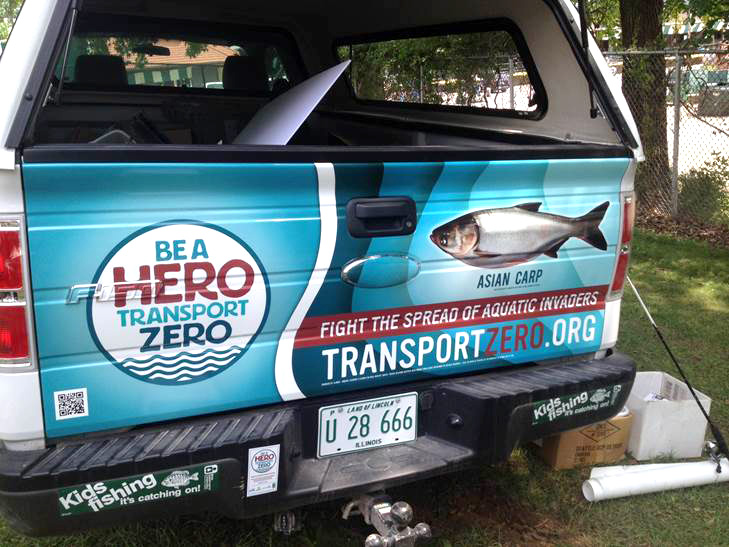
Summer is coming to an end, but there is still plenty of fun to be had this weekend. If you’re like us, you’re anxious to hit the road to your favorite beach, boat launch, or fishing spot. But before you do, we have a message that will help keep these places healthy for many Labor Days to come. And you may just see it on the car in front of you.  

The Illinois Department of Natural Resources has emblazoned nine vehicles with a reminder to Be a Hero—Transport Zero. It’s all part of a statewide program that is raising awareness about how the public can help prevent the spread of invasive species on land and in waterways. These plants and animals can wreak havoc on food webs, water quality, and recreation. The three featured in IDNR’s tailgate designs—Asian carp, zebra mussel, and hydrilla—are some of the worst offenders, but there are many more, and they aren’t always easy to recognize. 
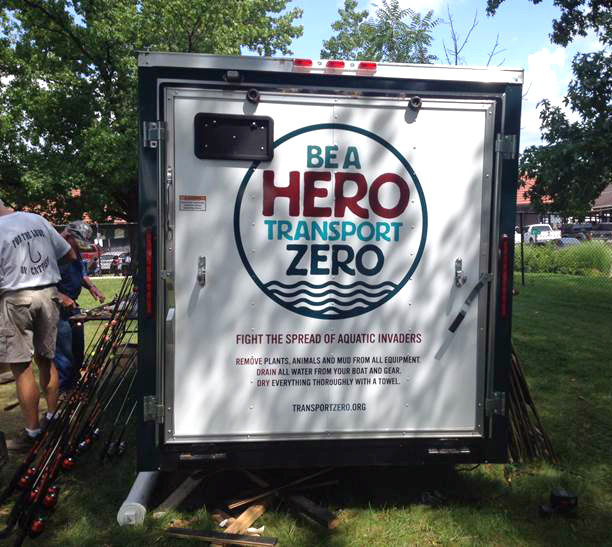
So what can you do? Just follow three easy steps before you leave the water this weekend: 

– Remove any plants, animals, and mud from boats, trailers, and equipment
– Drain everything—bait buckets, live wells, etc.
– Dry everything with a towel 


From boaters and kayakers to waterfowl hunters, scuba divers, swimmers, and more, we can all help prevent invasive species from taking over our favorite waterways.


See you on the water! 

IISG Instagram

Celebrate Earth Day with freshwater science and good conversation! Join Illinois-Indiana Sea Grant, the Northwestern Center for Water, Loyola University researcher Tim Hoellein, and IISG’s Sarah Zack for Science Sips: Trash Talk about Chicago Waterways. Learn what research reveals about litter and trash in Lake Michigan and Chicago waterways and what we can do to help.Plus, enjoy Great Lakes trivia games!📅 April 22, 2026⏰ 7–9 PM📍 Sketchbook Brewing Company, Evanston Tap RoomCome curious and ready to test your Great Lakes knowledge!
Looking for a fun way to teach about marine debris? Check out Me and Debry, which is a whimsical, 30‑minute, audience‑participation play created for @UWiscSeaGrant. It helps students explore what marine debris is, why it matters, and how we can make a difference in the Great Lakes.The full script (English) and participation scripts (English, Spanish, and Hmong) are free to use, along with marketing materials for performances.Bring learning to life and start a conversation about litter in our waters!Check it out at the link in bio.#TeachingTuesday
Do you work or live along the Great Lakes coasts? Watch our newly released video series collection, containing several short videos that overview the range of coastal protection options in the Great Lakes, including:- Natural processes in the Great Lakes- Hard coastal protection structures and how they interact with/alter natural processes- Nature-based coastal solutions in the Great Lakes, ranging from green to gray approachesFind our two new video series at the link in bio.