
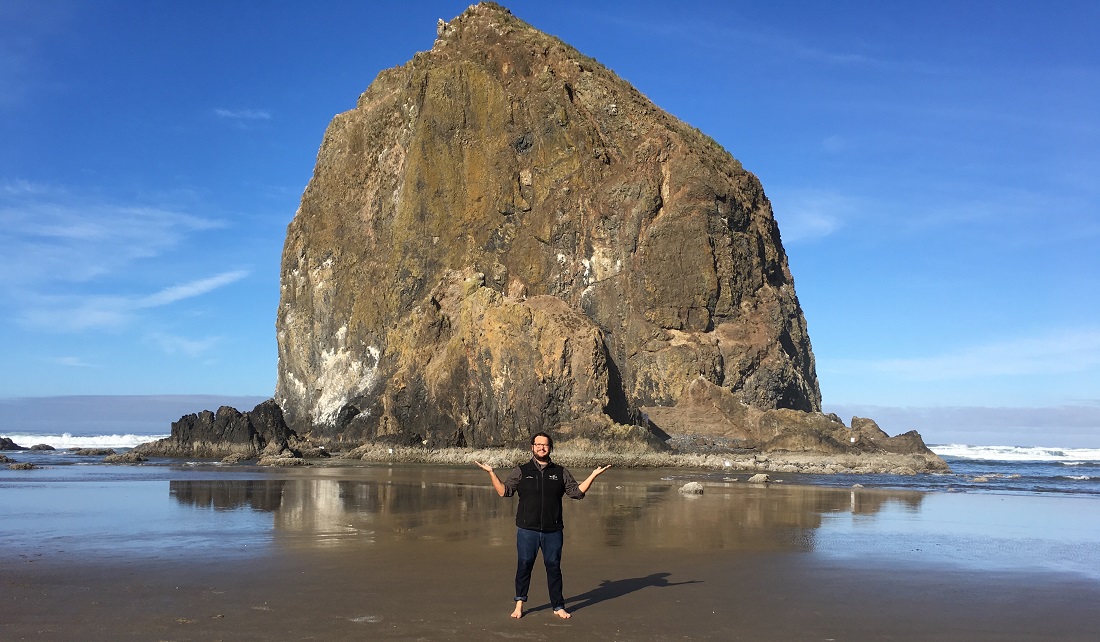
Drawing on the rich Sea Grant talent pool around the country, Illinois-Indiana Sea Grant (IISG) welcomes our newest addition, Stuart Carlton, as the program’s assistant director. Previously a healthy coastal ecosystems and social science specialist with Texas Sea Grant, he now manages day-to-day operations and, working closely with director Tomas Höök and the IISG team, coordinates all aspects of the program.
“As assistant director, my main job is to guide and support our staff as they continue to do amazing work,” said Carlton. “Our specialists are experts in their field; my goal is to empower them and then get out of the way.”
Carlton also hopes to help expand the program and create new partnerships for IISG in the Great Lakes region and beyond. “Environmental issues are complex, a fact that isn’t going to change any time soon,” he said. “We need to be constantly thinking about who we can work with to meet 21st-century challenges.”
Carlton is an interdisciplinary social scientist who holds a PhD in interdisciplinary ecology from the 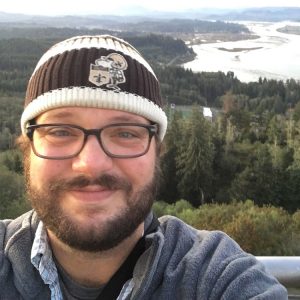 University of Florida, an MS in fisheries biology from the University of Georgia, and a BS in English from Tulane University. In addition to Texas Sea Grant, he has held positions at Florida Sea Grant and the Natural Resources Social Science Lab in Purdue’s Department of Forestry and Natural Resources.
“Illinois-Indiana Sea Grant is never boring,” he said. “We work on issues ranging from aquatic invasive species to medicine disposal, green infrastructure, aquaculture, climate change, community planning, environmental education and beyond. We fund groundbreaking biological, ecological and social science research. We have buoys. The sheer number of cool, important things that we do is mind-blowing.”
His research and outreach interests are in the role of stakeholder values, attitudes, and behaviors in controversial environmental systems. Carlton has worked on a variety of issues, ranging from snapper management in the Gulf of Mexico to state service foresters’ use of climate information. His research on climate change beliefs has been cited on the Senate floor, covered by national and international media—including The Guardian and The Washington Post—and has been featured as the top post on the front page of Reddit.
“I enjoy working for Sea Grant because I strongly believe in our mission to provide unbiased, research-based information to help people and communities become more resilient and sustainable,” said Carlton. “We take the important work that scientists are doing and use it to actually help people and communities, and that’s pretty neat.”