May 13th, 2014 by iisg_superadmin
Several interests have aligned to propose a biking, hiking, and paddling route through the Great Lakes basin in both the U.S. and Canada.
“The Great Lakes Coastal Trail Conference — taking place Thursday and Friday in Saugatuck, Mich. — aims to bring together supporters in the U.S. and Canada to formalize development of a roughly 11,270-kilometre route.
The route would include Great Lakes shoreline and the St. Lawrence River, which connects the lakes to the Atlantic Ocean.
An aim is to draw tourists to the region, which includes eight U.S. states and Quebec and Ontario.
It would integrate independent biking and kayaking trail developments in states such as Illinois, Michigan and Wisconsin.”
Read more at the link above.
May 9th, 2014 by iisg_superadmin
Higher temperatures, extreme rainstorms, loss of wildlife, and a drop in Lake Michigan water levels. This is what the Midwest can expect in the coming decades according to the latest review of climate change trends.
Released on Tuesday, the
2014 National Climate Assessment provides an in-depth look at the expected impacts of climate change across the country. The report also investigates how businesses, agriculture, infrastructure, natural resources, and public health will be affected if current trends continue.
Midwesterners have likely noticed a few of the projected changes already. Summers are longer and warmer, winters are wetter, and flooding is increasing. But some of the long-term impacts might not be as apparent. For example, higher water temperatures could drive out fish species and make it easier for non-native species to invade new habitats. Stronger rainstorms, especially in cities, will also mean more runoff that pollutes waterways and erodes shorelines and river banks.
Visit our
climate change page for information on what communities and individuals can do to mitigate and prepare for the changing climate.
May 8th, 2014 by iisg_superadmin
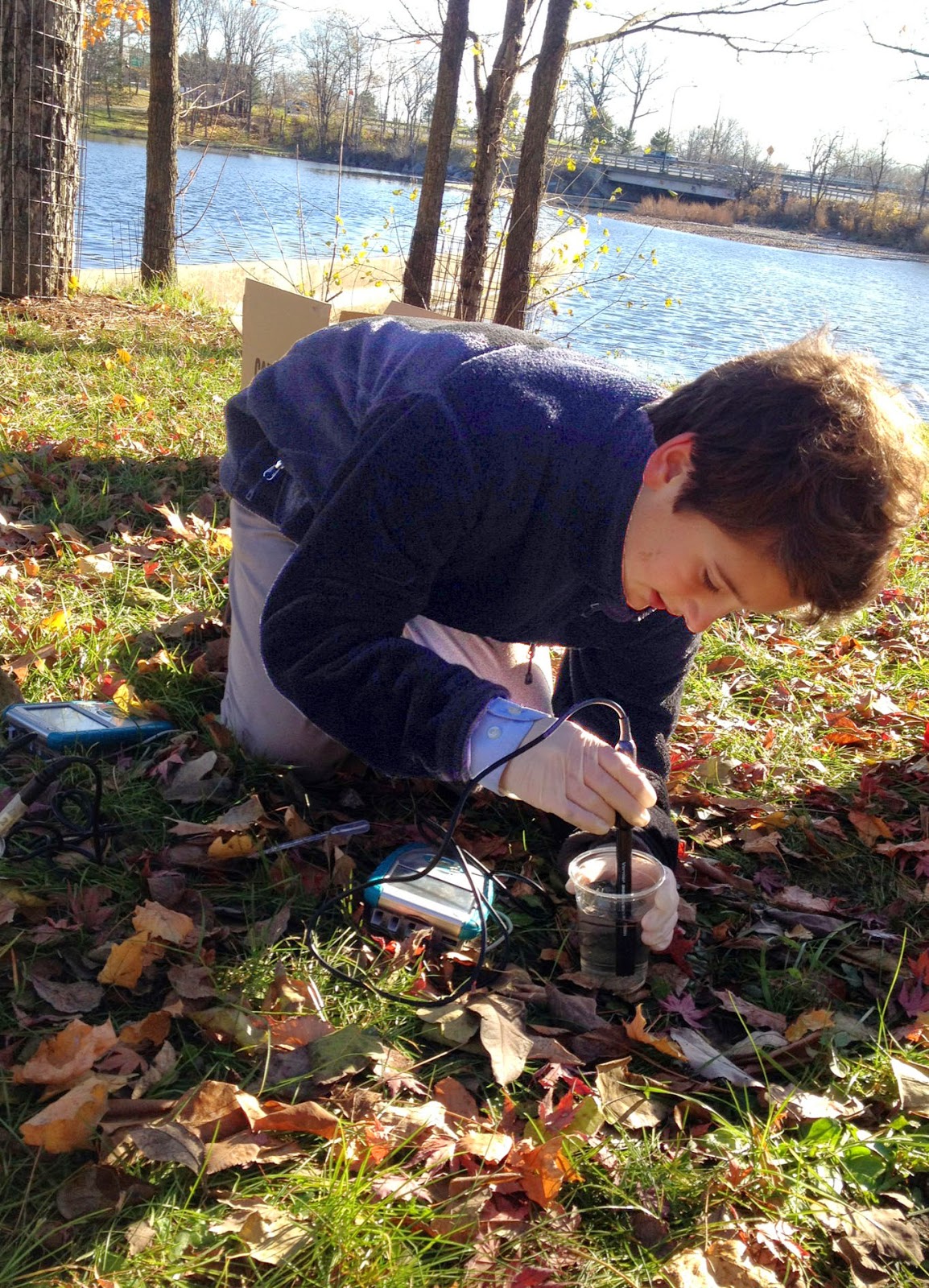.JPG) A group of seventh graders in Buffalo, New York are gearing up for a different kind of science class. On Monday, students will take a break from their regular activities to video chat with Great Lakes scientists and discuss issues like water chemistry, food webs, and pollution. And after spending the fall monitoring water quality in their local rivers, they have a lot of questions.
A group of seventh graders in Buffalo, New York are gearing up for a different kind of science class. On Monday, students will take a break from their regular activities to video chat with Great Lakes scientists and discuss issues like water chemistry, food webs, and pollution. And after spending the fall monitoring water quality in their local rivers, they have a lot of questions.
It’s all part of a joint program with IISG and the EPA Great Lakes National Program Office that gives students a chance to collect data on water characteristics like dissolved oxygen, conductivity, and pH. The monitoring equipment is similar to the sensors used aboard the EPA research vessel Lake Guardian.
.JPG) The Nichols Middle School students have worked throughout the year on projects related to field work done in the fall, and they plan to collect new samples next week. But before they return to the field, they will “sit down” with EPA scientists Glenn Warren, Eric Osantowski, and Beth Hinchey Malloy.
The Nichols Middle School students have worked throughout the year on projects related to field work done in the fall, and they plan to collect new samples next week. But before they return to the field, they will “sit down” with EPA scientists Glenn Warren, Eric Osantowski, and Beth Hinchey Malloy.
Each of the three classes will have roughly 20 minutes to ask questions about their fall data, the connections between different water characteristics, and the impact of human activities on Great Lakes health. They will also have a chance to talk about the ins and outs of being an aquatic scientist and the education those careers require.
Sandy Cunningham, the students’ teacher, has used the Hydrolab for several years and is one of three teachers to participate in the IISG-hosted video chats this year. Superior Middle School’s Stephanie Francis and Lesley Zylstra, a fifth grade teacher in Milwaukee, also used the monitoring equipment and conversations with scientists to boost their aquatic science sections. All three were introduced to the program, along with other classroom resources, during workshops coordinated by IISG.
Monday’s is the last videocast before summer break, but IISG’s Kristin TePas hopes to continue the event next year, each month with a different teacher.
*Students analyze water samples from local streams. Photos courtesy of Sandy Cunningham.
May 6th, 2014 by iisg_superadmin
Terri Hallesy is IISG’s new education coordinator. She has been a part of the program’s education team since 2004 and has played a key role in developing curriculum, conducting educator workshops, and designing IISG-led courses. Her list of accomplishments includes the Nab the Aquatic Invader! website and the B-WET teacher workshop. Terri has received several awards during her tenure with IISG, including an Extension Award of Excellence in 2008 for her efforts on a University of Illinois service-learning course. As the education coordinator, Terri will develop new programs and resources to build our program and improve Great Lakes education in the region. She will also oversee several state and regional collaborative education efforts, including the Center for Great Lakes Literacy project.
May 5th, 2014 by iisg_superadmin
The City of Chicago is funding its first projects under the Green Stormwater Infrastructure Strategy, incorporating green water management principles and practices into current and upcoming city projects.
“As part of the Mayor’s Green Stormwater Infrastructure Strategy, which is one of the largest voluntary investments in this type of infrastructure by an American City, DWM has worked with City agencies to identify opportunities to incorporate green infrastructure into existing and ongoing capital projects. For 2014, DWM has identified 39 such projects, which include four schoolyard projects, five complete streets projects and 30 traffic calming projects. In sum, these 39 projects will receive $6.1 million in funding from DWM and will leverage nearly $18 million in additional funding from Chicago Public Schools (CPS), the Chicago Department of Transportation (CDOT), the Metropolitan Water Reclamation District (MWRD) and other partners…
Working with CPS and MWRD, DWM will provide funding to the Space to Grow program, an initiative by Openlands and Healthy Schools Campaign to convert public school asphalt schoolyards into green playgrounds. Donald Morrill Math & Science Elementary School, Virgil Grissom Elementary School, George Leland Elementary School and Theophilus Schmid Elementary School are currently in the design phase, with construction anticipated to begin this summer. These projects will contain several green infrastructure components, including rain gardens, bioswales and permeable pavement to help absorb rainfall.”
Read the complete announcement, including information about the city’s new grant funding from the Great Lakes Restoration Initiative, at the link above.
May 1st, 2014 by iisg_superadmin
 Residents and visitors alike can learn more about the beloved Chicago lakefront with our new Chicago Water Walk mobile tour. The app offers a self-guided walking tour of the city’s historic and scenic shoreline from Navy Pier to the Museum Campus, with stops and landmarks along the way.
Chicago Water Walk takes users on a journey through time to discover how Lake Michigan and the Chicago River transformed a small trading post into one of the economic and cultural hubs of the world—and the vital role these natural resources play in the city’s present and future.
The app explores some of the city’s most celebrated sites—Navy Pier, the Chicago River, downtown marinas, Buckingham Fountain, and Museum Campus. Each stop combines history, current events, and water sciences with fun facts to show the importance of aquatic ecosystems in the city’s past, present, and future. Stunning photos, historical images, and links to videos and other resources bring these issues to life and reveal a lakefront that will surprise even lifelong Chicagoans.
Through the tour you’ll learn why the decision to reverse the Chicago River is still making waves more than a century later, how a city that sits along Lake Michigan can be concerned about having enough water in the future, and how native trees and plants are helping the city prepare for changing weather patterns. You’ll also find out about efforts to restore much-needed habitats for millions of birds, fish, and other wildlife.
With 18 stops across four routes, Chicago Water Walk is easily customized to enhance any trip to the lakefront. You can follow the suggested leg or visit the sites that most appeal to you using the interactive map.
You can download Chicago Water Walk for free on Apple devices. It was developed by Illinois-Indiana Sea Grant, with funding from the Illinois Department of Natural Resources and technical support from the University of Illinois Administrative Information Technology Services.
Visit www.chicagowaterwalk.org for more information.
April 29th, 2014 by iisg_superadmin
The North Central Region Water Network is a recently formed partnership between extension agencies and professionals in twelve states. The network was created to help foster collaboration between researchers and extension staff throughout these states addressing water issues common to the region.
The Current, a webinar series designed to connect people with the new network and the water issues that are critical to the region, held the first round of presentations earlier this month. IISG’s water resource economist Margaret Schneeman was among the presenters for the inaugural webinar, Managing Water Supply: Resources for Education, Engagement, and Research, and she highlighted the work done so far to address water supply planning in northeastern Illinois. Gary Zoubek of the University of Nebraska-Lincoln Extension, and David Lusch from Michigan State University presented for the webinar as well.
Through both the webinars and collaboration between extension programs, the North Central Region Water Network hopes to expand water protection efforts, research, and the spread of information throughout the states. Visit the webpage (linked above) to learn more.
April 28th, 2014 by iisg_superadmin
Asian carp may be getting a foothold in waters near Lake Erie according to recent water sample analysis.
“Multiple water samples taken from the Muskingum River last fall carried the environmental signature of bighead carp, an invasive species threatening the ecosystem of the Great Lakes. A report released Friday by the Nature Conservancy — in conjunction with the Muskingum Watershed Conservancy District, the Ohio Department of Natural Resources, and researchers from Central Michigan University — indicated 10 of the 222 samples from the river tested positive for bighead carp eDNA.
Asian carp have been established in the Ohio River for more than a decade, but these eDNA results indicate the fish could be present in the Muskingum some 80 miles north of where the Muskingum joins the Ohio at Marietta.
The Muskingum has a series of old dams and deteriorating locks, but if the genetic evidence is accurate, those have not provided a significant impediment to the carp moving up the river system.”
Read more about the findings at the link above.
April 21st, 2014 by iisg_superadmin
We first introduced you to Alice Denny last year when she worked as an IISG summer intern. Well, we liked her too much to let her go. When her internship ended, Alice became the newest member of our aquatic invasive species (AIS) team, located at the Chicago Botanic Gardens.
 As an outreach assistant, Alice works on wide range of projects, including finding new opportunities to connect with recreational water users, aquarium hobbyists, water gardeners, and more. She will spend much of the summer spreading the word about AIS at professional and amateur fishing tournaments. Her message to anglers and boaters will be simple—be sure to remove, drain, and dry after a day on the water.
Prior to her internship with us, Alice worked as a field technician in the Chicago area and conducted research on invasive species in New York state parks. She holds a Bachelor’s in Biology from Hartwick College and is a member of the Illinois Volunteer Lake Monitoring Program.