March 8th, 2013 by Irene Miles
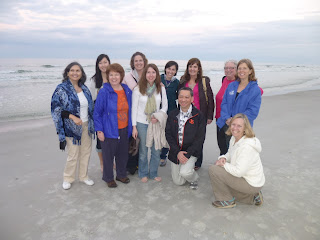 Last month, representatives from eight Sea Grant programs attended a two-day workshop in Jacksonville, FL hosted by Illinois-Indiana Sea Grant. Designed as an opportunity for specialists, educators, and communicators to build a national partnership on reducing pharmaceuticals and personal care products (PPCPs) in the nation’s waterways, the event was a first step in working towards coordinating these efforts.
Funded by the NOAA National Sea Grant Office, the workshop brought together a wide range of input from people who have extensive experience working on the issue of PPCPs in waterways, allowing for a tremendous collaboration.
Out of the two-day workshop came a unified message: The ways people choose to use and dispose of PPCPs impacts water quality everywhere.
In months to come, workshop participants will continue to work together to develop programs that carry that message to local communities.
“This is a national problem that requires local action. Sea Grant’s new working group is well-suited to tackle this issue because each program is trusted in their communities,” said Laura Kammin, IISG pollution prevention program specialist. “We are sharing our resources to create a strong and effective national partnership.”
The meeting also provided an opportunity for representatives from New York, Pennsylvania, and Illinois-Indiana Sea Grant programs to mentor others by sharing their award-winning work on reducing PPCPs in the Great Lakes basin. These and other discussions opened the door for collaboration with the North Carolina, Georgia, Florida, Oregon, and Southern California Sea Grant programs.
IISG has been providing communities with information about how to start safe, legal medicine collection programs since 2006. So far, IISG has helped 63 communities in Illinois, Indiana, Wisconsin and Michigan with single-day or permanent collection programs, ensuring the proper disposal of 9.65 million pills (81,813 pounds of unused medication).
For more information on IISG’s efforts to spread the word about proper use and disposal of PPCPs visit www.unwantedmeds.org.
March 4th, 2013 by Irene Miles
Carbon dioxide is contributing to a change in the chemical makeup of the world’s oceans, which is known as ocean acidification. This process may make it more difficult for shellfish and coral to survive in this new environment. But the oceans may not be the only bodies of water threatened by this dangerous change.
From The Great Lakes Echo:
The increased carbon dioxide changing the water chemistry and ecology of oceans may also be affecting freshwater and the organisms that live in it.
“Based on our preliminary modeling and understanding of carbon cycles, we think similar acidification trends will take place in the Great Lakes to the degree that researchers are expecting in the oceans,” said Galen McKinley, a professor of atmospheric and oceanic sciences at the University of Wisconsin.
Visit the Great Lakes Echo for the full article, which details potential impacts that these changes in water chemistry may have on the Great Lakes ecosystems.
February 22nd, 2013 by Irene Miles
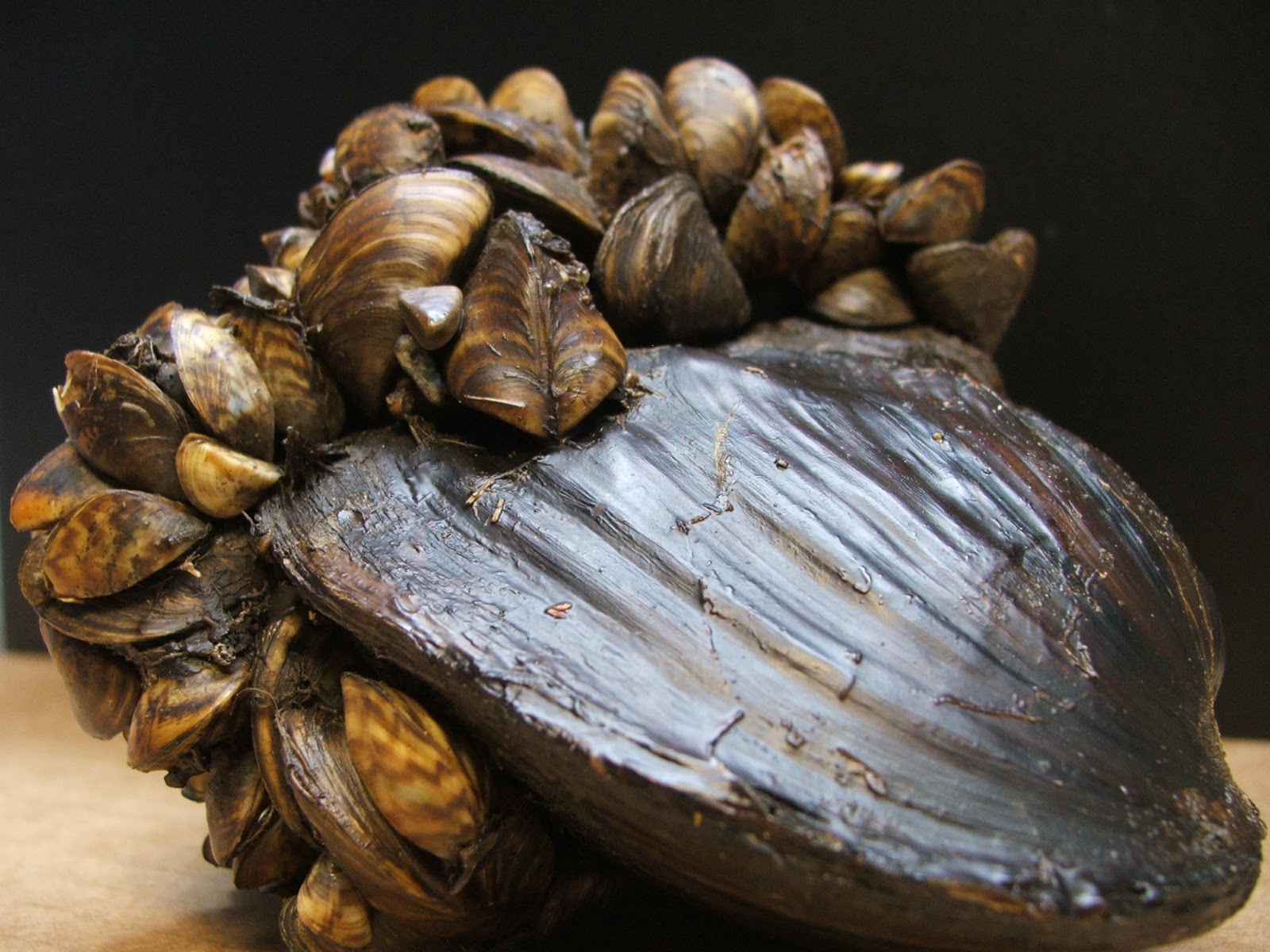
Danielle Hilbrich from the IISG aquatic invasive species (AIS) outreach team attended the Indianapolis Boat, Sport, and Travel Show at the Indiana State Fair Grounds in Indianapolis, IN, February 15-17. Danielle teamed up with the Indiana DNR to host a booth and educate recreational water users about the dangers posed by invasive species. Danielle talked with more than 800 attendees about AIS, and handed out hundreds of stickers and brochures. Many show attendees regularly boat on lakes infested with invasive species and were aware of problems that Zebra Mussels, Eurasian Watermilfoil, Hydrilla, and other invasive species can cause for aquatic ecosystems.
 Attendees were educated about the proper techniques to prevent the spread of aquatic invasive species, which include these simple steps: INSPECT and REMOVE any aquatic plants or animals from boats and recreational equipment, DRAIN all water from equipment, DISPOSE of unwanted live bait or fish into the trash, DRY equipment thoroughly, and never release organisms from one waterbody to another. One show-goer was surprised to find out that dumping bait in the trash was a way to prevent the spread of invasive species, and several others were glad to learn just how easy it could be to help keep these species from spreading to other waterways.
February 18th, 2013 by Irene Miles
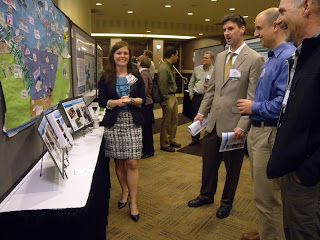 IISG’s Caitie McCoy attended the Seventh International Conference on Remediation of Contaminated Sediments last week to present her community outreach work with the Great Lakes Legacy Act (GLLA). The conference traditionally features environmental scientists and engineers, but that is changing. “We are starting to see more attention paid to community engagement at these types of conferences,” Caitie tells us. “Technical project managers realize that projects are easier to implement when the community understands and supports the work, and so they’re eager to learn from professionals who specialize in community engagement and stakeholder involvement.”
Caitie presented a poster on her educational program in northwest Indiana, which taught students about the GLLA sediment cleanup at Roxana Marsh on the Grand Calumet River. Instead of presenting a typical scientific poster full of text and graphs, Caitie displayed a mural that her fourth grade students made to represent the Roxana Marsh ecosystem.
“Some of my colleagues were a bit skeptical about me presenting a fourth grade mural to a bunch of technical folks, but I’m not afraid to shake things up,” Caitie said. “I wanted to use something eye-catching that would draw people’s attention toward my poster.” And it worked. Caitie was visited non-stop during the session and talked to more than 100 conference attendees about her program. When asked if she thought her poster made an impact, Caitie replied, “I would never have dreamed that someday engineers would be asking me how to replicate my educational program at their sites, so I take that as a big success.”
 Caitie will expand her programming throughout the Grand Calumet River community in 2013, as the Legacy program begins another phase of dredging this summer.
February 13th, 2013 by Irene Miles
The Sheboygan River, which was dubbed an “Area of Concern” in the 1980s for its high levels of environmental pollution and degradation, has just completed the final stages of a dredging project to clean and restore the river.
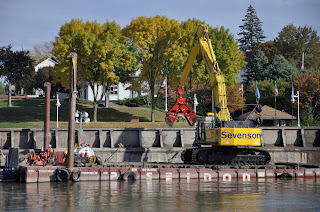 Approximately 300,000 cubic yards of sediment (equivalent to 15,000 dump trucks full) contaminated with PCBs and PAHs were removed from the river between August 2012 and early January 2013. As a result, river-goers will enjoy a deeper river with better navigation and access, and a cleaner habitat for fish and wildlife to thrive.
IISG’s Caitie McCoy worked with a local team throughout 2012 to provide information to stakeholders and the public on the project. She completed a study in March (PDF) with University of Illinois student Ada Morgan to learn how to communicate the sediment remediation project and its benefits to the public. The study helped the team tailor outreach products and messaging for everyone who uses and visits the river.
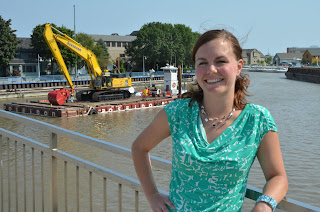 Work on the Sheboygan river will continue through 2013 to improve fish and wildlife habitats, both nearshore and underwater. “The dredging and habitat work are the last remaining actions necessary to take Sheboygan off a list of most polluted places in the Great Lakes,” wrote Caitie. “This has been an enormous team effort by the U.S. EPA and their partners, and we can’t thank the community enough for their support during the cleanup.”
February 12th, 2013 by Irene Miles
Low temperatures and more characteristic winter weather have turned parts of Lake Michigan into a frozen lunar landscape – perfect for some chilly but scenic photography.
From Michigan Live:
 “What a difference one year can make.
Last year Lake Michigan was nearly ice-free. But cold weather in 2013 has brought a return to the ice formations typical to West Michigan’s winter shoreline.”
Visit the link above for a great gallery of scenic shots from the frozen lakefront.
February 11th, 2013 by Irene Miles
Today’s blog post features a fun bit of physics from Wired.com’s science blog.
Writer Rhett Allain, professor at Southeastern Louisiana University, received an interesting question over Twitter – “What would happen if everyone on the planet jumped in the water?”
He writes:
“Let’s give a slightly refined version of the question.
‘If everyone on Earth went for a swim at the same time in Lake Michigan, how high would the water level rise?’
I have two primary assumptions to start with. First, I will assume that during this time the volume of water in Lake Michigan will be constant. So if the people make the water level rise, the water level will indeed rise instead of pushing water into the other Great Lakes. Second, I will assume that all of the humans in the lake are floating. If they aren’t ‘swimming’ or touching the bottom, then it will be easier to calculate the rise in the water level.”
Follow the link above for a fun Lake Michigan physics lesson.
February 8th, 2013 by Irene Miles
The frigid waters of Lake Michigan during a Midwestern winter may not seem very inviting to us, but some species spend a great deal of time there.
From Phys.org:
“On Nov. 2, 2010, Mueller documented 25,555 long-tailed ducks in Lake Michigan.
And on Jan. 20, 2011, 9,311 red-breasted mergansers were tallied.
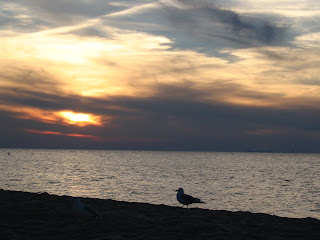 The data comes from the Lake Michigan Offshore Waterfowl and Waterbird Survey, a project initiated in 2009 by Mueller and Noel Cutright, both of the Western Great Lakes Bird and Bat Observatory in Belgium.
The work is designed to increase the understanding of key offshore Lake Michigan bird habitats, many of which have been lightly studied.”
Read more at the link above, including details about how the data they collect can help not only understand the presence and habitats of animals, but can guide safer development of energy production on the Great Lakes too.
February 7th, 2013 by Irene Miles
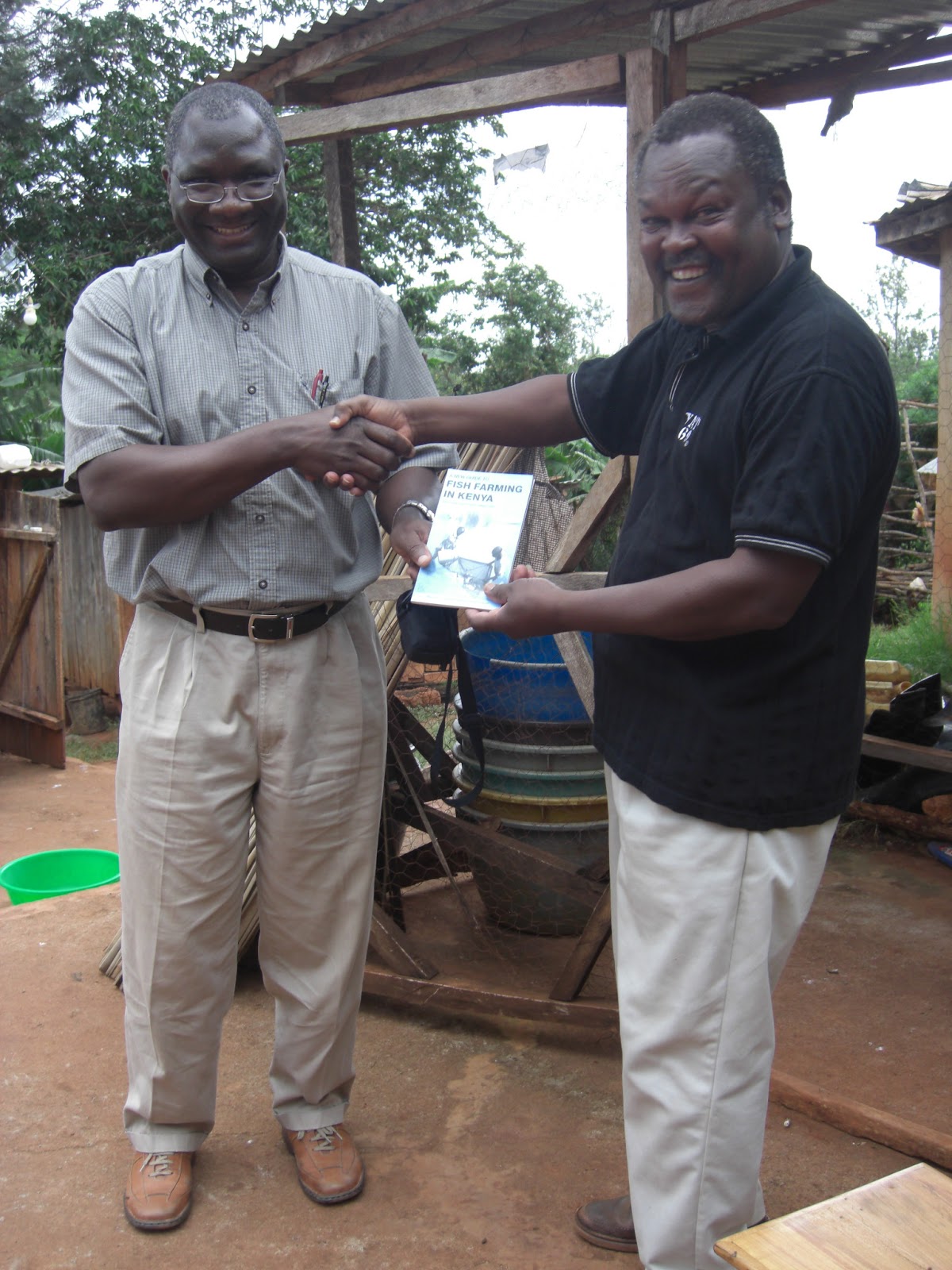
IISG’s Aquaculture Marketing Specialist Kwamena Quagrainie, who also directs the aquaculture economics and marketing program at Purdue University, was recently promoted to the position of Clinical Engagement Assistant Professor in Agricultural Economics. Dr. Quagrainie has been involved for many years in aquaculture marketing and outreach, helping numerous aquaculture operations get started or expand their business throughout the Midwest. He has also been involved in international efforts to promote and foster aquaculture operations throughout several African nations.
The Clinical Engagement professorship emphasizes transfer of applied research results to aquaculture communities small and large. The goal of this position is to promote active engagement in a field, which is the type of work that Dr. Quagrainie has been directly involved in for many years now. This promotion will give him even more opportunities to bring his expertise to aquaculture producers–helping businesses and communities grow.

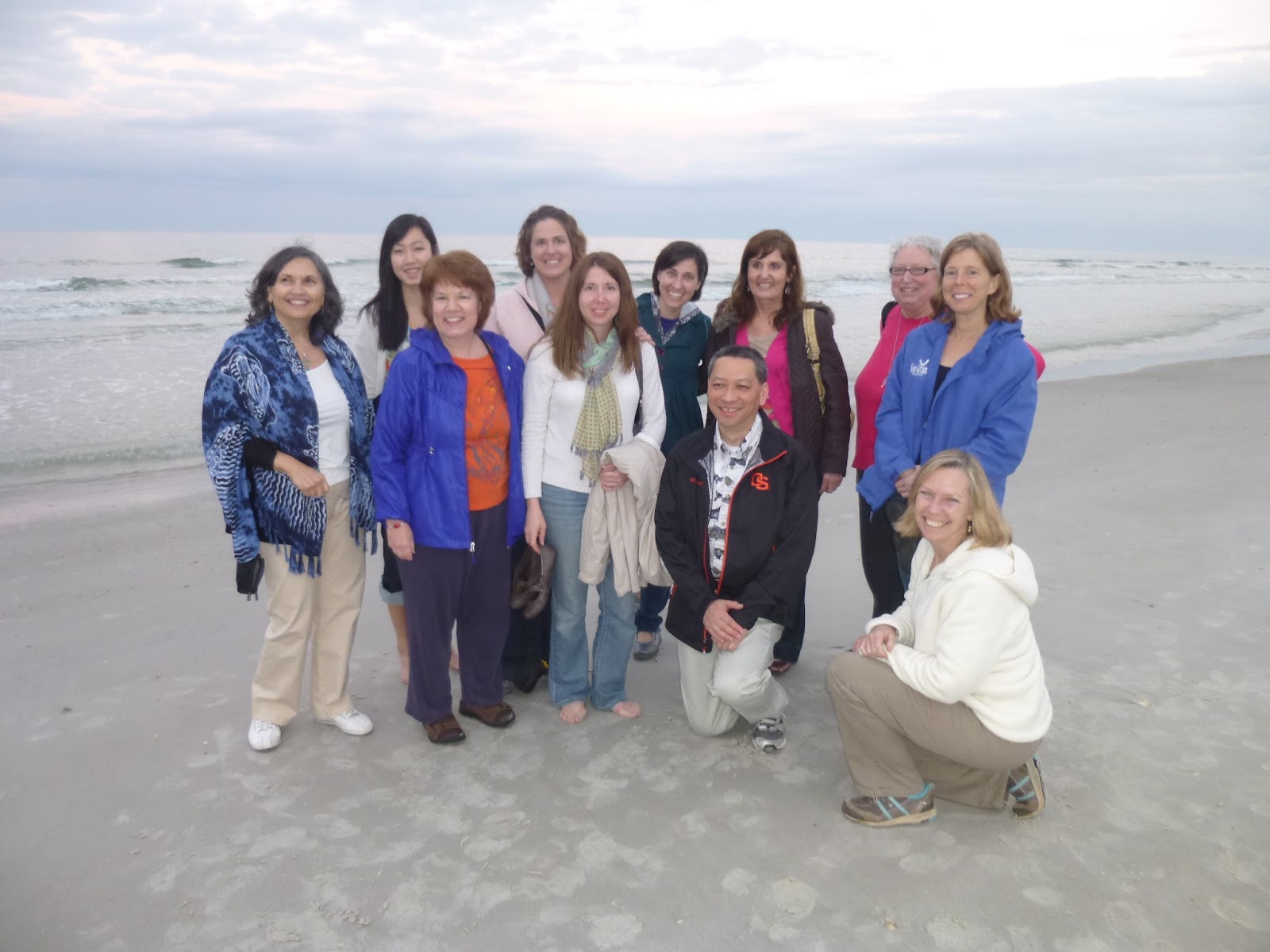 Last month, representatives from eight Sea Grant programs attended a two-day workshop in Jacksonville, FL hosted by Illinois-Indiana Sea Grant. Designed as an opportunity for specialists, educators, and communicators to build a national partnership on reducing pharmaceuticals and personal care products (PPCPs) in the nation’s waterways, the event was a first step in working towards coordinating these efforts.