Illinois-Indiana Sea Grant (IISG) announces $400,000 in funding for four new research projects focused on social and policy issues related to PFAS in the Great Lakes region. PFAS, or per- and polyfluoroalkyl substances, are known as “forever chemicals” because they don’t break down in the environment.
PFAS are used in a range of products, including nonstick cookware, water- or stain-resistant clothing or carpeting, cosmetics and even toilet paper. As a result, scientists are finding PFAS in waterbodies just about everywhere they look.
These substances have been associated with negative health effects, including a weakened immune system, kidney disease and cancer.
“Many federal, state and tribal organizations are now monitoring and detecting PFAS and related compounds in drinking water and fish,” said Tomas Höök, IISG director. “However, it may be unclear how organizations can communicate to the public about risks related to PFAS, and the public may struggle to determine what actions to take to reduce risk.”
Four new research projects have been recommended for funding to fill in these information gaps:
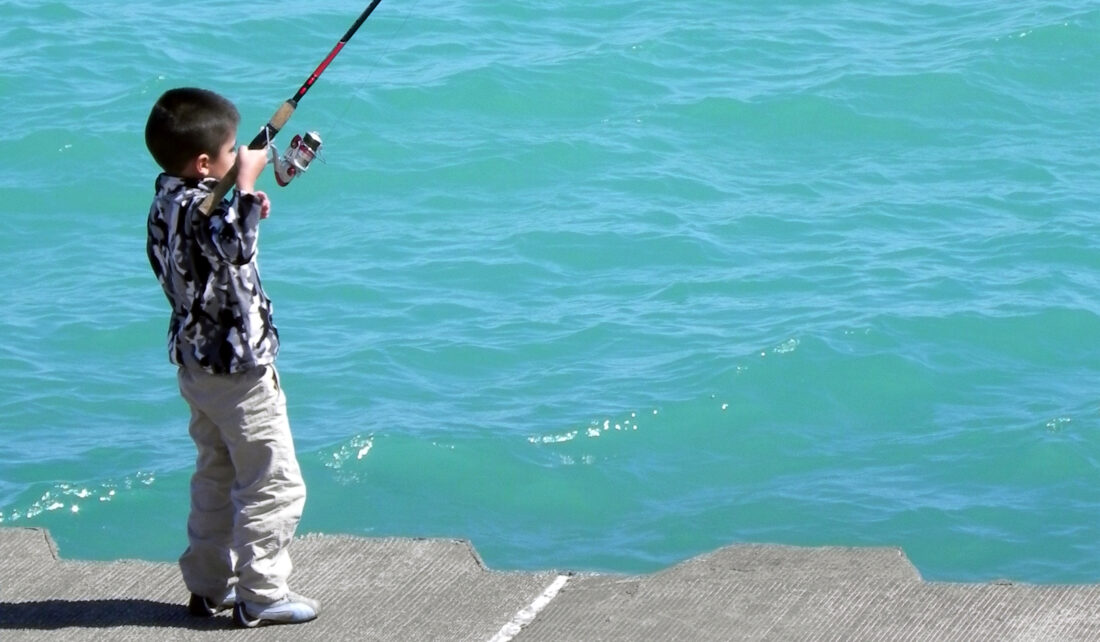
Through a listening session and surveys, Susan Buchanan, a medical doctor and an environmental health scientist at the University of Illinois Chicago and her team will engage with recreational anglers in two communities of color in Chicago, Illinois and Benton Harbor, Michigan to assess their knowledge about PFAS and related issues and their fish consumption levels. The researchers will work closely with on-the-ground local partners in both locations.
At the University of Wisconsin-Madison, Lyn van Swol, a communication scientist, will test the effectiveness of messaging to the public, with a special emphasis on Latino populations in the state. Her team will gather data on people’s internet searches related to PFAS information. Then they will test specific messages with municipal water users, and finally, test what messaging engages audiences on social media.
Ruohao Zhang, an agricultural economist at Pennsylvania State University will lead an effort to develop an online risk assessment tool to help residents of Michigan, New York and Pennsylvania get a better understanding of their exposure to PFAS related to their location and personal choices. The team will also assess the effectiveness of local regulations and advisories on public awareness and decisions related to PFAS levels.
Finally, to help inform state regulators and lay the groundwork for regional consensus regarding PFAS policies, Catherine Janasie, a senior research counsel at the National Sea Grant Law Center, will lead an effort to compile a list of all PFAS-related state laws and regulations in the Great Lakes and Lake Champlain regions. The team will then engage in comparative analysis of these policies and create case studies to further explore policy challenges.
“Researchers are continuously learning more and more about the prevalence of PFAS in the environment and their effects on humans, thereby complicating policy setting and communication about risks,” added Höök. “We hope these projects will collectively contribute to improved communication and consideration of policies related to PFAS in the Great Lakes region.”
IISG is working in cooperation with Great Lakes Sea Grant programs and with funding from the National Sea Grant Office to support these projects. Each team has been awarded up to $100,000 with an additional $10,000 directed to Sea Grant partners to develop and engage in related extension work.
IISG’s efforts to identify and fund these projects began with guidance from an advisory committee as a plan was developed to define social and economic knowledge gaps related to PFAS. Then, more than 70 representatives from at least 45 federal and state agencies, tribal nations, academic institutions and consulting firms joined in the scoping process. The results have been compiled in the PFAS Scoping Report.
Illinois-Indiana Sea Grant is a partnership between NOAA, University of Illinois Extension, and Purdue University Forestry and Natural Resources, bringing science together with communities for solutions that work. Sea Grant is a network of 34 science, education and outreach programs located in every coastal and Great Lakes state, Lake Champlain, Puerto Rico and Guam.