Environmental clean-ups can revitalize a waterway and nearby neighborhoods, but are they always good for everyone in a community? Are there people left behind, or worse, negatively impacted by the process or the results?
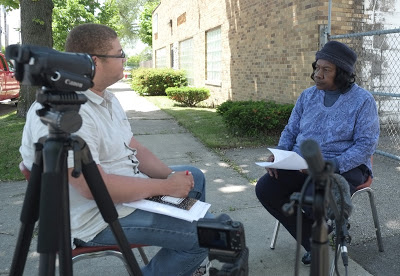
Bethany Cutts and Andrew Greenlee (pictured here left, with a Milwaukee resident), both University of Illinois researchers, are investigating these questions in conjunction with Great Lakes Legacy Act clean ups in Milwaukee’s Lincoln Park and the Grand Calumet River in northwest Indiana. In Milwaukee, they have been interviewing residents, as well as representatives from businesses and grassroots organizations that have a stake in river management activities to learn how the remediation experience is playing out for more vulnerable members of the community.
Social vulnerability is a measure that is typically used when a community goes through turbulent change, which is mostly disasters. Vulnerable populations are defined by census categories—low income, minorities, single mothers, the elderly, for example.
“Socially vulnerable populations generally have a lack of capacity to recover from these setbacks or do not have a voice during the community decision process,” said Cutts. The interviews provide an opportunity to inform how vulnerable populations are characterized and it can help target outreach during remediation projects.
According to El Lower, a Master’s student working on this project, one preliminary finding in these taped interviews is that generally, residents tend to think about different river restoration projects together. They don’t separate them in terms of who is funding the work or the different project goals.
In the Milwaukee area, this means that the Great Lakes Legacy Act project, which has led to the removal of many cubic yards of contaminated sediment, may become viewed by residents as connected to a controversial plan to remove the Estabrook Dam upstream.
Caitie Nigrelli, IISG social scientist, affirmed that at public meetings for the Lincoln Park sediment remediation project, discussions were overtly steered away from the contentious dam.
Through listening to residents and their strong opinions on the dam, the research team has come to have some advice for environmental organizations and agencies involved in other nearby restoration projects. “The conflict the dam generates may help outreach coordinators more successfully address residents’ questions and concerns regarding the Milwaukee River as a whole,” said Cutts.
Also, the dam project provides a ripe opportunity to hear from vulnerable populations. For her Master’s project, student Kaitlyn Hornik (pictured on right with El Lower) will create a video from interviews and focus groups to share the opinions of those who are not typically heard, which will be shown at a community meeting. “Public forums can be intimidating. The video can open people’s eyes to different points of view,” she explained. “It helps create a level playing field.”
Next, the researchers will turn their sights to northwest Indiana where the Grand Calumet River has been undergoing remediation for several years to learn how this is impacting residents.
“We need to think about socially vulnerable groups and if possible include them in the process,” said Cutts. “Analyzing how change can occur is important. The remediation process can be opportunity to have more compassion regarding how this process impacts people.”
-Irene Miles