
IISG’s Caitie McCoy has been heavily involved in the Sheboygan River AOC project, helping to provide information to the community and to all of the agencies and individuals involved in the project.
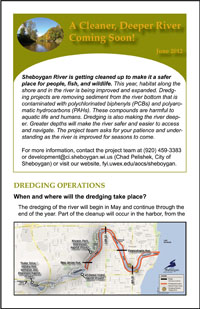
 

The cleanup and remediation of the area is well underway, and a new publication answers the most common and important questions that community members have had about the project. 

 
Available now for download, the pamphlet “A Cleaner, Deeper River Coming Soon!” addresses questions ranging from specific areas that will be dredged, disposal of the polluted materials that are removed, and positive impacts for wildlife and the community once the project is complete. 
 
You can learn more about the work in Sheboygan on the project website.

IISG Instagram

Coastal protection is not limited to concrete, rocks, and steel. Coastal protection solutions exist on a spectrum, ranging from softer “green” solutions to harder “gray” structures.Nature-based coastal solutions fall between green and gray techniques, providing multiple benefits to people and habitats.Our three-part video series, Nature-Based Coastal Solutions in the Great Lakes, is now available to watch. Learn how nature-based coastal solutions, including nature-driven and hybrid approaches, can protect shorelines while supporting ecosystems and communities.Watch the 3-part video series at the link in bio.(Photo credit: Liz Spitzer, Illinois State Geological Survey, Coastal Research Group)
Managers and researchers can be faced with a need to classify the risk of new crayfish invaders. Rapid assessment tools, such as the Science-based Tools for Assessing Invasion Risk (STAIR), can assist in this process by providing a streamlined framework for analysis and decision-making.Join us for an ICC webinar with John Bieber from Loyola University Chicago to learn how rapid assessment tools are used to classify invasive species risk and how STAIR can support invasive crayfish management.Learn more at the link in bio.