Last month, the U.S. EPA awarded University of Illinois at Chicago and University of Illinois at Urbana-Champaign first and second prizes in their Campus RainWorks Challenge. The national competition recognizes student-led green infrastructure plans and projects to manage stormwater on campus. Eliana Brown, has been following the UIUC plan from the beginning.
The first time I heard that landscapes could be designed to improve water quality, it was a revelation. I knew about the highly-effective bioremediation treatment cells at industrial facilities. But, the fact that the landscapes we walk through in our daily lives could have that power was exciting. What came to be known as “green infrastructure” is an elegant blend of landscape architecture and civil engineering that places of higher learning should embrace.
The EPA Office of Water seems to agree. Since 2012, it has invited students to design innovative green infrastructure projects to show how managing rainfall in a more natural way can benefit their community and the environment.
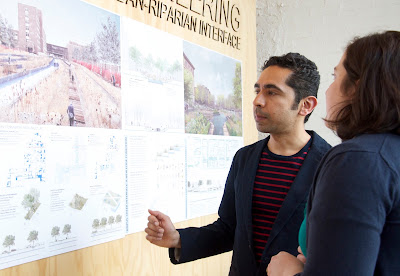 Because I’m fond of the small creek running through the University of Illinois’ engineering college—known as Boneyard Creek—I have always wanted to see an entry from my campus. This year, I got my wish and then some. U.S. EPA announced on Earth Day that “Reverse Engineering: The Engineering Campus as Catalyst,” a master plan designed by a multi-disciplinary team of UIUC students under the direction of landscape architecture instructor Tawab Hlimi earned 2nd place. According to the EPA, 64 teams from 23 states submitted entries.
The plan focuses on improving water quality in Boneyard Creek by installing green streets, roof catchments, bioswales, and rain gardens in the surrounding area. Native plants and pollinator habitats are also proposed to boost the creeks’ ecological role and create more recreational opportunities.
Building off this success, Hlimi and teaching assistant Faezeh Ashtiani showed the plan along with the work of their spring semester students in an exhibit called “Reverse Engineering: Reconfiguring the Urban-Riparian Interface” at [CO] [LAB] in downtown Urbana. Students expanded on the Campus RainWorks plan upstream and in other parts of campus, including three visions of Dorner Driver Retention Pond that add water quality filtration to the existing water storage function.
Looking to the future, Hlimi has applied for a Student Sustainability Committee grant to build a multi-purpose demonstration rain garden.
.
Aging pipes and pollution runoff are big concerns in any city, and the cost to repair or replace old systems is very high. Often it means downtime for entire streets and systems, and a very big price tag to boot.
But cities worldwide are adopting green infrastructure elements to help manage numerous factors, from excessive burden on old systems to pollution management and more.
“Gray infrastructure is the system of pipes and ditches that channel storm water. Green infrastructure is the harnessing of the natural processes of trees and other vegetation — so-called ecosystem services — to carry out the functions of the built systems. Green infrastructure often intercepts the water before it can run into streets and become polluted and stores the water for gradual release through percolation or evapotranspiration. Trees also clean dirty water through natural filtering functions.
Advocates say green infrastructure isn’t just about being green — it makes financial sense, as well. Its cost-effectiveness depends on how benefits are assigned and valued, and over how long a time scale, but green has been shown to be cheaper than gray.”
The article (linked above) features much more information about green infrastructure examples, from Seattle to Sweden and many points in between.
Loyola University in Chicago is committed to the environment in a number of ways, and one of their approaches holds benefits for Lake Michigan as well.
<span”>The University recently installed their seventh green roof system, this one on Cuneo Hall. Green roof systems provide a number of benefits, but one of them is the reduction of rainwater runoff. By providing natural materials to absorb, filter, and utilize the water, it reduces pollution and runoff volume that can wind up negatively impacting the Lake.</span”>
From the article on Earth Techling:
“A green roof acts like a natural sponge that absorbs stormwater and curtails runoff,” Aaron Durnbaugh, the university’s director of sustainability, explained in a statement. He went on to note that the university’s Chicago campus is located on the shores of Lake Michigan, which makes reduced runoff a real priority for protecting local water quality.”

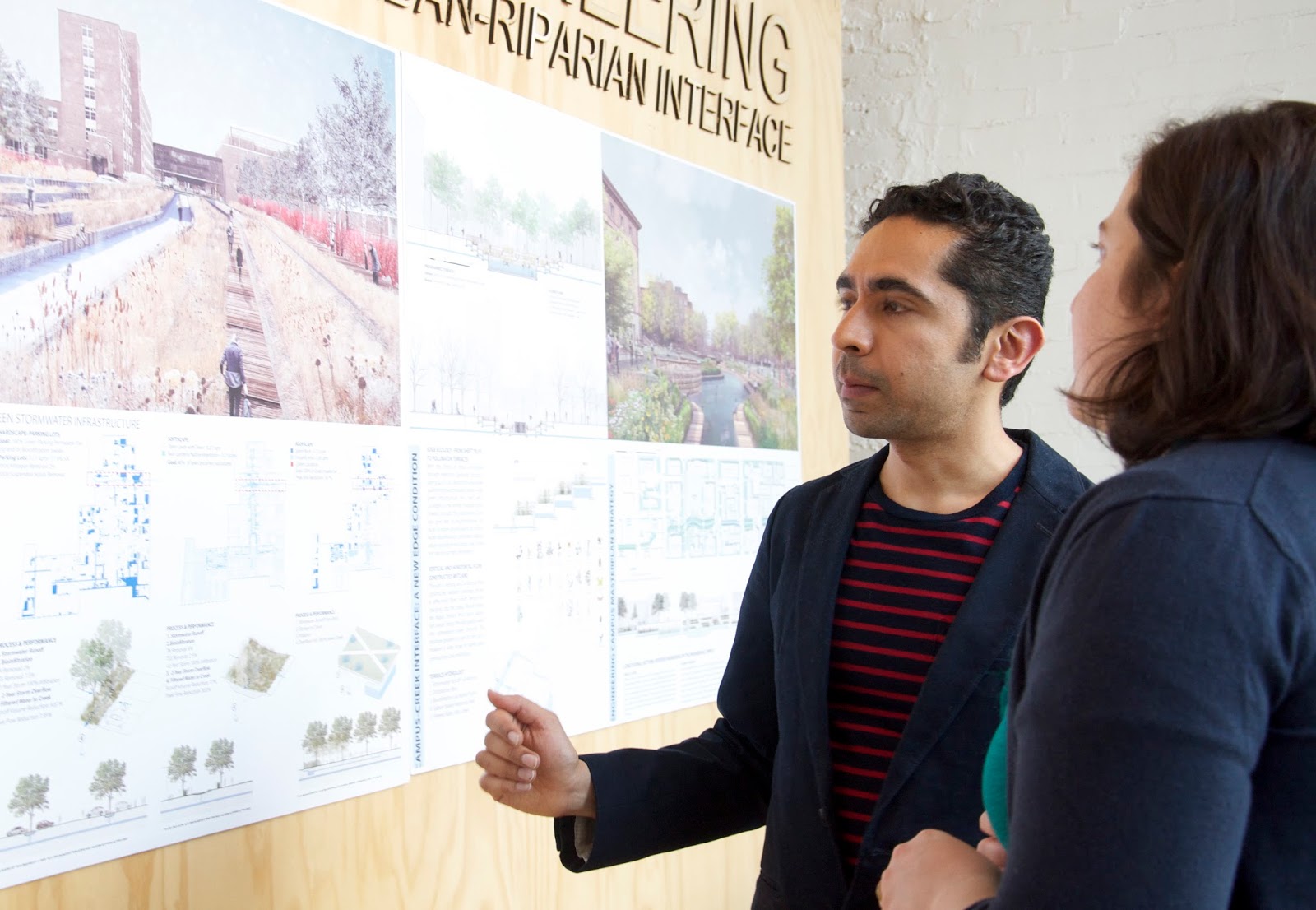 Because I’m fond of the small creek running through the University of Illinois’ engineering college—known as Boneyard Creek—I have always wanted to see an entry from my campus. This year, I got my wish and then some. U.S. EPA announced on Earth Day that “Reverse Engineering: The Engineering Campus as Catalyst,” a master plan designed by a multi-disciplinary team of UIUC students under the direction of landscape architecture instructor Tawab Hlimi earned 2nd place. According to the EPA, 64 teams from 23 states submitted entries.