June 20th, 2014 by iisg_superadmin
Two years ago, a group of middle school students planted native seedlings along the banks of Roxana Marsh to celebrate the successful cleanup of the waterway. On Monday, those same students returned for another day of learning and service to find the marsh in bloom – thanks in large part to their efforts.
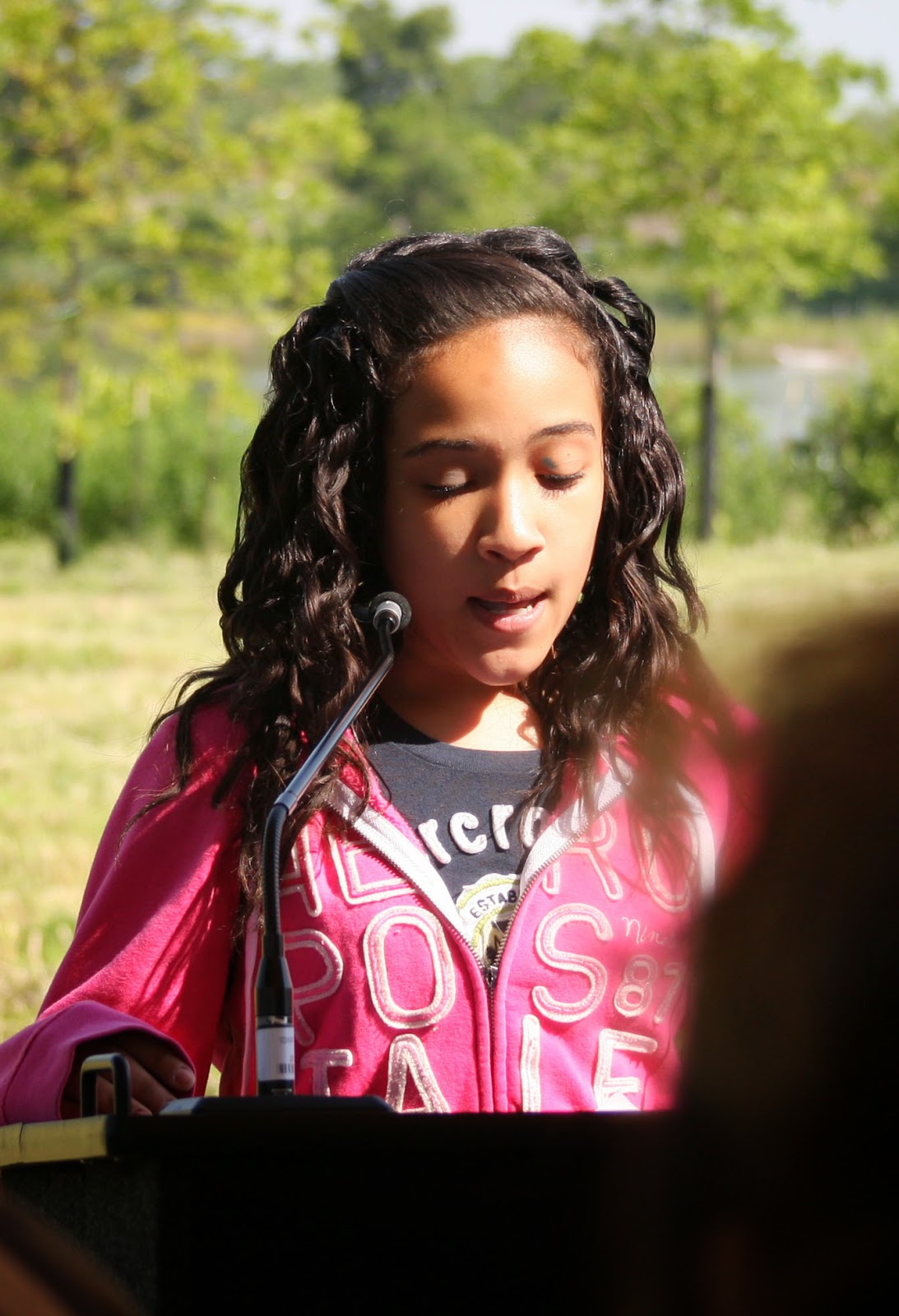
“It’s good to know that we did something phenomenal to help our environment,” said Sandra Olivarria, one of the East Chicago Lighthouse Charter School students participating in the event.
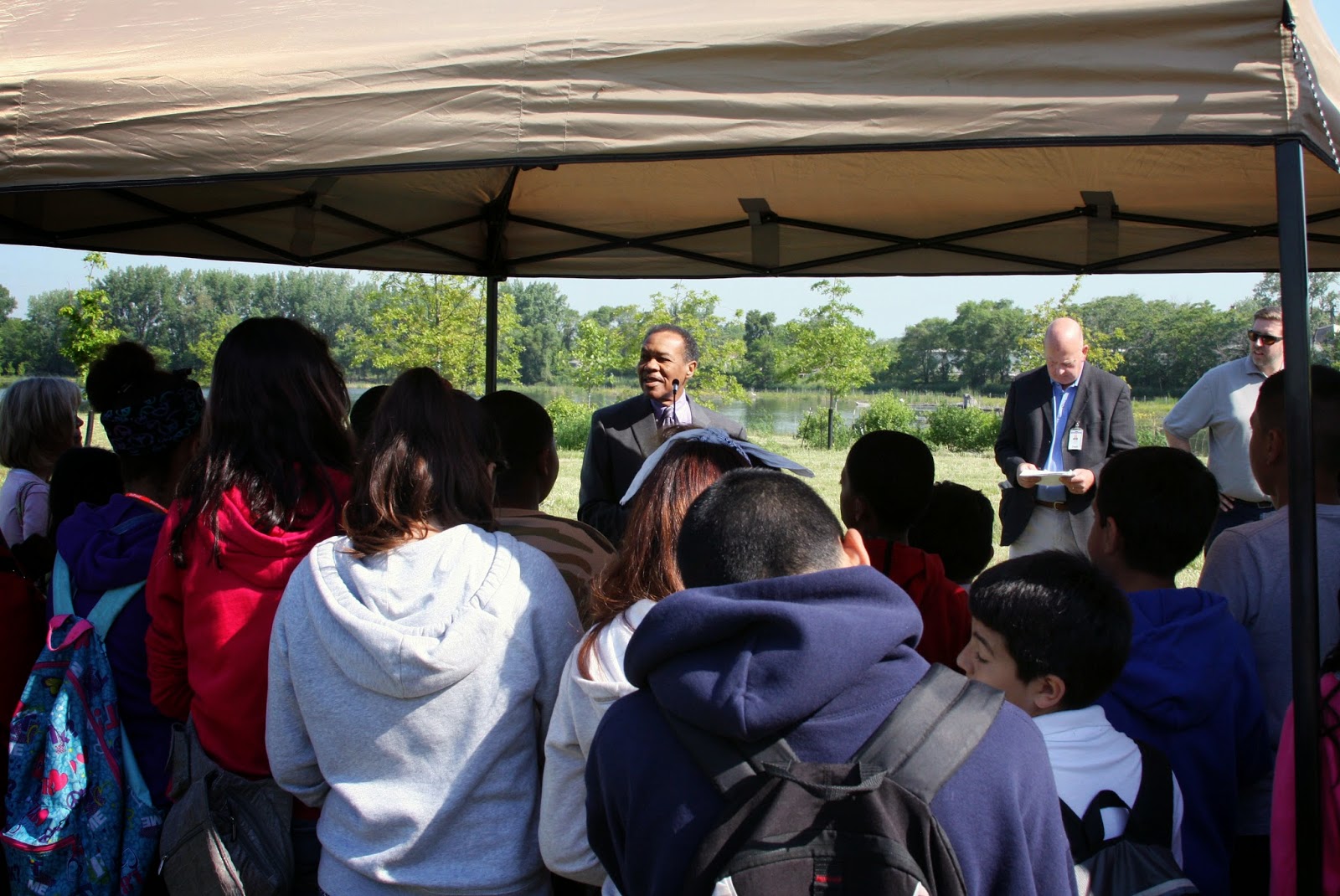
Monday morning’s stewardship began with speeches from state and local officials, including Indiana Representative Earl Harris, Senator Lonnie Randolph, and Mayor Anthony Copeland of East Chicago.
“We need to start to get everyone involved in this kind of project at an early age so that when you grow up, you become part of something that keeps you involved for the long term,” Representative Harris said.
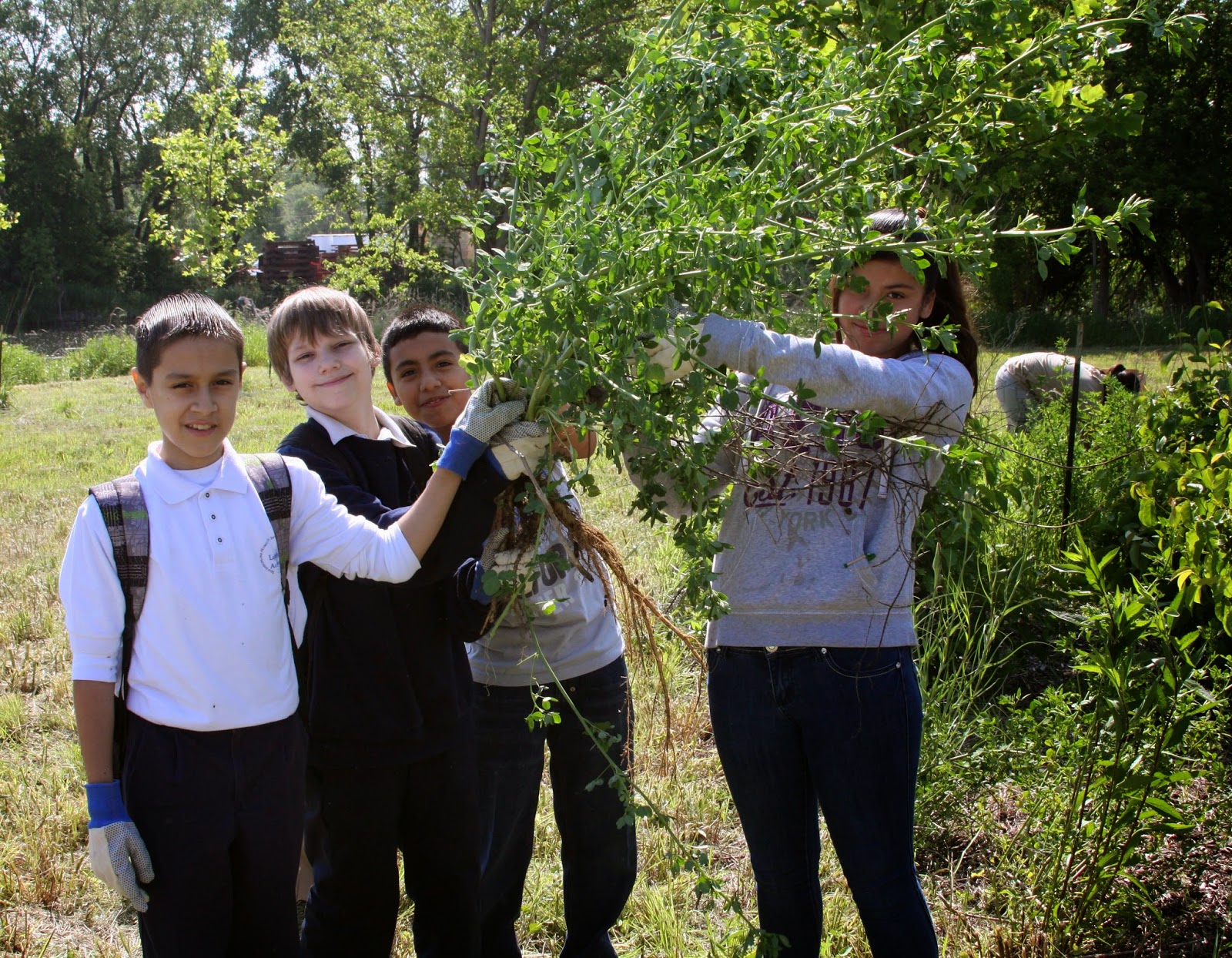
 The rest of the day was devoted to hands-on activities that encouraged students to get familiar with the plants and animals inhabiting the area. The class looked at native and non-native plant species growing around the marsh, then checked on the flowers they had originally sprouted in their classroom. The kids worked together to pull up the invasive clover that had grown around their plantings – a little tricky at times, they said, but “pretty fun, too.”
“It feels so good to come back and see what we did two years ago, and see it all grown and restored!” one student exclaimed.
 Down by the water, volunteer scientists helped students take samples of mud from the marsh to collect bottom-feeding aquatic animals that lived there. The students identified various species of worms, snails, larvae, and tadpoles, and were delighted at the chance to handle these small creatures.
The class also cleaned up trash from the marsh and along Roxana Drive, helping to beautify the area.
“I’m really proud of all the work the students performed today,” said IISG environmental social scientist Caitie McCoy. “It was thrilling to have them come back and take care of a beautiful environment that they helped create. Today, nature was our classroom, and I think the students learned a lot.”
Roxana Marsh is now home to blue herons, wild irises, and all sorts of aquatic life. But it wasn’t always that way. Located on the Grand Calumet River, the marsh was heavily polluted for more than a century with byproducts of heavy industry around East Chicago. Federal and state agencies worked to dredge the river, removing contaminated sediment and restoring the surrounding habitat as part of the U.S. EPA’s Great Lakes Legacy Act.
 Monday’s restoration activities and press event brought together partners from the US EPA Great Lakes National Program Office, US Fish and Wildlife, Indiana Department of Environmental Management, Indiana Department of Natural Resources, Illinois-Indiana Sea Grant, The Nature Conservancy, and Shirley Heinz Land Trust. The Roxana Marsh cleanup and Caitie’s work to improve community engagement here and at other Areas of Concern is possible because of the Great Lakes Restoration Initiative and the Great Lakes Legacy Act.
Teachers interested in integrating AOC issues into their classroom can find activities and other resources in our Helping Hands curriculum.
June 19th, 2014 by iisg_superadmin
 The APEX awards are given each year by Communication Concepts to recognize outstanding publication work in a variety of fields, and Illinois-Indiana Sea Grant projects were selected this year for awards in two categories.
Laura Kammin and Anjanette Riley of our Unwanted Meds program received an award in the category of Green Writing for their edition of UpClose with researcher Rebecca Klaper. The UpClose series interviews professionals working in the pollution and water quality fields to learn about the latest discoveries and projects related to pharmaceuticals and personal care products.
 Additionally, Sarah Zack, Pat Charlebois, and Jason Brown were awarded in the Green Campaigns, Programs & Plans category for their work on our “Be A Hero – Transport Zero” campaign and messaging, and for the www.TransportZero.org website. The campaign is designed to show boaters, fishermen, and other recreational water users how simple it can be to help prevent the spread of aquatic invasive species between water bodies.
These projects are just two of the many that IISG continues working on to help the public learn about, protect, and preserve Lake Michigan and waterways throughout the two states. To learn more, visit our website.
June 18th, 2014 by iisg_superadmin
IISG’s Pat Charlebois and Sarah Zack were members of a committee on recreational water use, and Pat co-chaired a committee on water garden guidelines, both aimed at preventing the spread of aquatic invasive species (AIS) through these two pathways. The committees recently completed their report, Voluntary Guidelines to Prevent the Introduction and Spread of Aquatic Invasive Species; Recreational Activities and Water Gardening, which provides guidelines for recreational water users and water gardeners to follow.
The steps listed include cleaning, draining, and drying all recreational equipment (boats, vests, trailers, etc.) following a day on the water (for recreational water users), and purchasing/planting native plants or properly disposing of unwanted specimens (for water gardeners).
There are more simple steps outlined in the two documents that can help prevent the spread of invasive species through these two pathways, as well as information about the importance of protecting waterways and native ecosystems. Visit the links above to read the complete reports, and visit our “Be A Hero – Transport Zero” and “Stop Aquatic Hitchhikers” webpages for additional information.
*Note: This post originally listed Pat Charlebois as a co-chair of the recreational water users committee and omitted Sarah Zack’s participation. The text has been corrected.
June 17th, 2014 by iisg_superadmin
The efforts of an Illinois teacher to bring Great Lakes science into the classroom were brought center stage in the latest edition of Teacher Features, a monthly online series that showcases outstanding educators in the Great Lakes region.
Eileen DeJong, a teacher at Suak Village’s Rickover Junior High, is one of 14 teachers from Illinois and Indiana who learned about local aquatic ecosystems and ideas for hands-on stewardship activities at last summer’s B-WET workshop. In this edition, she talks about the importance of raising awareness of Great Lakes issues, past classroom projects, and her plans for the future.
From Teacher Features:
1. Why do you think it’s important to infuse Great Lakes topics in education?
I think it’s important that I incorporate information about our Great Lakes into my teaching because our school is impacted in many ways by one of the Great Lakes (Lake Michigan). Students respond to information that makes sense to them and that affects their life, and because Lake Michigan is so close to us (within 45 minutes); it’s a great way to get students involved in current environmental issues. We can study about aquatic invasive species affecting Lake Michigan and then GO TO Indiana Dunes, for example, and conduct experiments there. Or … even closer to home, we can study about invasive species harming our local forests, and then GO TO nearby forest preserves and volunteer. It’s all about making connections. Studying the Great Lakes topics make science REAL for my students and helps foster natural curiosity about their surroundings. It is also important because the problem of invasive species is a current environmental issue, and it’s happening in our own backyard. It encourages my students to become knowledgeable about factors affecting their living environment and to become activists for change.
Continue reading at the link above.
Teacher Features is part of the Center for Great Lakes Literacy’s (CGLL) ongoing efforts to boost awareness of issues facing the Great Lakes watershed and inspire greater community stewardship. The group is led by Sea Grant educators throughout the region and conducts numerous teacher trainings each year, including the annual Shipboard Science workshop.
June 16th, 2014 by iisg_superadmin
It’s beach season once again in southern Lake Michigan, and the rip current warnings have already begun.
The National Weather Service (NWS) has issued at least one advisory since Illinois and Indiana beaches opened last month asking beach-goers to think twice before taking a dip in the lake. And for good reason. Rip currents and other dangerous currents are the biggest threat to Great Lakes swimmers. Roughly 140 people have drowned in the lakes over the last 12 years due at least in part to dangerous currents. And most of those incidents happened in Lake Michigan.
Illinois-Indiana Sea Grant hopes to bring these numbers down with a new outreach effort that will raise awareness about dangerous currents in the Great Lakes. The “Implementing Dangerous Currents Best Practices” project was recently awarded funding from the NOAA Coastal Storms Program.
A collaborative effort Sea Grant programs in Michigan and Wisconsin, the project will include print and online resources—including educational videos—that introduce the science behind rip currents, provide tips for avoiding them, and explain what to do if you or others are caught in one. Many of these resources will be available in both English and Spanish.
Watch for further information on these outreach efforts and rip currents in the coming months. In the meantime, you can find tips for staying safe at the beach this summer at dangerouscurrents.org.
“Implementing Dangerous Currents Best Practices” continues years of efforts by Great Lakes Sea Grant programs, NOAA, and NWS to reduce dangerous currents drownings across the region. To learn more about these efforts, visit Rip Current Safety.
June 13th, 2014 by iisg_superadmin
The Illinois Clean Marina Program celebrated its one year anniversary last month by certifying DuSable Harbor as the newest clean marina—bringing the state total to six.
The harbors earned their clean marina status by implementing a series of best management practices that make marina operations more efficient and environmentally friendly. Practices cover a range of topics—everything from marina construction to vessel maintenance to waste handling. Most are easy and affordable, such as watering plants deeply but infrequently and encouraging boaters to share excess paint instead of storing or disposing of it improperly. Others help marina personnel educate and train boaters on what they can do to protect habitats and improve water quality.
In addition to outlining best practices, the guidebook provides important information on laws and permit programs, connects readers with additional resources, and includes clean boating tip sheets that can be distributed to boaters. Illinois DNR also provides training and support as marinas work their way through the certification processes.
Illinois is one of six states in the Great Lakes region with a volunteer program that empowers boaters and marina personnel to preserve habitats and prevent pollution. The Illinois program was developed by IDNR, CPD, IISG, and representatives from the marina industry. Funding for the program and guidebook comes from a Great Lakes Restoration Initiative grant.
June 6th, 2014 by iisg_superadmin
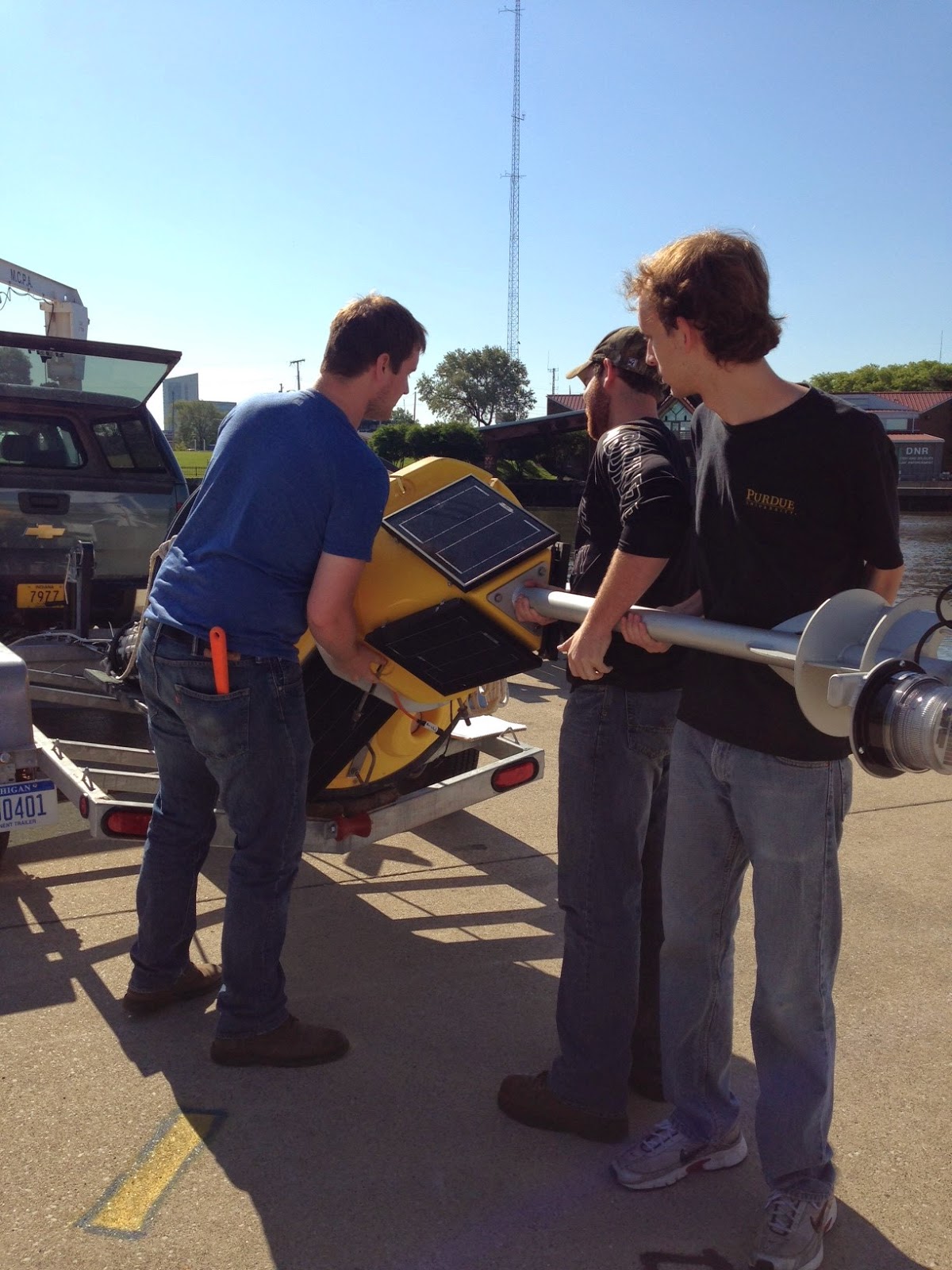
The Michigan City buoy returned to the nearshore waters of Lake Michigan on June 5—this time with an upgrade that boaters, anglers, and researchers have been eagerly awaiting. In addition to broadcasting real-time data on wave height and direction, wind speed, and air and surface water temperatures, the improved buoy now relays water temperatures at different depths.
The sensor chain, which measures water temperatures approximately every 3 ft. from the surface to the bottom of the lake, will help kayakers know when the water is warm enough to paddle out and make it easier for anglers to find and catch their favorite fish. A more comprehensive picture of nearshore water temperatures is also vital for research on fisheries and nearshore hydrodynamics.
“We’ve been getting a lot of positive feedback asking us when the buoy will be in the water again,” said Carolyn Foley, IISG assistant research coordinator. “And they’re all excited to hear that we’ve added a temperature chain to our setup. The nearest buoy with a similar chain is about 30 miles away.”
Real-time data will be available on IISG’s website until the buoy is pulled out for the winter in mid-October. The site currently shows snapshots of lake conditions—updated every 10 minutes—as well as trends over 24-hour and 5-day periods. Buoy-watchers can also download raw historical data at NOAA’s National Data Buoy Center.
Later this summer, IISG will be hosting a workshop designed to help educators develop science, math, and stewardship projects using the real-time buoy data. The workshop is scheduled for August 6 at Purdue University North Central.
June 4th, 2014 by iisg_superadmin
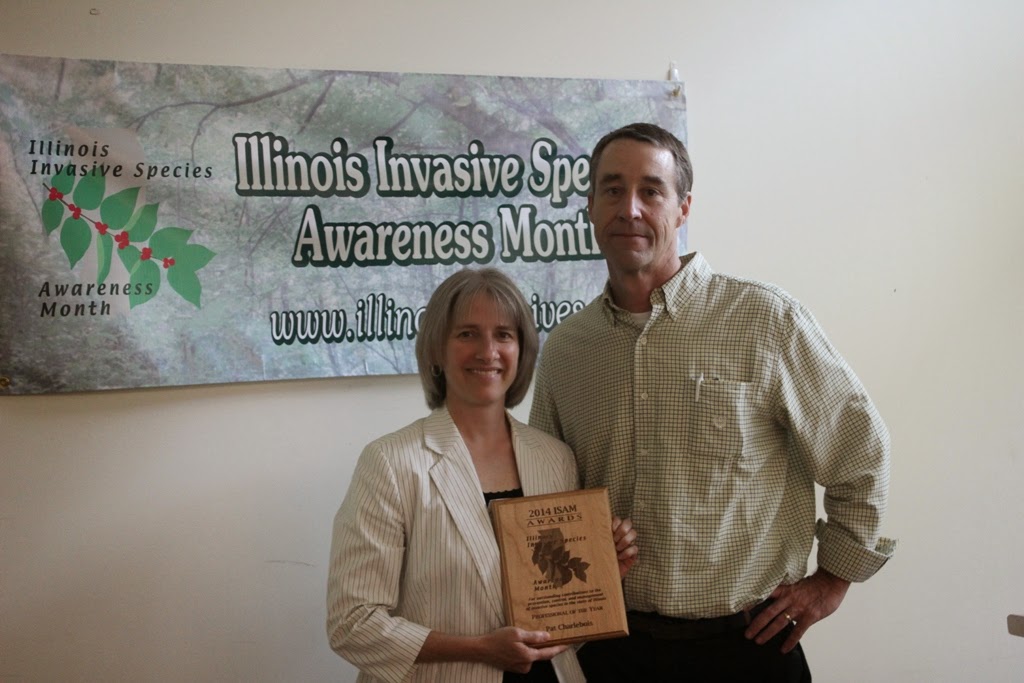
Illinois-Indiana Sea Grant’s Pat Charlebois was one of the professionals selected for this year’s ISAM awards. Recognizing outstanding invasive species work in the state of Illinois, the awards are an annual opportunity to highlight just some of the many important projects dedicated to protecting Illinois’ land and water from invasives.
“In 2011, the ISAM committee decided to initiate an awards program to formally recognize and honor outstanding contributions to the prevention, control, and management of invasive species in the state of Illinois. For 2014, The Illinois Invasive Species Awareness Month Committee would like to recognize recipients in five categories: Professional of the Year, Volunteer of the Year, Professional Organization of the Year, Business of the Year, and Educator of the Year. Recipients of the 2014 ISAM awards were officially recognized at an awards ceremony in Springfield at the Illinois Department of Natural Resources (IDNR) office. IDNR Office of Resource Conservation Director Jim Herkert was on hand to present the awards. The ceremony was part of the 2014 Illinois Invasive Species Symposium on May 29th, 2014 at the IDNR Office Building in Springfield, IL…
Pat is receiving this award for her leadership in aquatic invasive species education, outreach, messaging, and policy throughout the state. Pat’s hard work has contributed significantly to increasing the public’s awareness of aquatic invasive species. Through her efforts, the new ‘Be a Hero, Transport Zero’ campaign is being expanded towards a comprehensive campaign to address all invasive species spread throughout Illinois. In addition, Pat has been instrumental in supporting policy changes, such as the addition of 27 new aquatic plants to the Illinois Injurious Species list.”
Read about the other award recipients and their work protecting Illinois’ environment at the link above.
May 29th, 2014 by iisg_superadmin
The Illinois and Indiana Departments of Natural Resources, along with several other state, local, and federal agencies, are joining forces to coordinate a survey of Calumet Harbor and Lake Michigan waters. The efforts will help search for and combat aquatic invasive species.
“The exercise – including intensive netting and electro-fishing – will be the first of its kind utilizing provisions of the new Mutual Aid Agreement for Combating Aquatic Invasive Species, signed at the Council of Great Lakes Governors meeting on April 26 in Chicago…
Crews coordinated by the Illinois and Indiana Departments of Natural Resources are deploying boats on Chicago’s Calumet Harbor, and on adjoining waters of Lake Michigan on both sides of the Illinois-Indiana state line, for electro-fishing and netting to determine whether invasive Eurasian ruffe are present.
‘Aquatic invasive threats know no national or state boundaries. Our ability to sample fish communities, respond quickly, and effectively communicate on efforts could be critical in the future to respond to a threat within the Great Lakes basin,’ said Indiana DNR Aquatic Invasive Species Coordinator Eric Fischer.
Eurasian ruffe, an eastern European species of fish, have been found in Lake Superior since the mid-1980s, have a similar diet and feeding habits of native fish, and could present problems for the food web in Lake Michigan. Researchers detected environmental DNA of Eurasian ruffe in Calumet Harbor last year.”
Read the complete article at the link above.