
One year has passed for Monica Gregory, Illinois-Indiana Sea Grant’s first NOAA Coastal Management Fellow. We caught up with her to hear about her first year. Monica will be finishing her two-year fellowship in July 2018. Stay tuned for her final installment.
“It’s hard to believe that it’s been over a year since I was selected as a NOAA Coastal Management Fellow (CMF) for North Carolina. I remember receiving the email invitation to interview for the project; I was thrilled (and nervous!) for the opportunity to fly to Charleston and meet potential employers. I was lucky enough to connect with the project in North Carolina, and here I am!
My office is with the Division of Coastal Management in Morehead City. I am halfway through my main project on community resilience planning. I am working with five pilot communities in North Carolina to map their social and physical vulnerabilities to coastal hazards. I have completed my work with town managers and planners to map their towns. This fall, I will be facilitating workshops and public meetings for resident input.
We hope to use the maps to identify priority areas for resilience work, then create a comprehensive list of resilience projects that could be feasible for each town depending on their unique circumstances. The overall idea is to create a larger framework guide on resilience planning for coastal communities in North Carolina. Our five case studies will be references for communities that are experiencing similar issues.
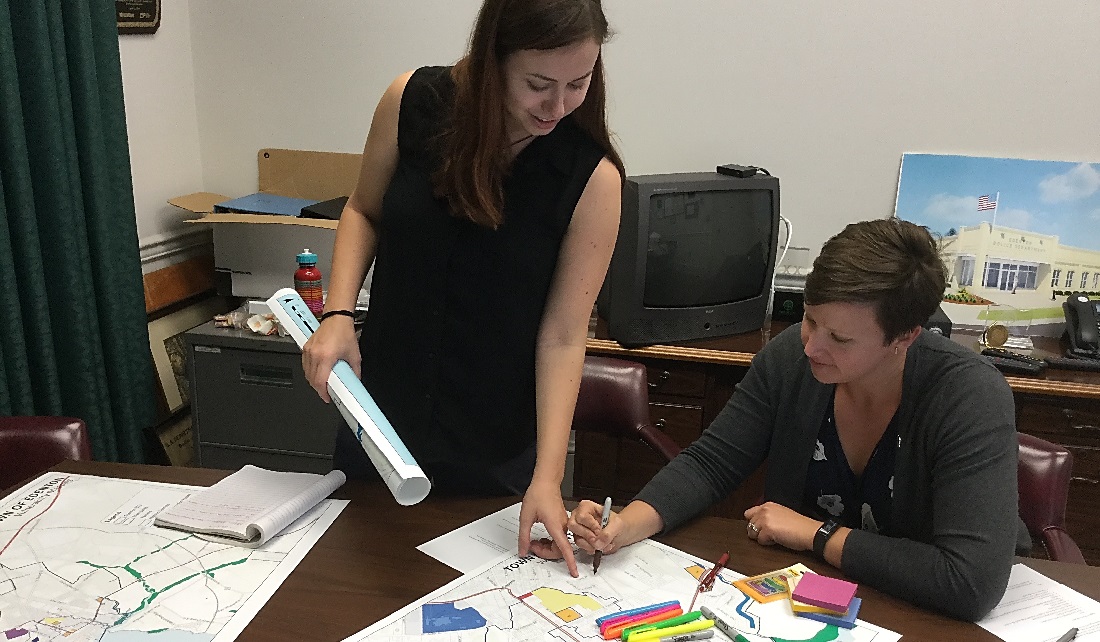
Monica (left) and DCM planner Rachel Love-Adrick mapping Town of Edenton’s vulnerabilities
August marks my one year anniversary as a CMF. In that time, I have had the chance to dig into my project, to learn all about the field of resilience and hazard mitigation, and to meet inspiring people in local government, as well as NOAA and The Nature Conservancy, to name a few.
I have used my skills in research, survey design, and community engagement. I have improved essential skills like networking, public speaking, and partnership-building. I have traveled around the south and southeast to attend conferences on topics from climate change adaptation to technology in coastal management. Most of all, I have found a new home in North Carolina, and I have fallen even more in love with the Southeast region.”
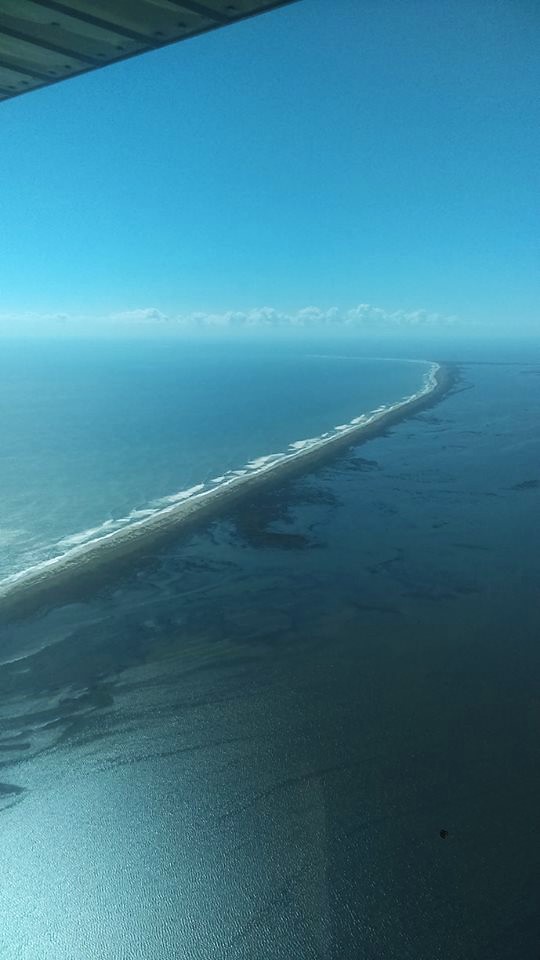
Barrier islands shortly after Hurricane Matthew