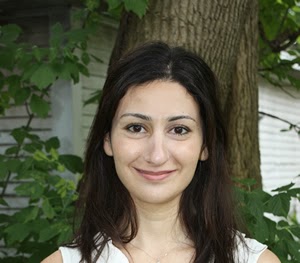
Her greatest exposure to policy came while participating in an ecosystem-based management working group with representatives from agencies like the Department of the Interior, NOAA, the U.S. Navy and EPA. Ecosystem-based management is a type of resource management that focuses on whole ecosystems instead of individual species or resources and is one of nine policy recommendations included in the National Ocean Policy Implementation Plan. The group – officially known as the National Ocean Council ecosystem-based management interagency subgroup – was charged with determining what this recommendation meant for each agency and identifying work priorities and pilot projects. In her role with the National Science Foundation, Najwa identified science and knowledge gaps and connected the group with academic experts.
Category:
Najwa Obeid, IISG-sponsored Knauss Fellow, shares her work with the National Science Foundation
March 7th, 2014 by iisg_superadminRecent News
IISG Instagram
Do you work or live along the Great Lakes coasts? Watch our newly released video series collection, containing several short videos that overview the range of coastal protection options in the Great Lakes, including:
- Natural processes in the Great Lakes
- Hard coastal protection structures and how they interact with/alter natural processes
- Nature-based coastal solutions in the Great Lakes, ranging from green to gray approaches
Find our two new video series at the link in bio.
Meet IISG grad student scholar, Qianyu Zhao! Qianyu is a PhD student at the University of Illinois Urbana-Champaign, focusing on understanding and reducing nutrient loss pollution. His research combines diverse datasets, watershed modeling, and machine learning to trace the movement of nitrogen and phosphorus at the regional scale. Through IISG, he is working to identify the sources and pathways of nutrient loading and translate that science into actionable guidance for policymakers and land managers protecting water quality across the region.
Learn more about Qianyu’s research at the link in bio.
Located in Washington, D.C., the Sea Grant Knauss Fellowship provides a unique educational and professional experience to graduate students who have an interest in ocean, coastal and Great Lakes resources, and in the national policy decisions affecting those resources. This is a one-year fellowship open to any student, regardless of citizenship, who is enrolled toward a degree in a graduate or professional program on the day of the deadline.
Students enrolled at an Illinois or Indiana university or college should submit their applications through Illinois-Indiana Sea Grant by emailing Angela Archer at amcbride@purdue.edu. Students in surrounding states without a Sea Grant program should contact the National Sea Grant College Program at oar.sg.fellows@noaa.gov for a referral.
Application deadline: June 3, 2026.
To learn more about the fellowship, visit the link in bio.
Science is Survival at C2E2 2026! Catch us at the Chicago Comic & Entertainment Expo (March 27–29) as we explore the underwater world of Subnautica through the lens of Great Lakes science.
Stop by our booth to discover how Great Lakes food webs, invasive species, and aquaponics stack up against your favorite survival game!
Learn more about the event at the link in bio.
Categories
- Aquaculture
- Aquatic Invasive Species
- Buoys
- Climate Ready Communities
- Coastal Resilience
- Director's Blog
- Education
- Featured
- Fellowships
- Fisheries
- Funded Research
- Funding
- Great Lakes Cleanup
- Great Lakes Data
- Healthy Waters
- Internships
- Jobs
- K-12 Education
- News
- Photos
- Program
- Recreation & Tourism
- Resources
- Sea Grant Scholars
- Stormwater & Green Infrastructure
- Sustainable Community Planning
- The Helm
- Uncategorized
- Video
- Water Resource Economics