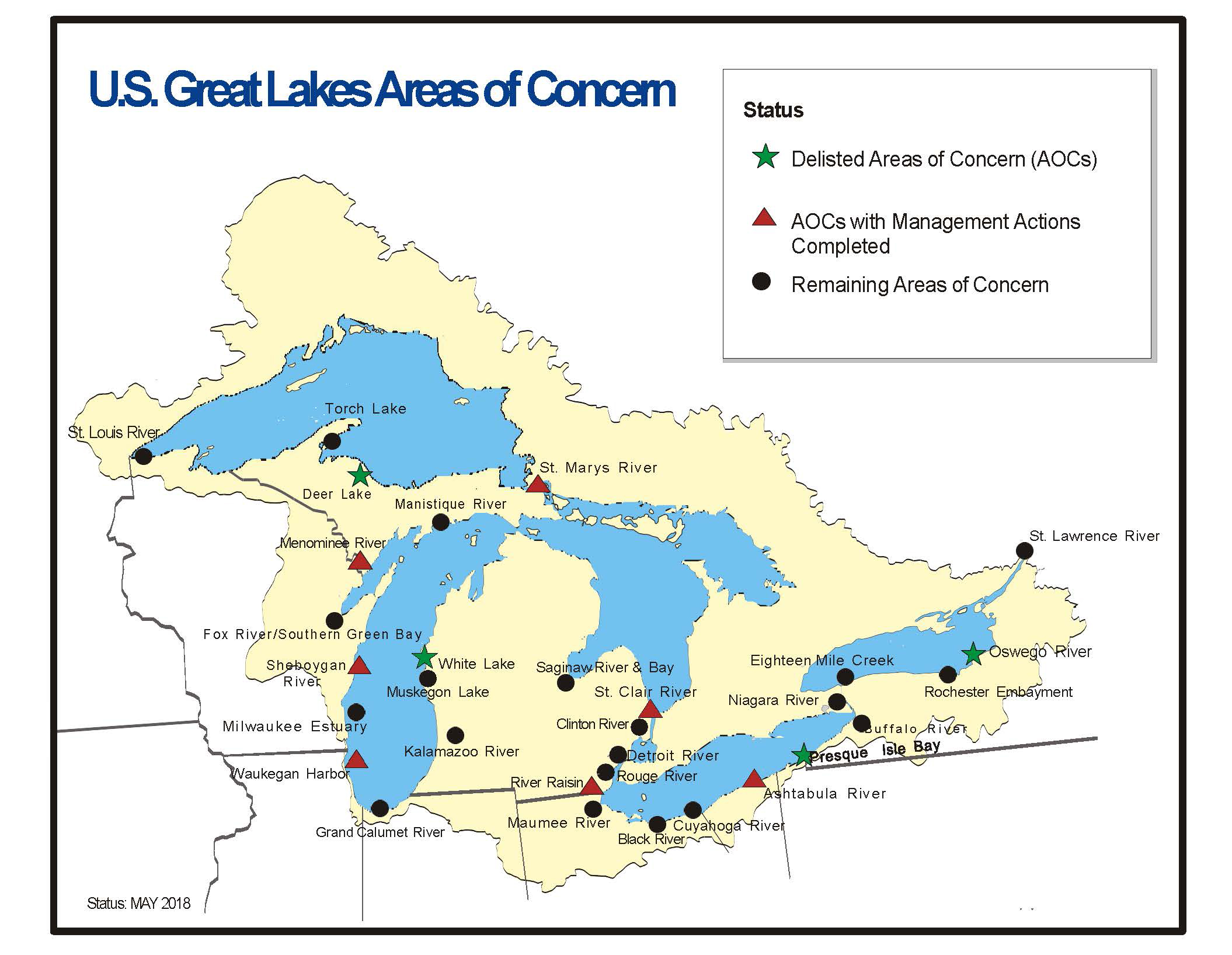
Caitie Nigrelli, an environmental social scientist working for IISG and the U.S. EPA, has been featured in a Christian Science Monitor article about her involvement in the cleanup of the Grand Calumet River in Northwest Indiana.
The reason behind the article? “Industry and environmental interests are often opposed. But in Indiana, a river cleanup requiring both sides to negotiate with each other offers an example for conservation partnerships everywhere.”
Cleaning up contaminated rivers, lakes and harbors facilitates the revitalization of waterfront economies on the Great Lakes. Aimed at industries, municipalities, states and non-governmental organizations, “A Seat at the Table: Great Lakes Legacy Act” is a new video that explains what it means to be a cost-share partner with the Environmental Protection Agency (EPA) under the Great Lakes Legacy Act (GLLA). The video uses interviews with partners to describe the benefits and challenges of cost-share partnering, the cost-sharing mechanism, examples of in-kind services and the flexibility of partnerships.
The GLLA is a component of the Great Lakes Restoration Initiative that addresses sediment remediation and habitat restoration in Great Lakes Areas of Concern. Contaminated sediment—caused by toxic chemicals, heavy metals, oil and other pollutants—can be a serious problem for communities struggling to revitalize their waterfronts and boost their economies.
Since 2002, the EPA has partnered with 57 entities under the GLLA to study, design and execute sediment cleanups across the Great Lakes basin. Over 4 million cubic yards of sediment have been remediated, removing threats to public health, creating vibrant environments for fish and wildlife, and giving coastal communities usable waterfronts.
The program is based on cost-sharing, which means that cleanup projects that result in economic revitalization, increased property values and an improved quality of life cannot take place unless partners contribute money or in-kind services. Through the GLLA, the EPA will cover up to 65 percent of the cleanup cost, and nonfederal entities can team up to volunteer matching funds. Once partners have been established, the GLLA program is able to help communities by completing cleanup projects.
“Legacy Act projects don’t take place unless a volunteer comes to the table and contributes cash or in-kind services,” said Caitie Nigrelli, an environmental social scientist for Illinois-Indiana Sea Grant and a liaison to the EPA Great Lakes National Program Office. “We have a lot of contaminated sediment sites left in the Great Lakes, creating blight and preventing local economies from realizing their potential. Voluntary, collaborative partnerships are the solution to the problem.”
Current and past partners include industry organizations (Honeywell, Ford, U.S. Steel), states (Indiana, Minnesota), municipalities (City of Toledo, Ashtabula City Port Authority) and non-governmental organizations (Buffalo Niagara Waterkeeper).
“A Seat at the Table: Great Lakes Legacy Act” was funded by the Great Lakes Restoration Initiative and produced by Illinois-Indiana Sea Grant and University of Illinois Extension.
What does a career in natural resources look like?
This month, a group of 4-H youth joined us at Martell Forest to find out! From tree climbing and birding to creating scent traps and dissecting owl pellets, participants spent three days exploring the many ways people work with and protect our natural resources.
Thanks to everyone who joined us! We can’t wait to see where your adventures take you next!