October 28th, 2014 by iisg_superadmin
Earlier this month, officials in Michigan announced that genetic material from silver carp, a species of Asian carp, had been discovered in the Kalamazoo River around 20 miles upstream from where the river flows into Lake Michigan. It was the first time a positive sample of eDNA had been found that close to the lake.
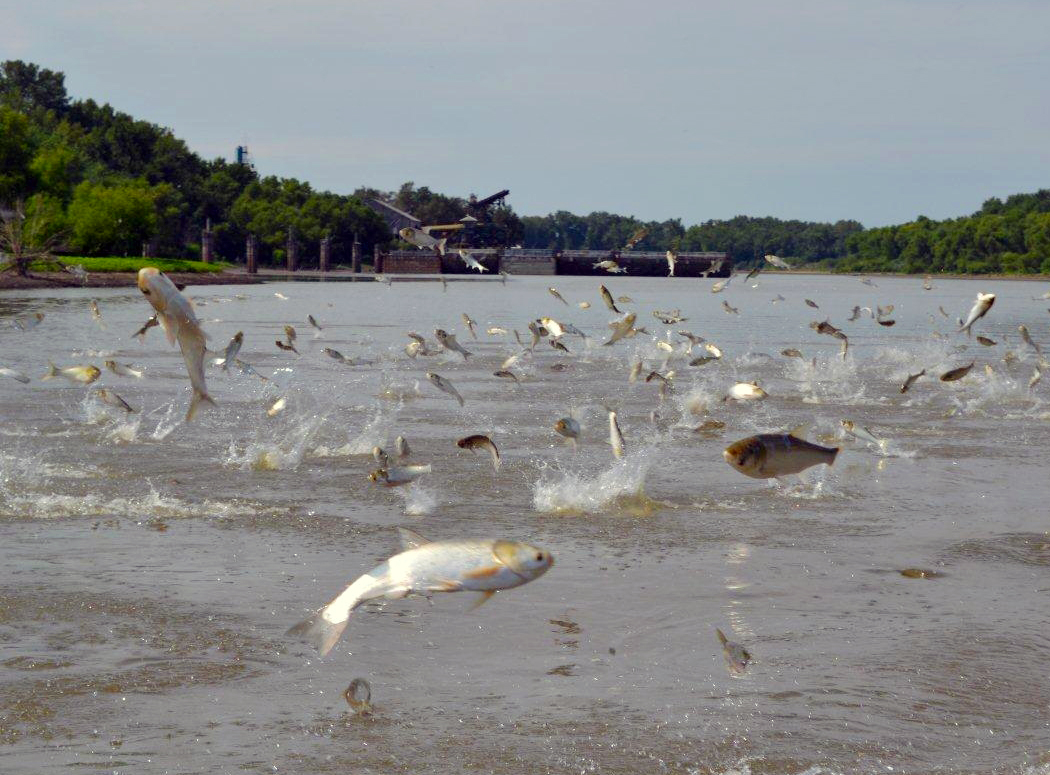 The results drew national attention and had many concerned that it wouldn’t be long until the infamous invader entered the Great Lakes. Further testing, though, reveals that there is no evidence of Asian carp in the river, Lake Michigan, or any of the other Great Lakes.
“We are pleased these samples were negative, but that doesn’t mean our efforts to keep Michigan’s waters are over,” DNR Fisheries Division Chief Jim Dexter said in a statement.
Asian carp were imported in the South several decades ago, where they served a utilitarian role on fish farms. But with no natural predator, the prodigious eaters and reproducers quickly escaped and began steadily invading the Mississippi River system.
Having arrived on the doorsteps of the Great Lakes, officials in Michigan, Ohio, Wisconsin, Pennsylvania, New York and others are working diligently to organize a strategy for keeping the invasive swimmers out.
Environmentalists, ecologists and others say the carp could decimate food chains and habitats in the Great Lakes, diminishing biodiversity there and threatening a multibillion-dollar fishing industry.
The threat comes from the invaders ravenous diet and ability to out-compete native fish for food. In the Illinois River, they have already fundamentally changed the food web.
From the Spring 2013 Helm:
Asian carp do more than compete for food. They actually force native fish to change their diets, feeding on species lower on the food chain than they natural would. In a healthy food web, filter-feeders, like gizzard shad and paddlefish, eat a variety of plankton species, ensuring that there is enough food to go around. But Asian car have all but wiped out the larger zooplankton in the Illinois River, pushing fish that have historically relied on that food source to turn to smaller zooplankton and phytoplankton for a meal. As the number of Asian carp in an area grows, more and more native fish are left competing for a smaller supply of plankton.
To learn more about Asian carp and efforts to prevent their spread, visit our Aquatic Invasive Species page.
***Photo courtesy of the Asian Carp Regional Coordinating Committee
October 28th, 2014 by iisg_superadmin
With the end of Chicago’s boating season right around the corner, we thought this would be a good time look back at this year’s progress making boating and harbor activities more environmentally friendly.
The Illinois Clean Marina Program launched last year with one certified marina, 31st Street Harbor. This year, five new harbors joined the ranks by implementing a series of best management practices, bringing the state total to six in just its first year. Two more, North Point Marina and Diversey Harbor have also pledged to implement these same practices.
 Clean boating includes preventing the spread of aquatic invasive species (AIS). It was a banner year for Clean Boats Crew, an outreach effort that gives boaters, anglers, and others the information they need to stop the spread of AIS. During its four-year tenure, the volunteer program has spread the word about AIS prevention to more than 8,000 recreational water users in Illinois and Indiana, with more than 3,500 people reached this year alone.
The idea behind Clean Boats Crew is simple. Volunteers visit boat ramps and docks during the height of the boating season to talk with boaters, anglers, and other recreational water users about AIS and to demonstrate cleaning techniques that can help stop their spread. This year, site leaders and volunteers were onsite at Chicago’s Burnham and Diversey harbors, as well as Illinois’s Chain O’ Lakes and North Point Marina and Indiana’s East Chicago and Portage marinas.
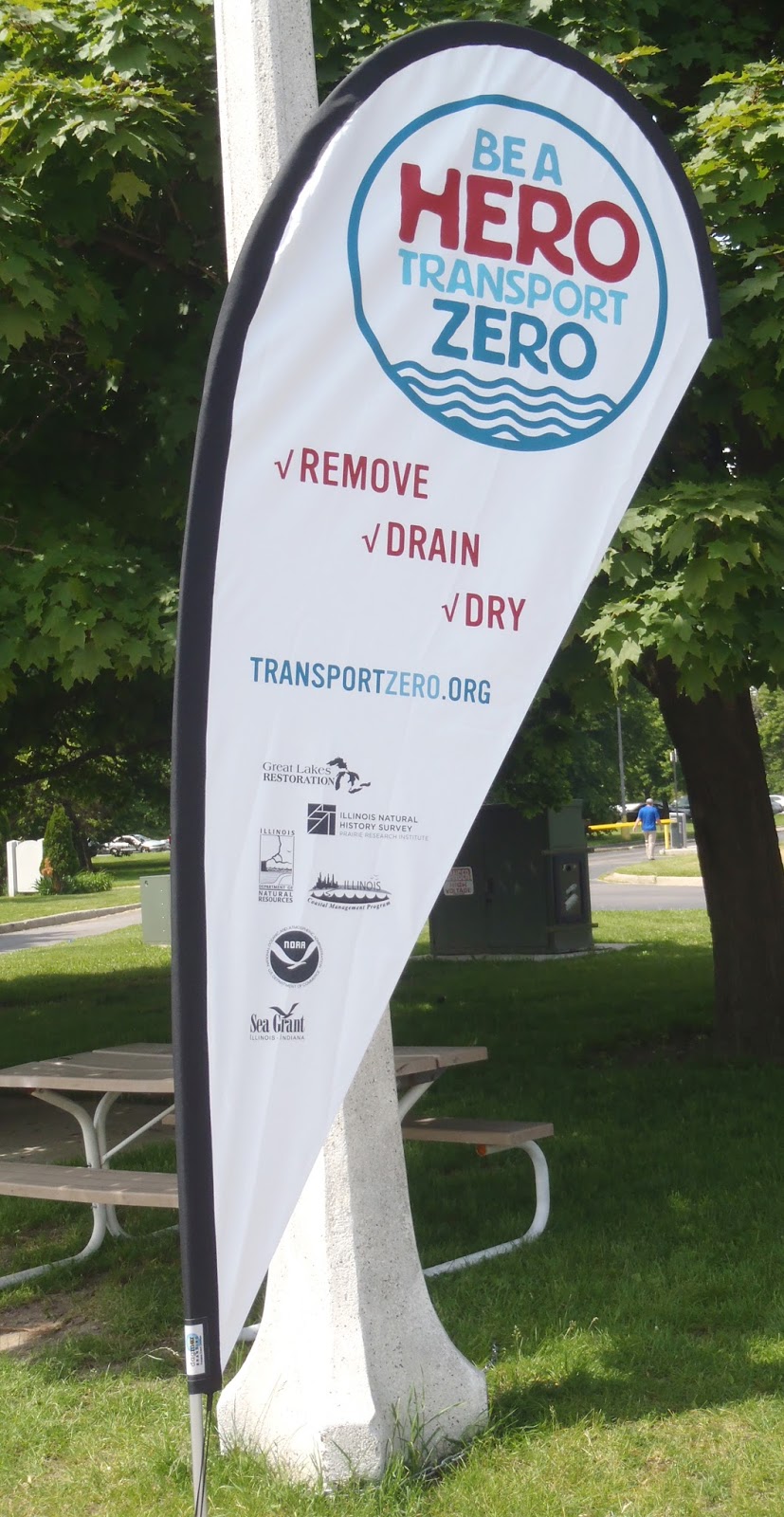 In Illinois, site leaders and volunteers introduced water users to three simple steps at the heart of the prevention campaign Be a Hero – Transport Zero™:
–Remove plants, animals, and mud from all equipment
–Drain all water from your boat and gear
–Dry everything thoroughly with a towel
With the season over, IISG and the Northeast Illinois Invasive Plant Partnership, co-organizers of the Clean Boats Crew program, have turned their sights to next year and are looking for others to join the effort.
October 27th, 2014 by iisg_superadmin
We’ve talked a lot in the last year about our Tipping Points Planner, which helps watershed planning groups develop effective strategies for the protection of natural resources. But what about the people behind the tool? Its use of the latest research and cutting-edge technology is made possible by the tireless efforts of Jarrod Doucette and a team of web developers that now includes Brandon Beatty.
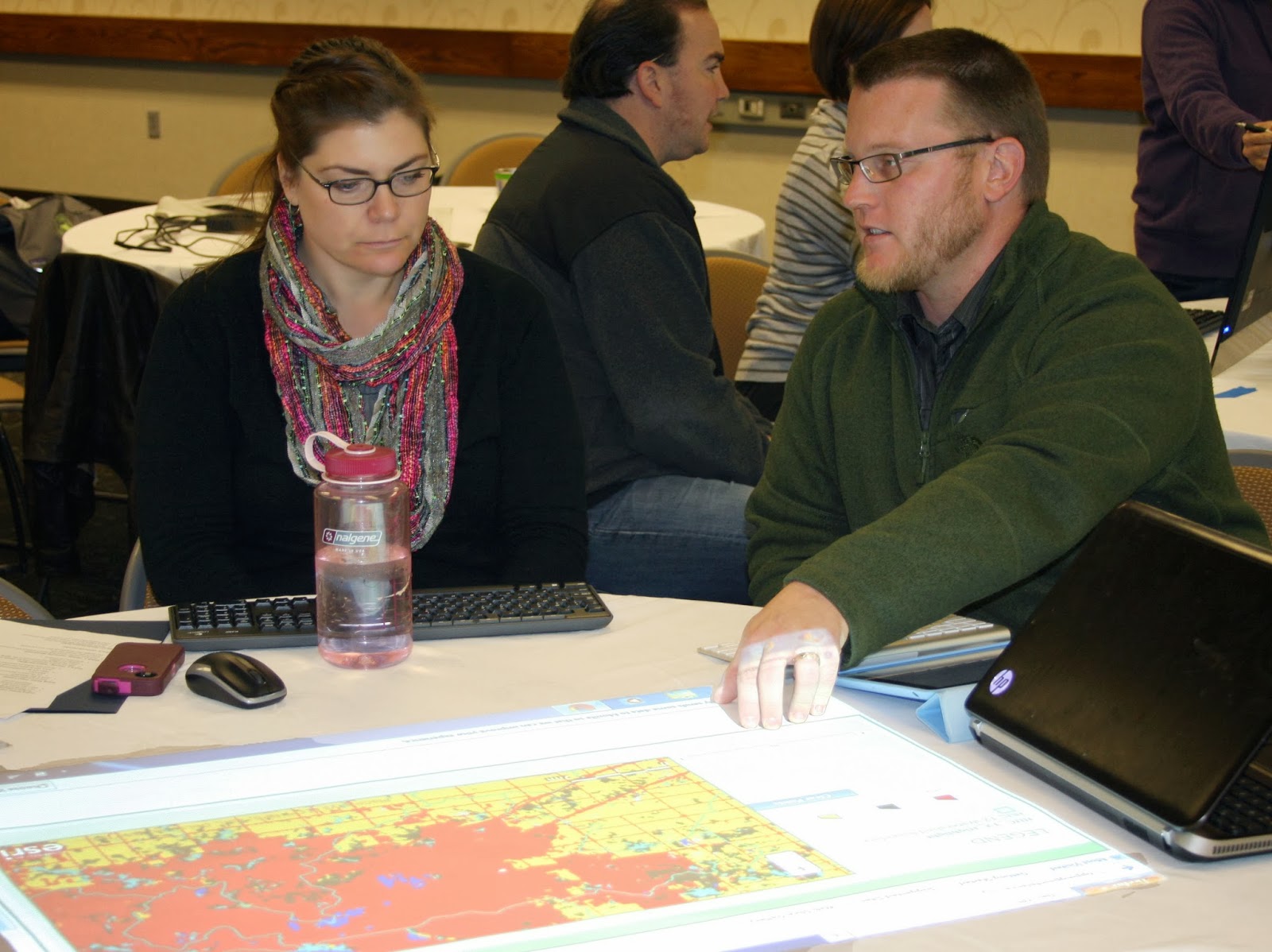 Jarrod, our GIS and database specialist, began work on the decision support tool roughly three years ago. Throughout the process, he worked closely with researchers and outreach specialists to ensure the Tipping Points Planner includes the latest data and is accessible to a wide range of audiences. Jarrod’s extensive experience as a GIS specialist and web developer working with universities and state agencies has been recognized by the GIS company Esri and from the Indiana Geographic Information Council. He holds a Master’s in geospatial information systems from State University of New York College of Environmental Sciences and Forestry.
The tipping points and indicators program is now up and running, but there is still a lot to do to make sure the tool stays current and user-friendly. More and more watershed groups are integrating it into their planning process, including several in northwestern Indiana and northeastern Illinois. That is where Brandon Beatty comes in.
Brandon joined Sea Grant earlier this year as our web designer and developer. Prior to that, he worked as a software developer on a project with the Purdue University libraries. His past work in design and development earned him an American Advertising Award in 2009. Brandon earned a Bachelor’s in computer graphics technology at Purdue University.
October 24th, 2014 by iisg_superadmin
Permanent medicine collection programs make it easy for people to rid their homes of unwanted pharmaceuticals, but they can be difficult to get off the ground. That’s where our Unwanted Meds team comes in. They have helped communities across Illinois and Indiana purchase collection boxes and raise awareness of drop-off programs, including Illinois’ Macon County.
From Rx for Action:
 A few months back, IISG was contacted by Laurie Rasmus of the Macon County Environmental Management Department. She was aware of the issues surrounding improper disposal of pharmaceuticals and wanted to know how we could work together to provide Decatur residents with a convenient way to safely dispose of their unwanted medicines. IISG has found that partnerships like this work really well. So we wanted to start sharing the stories of communities with medicine take-back programs with people who may be thinking about staring a program in their area. Laurie took a few minutes of her time to answer some of our questions about Macon County’s need for prescription take-back boxes and why they are so important to the community.
How did you learn about safe medicine disposal, and how did this initiative come about?
Our department first learned about safe medicine disposal through the one-day take-back collections sponsored by the DEA.
Our office receives many inquiries from residents who want to learn how to dispose of unused and expired medicine in a safe manner that is not harmful to the environment. We informed these residents of the drop-off box operated by the Maroa Police Department. Most were pleased to learn about the Maroa drop-off site but many mentioned that a Decatur-based location would be more convenient. So, we inquired with Illinois-Indiana Sea Grant about the possibilities for a collection site in Decatur and received encouraging information. We then approached Macon County Sheriff Thomas Schneider about a drop-off site at his office. Sheriff Schneider was enthusiastic about establishing a collection box in the lobby of the Macon County Law Enforcement Center.
Why do you think this is an important issue?
Safe, secure medicine disposal reduces the risks of accidental poisonings, drug misuse and pollution.
October 22nd, 2014 by iisg_superadmin
Following up on yesterday’smessage that prevention is key to stopping aquatic invasive species (AIS), we share this image of a Be a Hero, Transport Zero bobber (no, it’s not a Christmas tree ornament).
AIS can be introduced and spread through a variety of activities including those associated with recreational water users. For example, when an angler releases bait fish at the end of a day’s fishing or a water gardener disposes of excess plants in a local waterway, they could also be accidentally introducing AIS.
If you plan on enjoying the fall colors while out on the water, keep in mind the three simple steps to do your part to prevent aquatic invasive species from moving from one waterbody to another:
· Remove plants, animals, and mud from all equipment.
· Drain water from live wells and bait buckets.
· Dry items thoroughly with a towel.
If you would like more information about AIS and the Be a Hero, Transport Zero campaign, visit our website.
October 21st, 2014 by iisg_superadmin
Last week’s Science Friday on NPR, broadcasting from the University of Notre Dame, included an interviewwith David Lodge, a biologist who has been a key investigator in assessing the pathways and risks of aquatic invasive species in the Great Lakes. In fact, the interview focused on Lodge as an “environmental detective” due to his work with environmental DNA. This technique allows invasive species trackers to detect the trace presence of a fish through water sampling. Most recently, Asian carp DNA has been found in the Kalamazoo River in Michigan.
But, in the struggle to cope with these invaders, prevention is crucial. The interview also
touched on extensive work at Notre Dame to develop species profiles and risk assessment tools. This research helped inform efforts in Indiana to be proactive, and led to a ban on 28 plant species in the state.
To determine which plants imported for the aquarium and water garden trades posed the greatest threat to the state’s waterways, the Indiana Department of Natural Resources (IN DNR) relied on a risk assessment tool developed by the Aquatic Plant Working Group. The group was formed, organized, and facilitated by Illinois-Indiana Sea Grant at the request of IN DNR and included representatives from the aquatic plant industry, aquarium and water garden hobbyists, state agencies, academia, and non-governmental organizations. They used information provided by University of Notre Dame researchers to develop a tool that evaluates a plant based on factors such as its history of invasion, its ability to survive in Indiana habitats, and how difficult it is to control.
Many of the plants that made the list have been used in aquariums or water gardens in Indiana for years. Others have already been discovered in waterways throughout the state, sparking large-scale eradication projects. For example, efforts to remove the fast-growing weed Hydrilla verticillata from Lake Manitou have been ongoing for more than six years and cost the state millions of dollars. Hydrilla is believed to have entered Lake Manitou through trade.
This work has not been limited to Indiana plants. For starters, in 2013, Illinois added the designated Indiana plants into its Injurious Species List. And there’s more:
The success of the risk assessment tool in Indiana has sparked interest from officials in the Great Lakes region and at a national level. In fact, researchers at the University of Notre Dame (and Loyola University Chicago) were awarded a three-year grant from the U.S. EPA Great Lakes Restoration Initiative to develop risk assessment tools for commercially sold fish, mollusks, crustaceans, reptiles, and amphibians. IISG’s aquatic invasive species outreach specialists are working with researchers to coordinate and facilitate regular working meetings with state and province resource managers to develop a single set of tools that can be used in each of the eight states and two provinces that make up the Great Lakes region.
October 16th, 2014 by iisg_superadmin
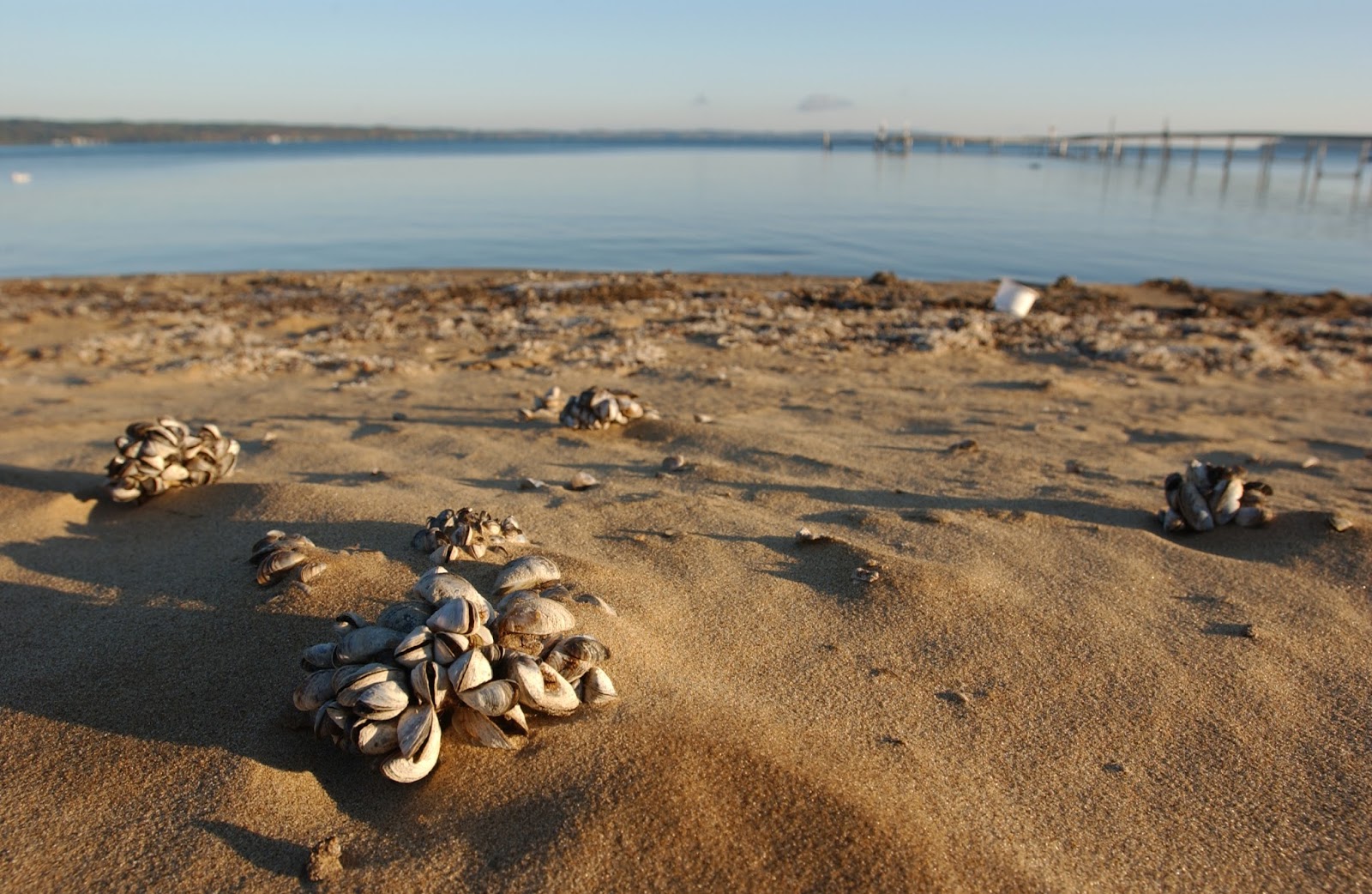 Even before zebra and quagga mussels arrived in the Great Lakes in the 1980s, the future looked a little bleak for native mussels. The invaders came close to wiping them out entirely. But small populations in Lake Erie appear to not only be surviving the invasion, but thriving.
Average density of native mussels before the arrival of zebra mussels was two per square meter in Lake St. Clair. By 1990, zebra mussel density was at 1,600 per square meter.
“By 1992, native mussel populations are almost gone from the southeastern portion of the lake and declining rapidly in the northwestern portion of the lake,” said [Dave] Zanatta, [a biologist at Central Michigan University].
By 1994, there were almost no native mussels left in the lake, with zebra now at 3,000+ per square meter.
“But there was reason for hope,” said Zanatta. “Remnant populations of native mussels were beginning to be found in coastal wetlands in western Lake Erie in the late 1990s.”
More recent research funded through the Great Lakes Restoration Initiative also reveals that native mussels have maintained genetic diversity, a key to any species’ long-term survival.
Again from The Voice:
Zanatta’s research adds further evidence that progress continues to be made on one of the impairments of the St. Clair River – the degradation of fish and wildlife habitat – that led to its classification as an environmental Area of Concern in 1985.
His work also sheds light on the complex ecological impacts of invasive species generally.
With some environmental observers predicting a doomsday scenario for native game fish if Asian carp are able to establish themselves in the Great Lakes, for example, Zanatta’s mussel research suggests that the outlook for native fish might be significantly more positive than forecasts suggest.
To read the full article, click on the link above.
**Photo of zebra mussels courtesy of Michigan Sea Grant.
October 13th, 2014 by iisg_superadmin
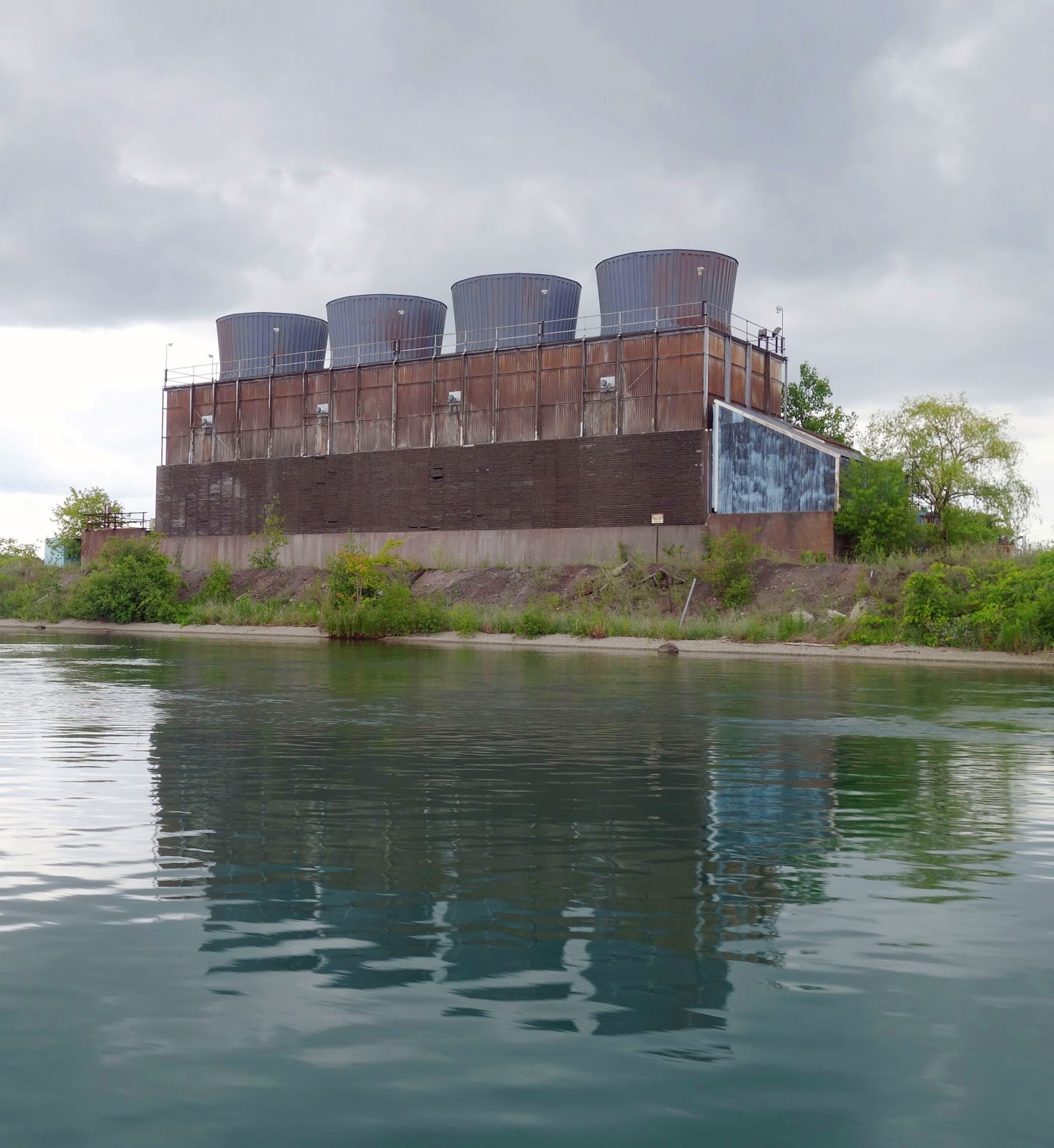
The Trenton Channel, part of the 32-mile Detroit River, could see a cleanup in 2016 through the Great Lakes Legacy Act, which combines federal funding with local support. Before that can happen though, voluntary partners must agree to help fund this final cleanup stage. The Detroit River is one of 29 remaining Areas of Concern in the U.S., a result of decades of poor environmental practices. The fast-moving Trenton Channel is one of the top sources of pollution in the river system due to its history of industrial and municipal practices.
Scientists and engineers are currently designing a cleanup plan to address approximately 240,000 cubic yards of sediment in the upper portion of the Trenton Channel. A majority of the community surrounding this remediation project is looking with optimism and enthusiasm to the clean-up efforts. Yet these feelings are by no means unanimous.
Caitie McCoy, IISG social scientist, and her two summer interns—Mark Krupa and Erika Lower—conducted a needs assessment with local stakeholders of Trenton Channel, including environmentalists, recreation enthusiasts, property owners, and city officials. They found that the channel is viewed as important to the region, but that the clean-up plan is viewed with some skepticism.
Caitie explains:
I assumed that everyone would be overjoyed that a sediment remediation project was happening in their community. Yet there were quite a few concerns about the safety and effectiveness of the project. About a third of the stakeholders we interviewed said that cleaning up pollution would provide no significant community benefits.
This needs assessment has given our outreach team a better sense of what is important to our stakeholders. We have a better sense of what information they want about this project.
Increasingly, social science provides the go-to method for Sea Grant programs to develop informed outreach efforts. In the 2014-2015 research cycle, 29 programs funded 59 social science research projects. Additionally, state Sea Grant programs are hiring social scientists.
More from Caitie:
Large-scale needs assessments are a wise investment for big outreach projects. Needs assessments give us detailed information about our audience concerning a topic of interest–in this case, it was sediment remediation. This information would otherwise be difficult to obtain. Even working with an outreach team composed of local leaders, we make a lot of assumptions about our stakeholders. Needs assessments help us cut through those assumptions so that we can understand what our stakeholders are really interested in or concerned about. This helps us design better messaging and better outreach events for our stakeholders.
To learn more about what the researchers learned from Trenton Channel stakeholders, you can download A Needs Assessment for Outreach in the Detroit River Area of Concern’s Trenton Channel.
October 9th, 2014 by iisg_superadmin
 Anjanette Riley was at last week’s Resilient Chicago workshop on climate trends and adaptive planning. She had this to say about the event:
Presentation after presentation, what struck me most is just how much climate change already is and will continue to impact our daily lives—and how interconnected those impacts are. Actually, a quick glance at the agenda was all it took to realize this workshop was going to be about much more than just predictions of yearly rainfall or average temperatures. The speakers were climatologists, public health experts, community planners, and policy specialists. And the participants were just as diverse—educators, urban planners, local officials, and private consultants.
Of course, we did talk about climate concepts and trends. IISG’s Molly Woloszyn kicked things off by making sure we were all on the same page about the difference between weather and climate—short-term changes vs. long-term averages. And throughout the day, Illinois State Climatologist Jim Angel told us that temperatures have risen by roughly 1.5o F over the last century and that we can expect drier summers and more precipitation in winter, spring, and fall.
Much of the day, though, was dedicated to what these changes mean for the people and wildlife that call the Chicago area home. Some impacts are pretty straightforward—you have likely seen them already. Warmer temperatures mean greater strain on an aging energy infrastructure and higher rates of heatstroke. Wetter springs means more stormwater runoff and basement flooding. And summertime droughts could lower crop yields and increase food prices.
Many were hard to see at first glance. As nice as they sound to many of us, warmer winters could have serious repercussions for public health, infrastructure, and Great Lake ecosystems. For example, with less frequent deep freezes, some disease-carrying insects could persist throughout the year. Fluctuations between freezing and thawing will also create more potholes and cracks in building exteriors. And—most unexpected to me—warmer water temperatures could make Lake Michigan and surrounding waterways more welcoming to a whole new suite of invasive species that could never have lived there before.

Fortunately, presenters came armed with solutions as well. Most were adaptation strategies—steps to prepare for climate change impacts. Speakers from Chicago Wilderness, the Alliance for the Great Lakes, and Hey and Associates, for example, showed how planting native trees, building rain gardens, and restoring natural areas could simultaneously filter pollutants from stormwater, lower air temperatures, and reconnect habitats divided by urbanization. Samuel Dorevitch, a professor at the University of Illinois at Chicago, and Dan Gabel from ComEd talked about the importance of early warning systems and emergency response plans. And the Center for Neighborhood Technology’s Harriet Festing introduced their Rain Readyprogram, which helps homeowners and communities understand flooding causes and prepare for future storms.
But don’t just take my word for it. All the presentations will soon be available on the Resilient Chicago website. In the meantime, peruse the many Midwestern Regional Climate Center resources on climate change predictions and adaptation planning.



.JPG)
.jpg)