April 10th, 2012 by Irene Miles
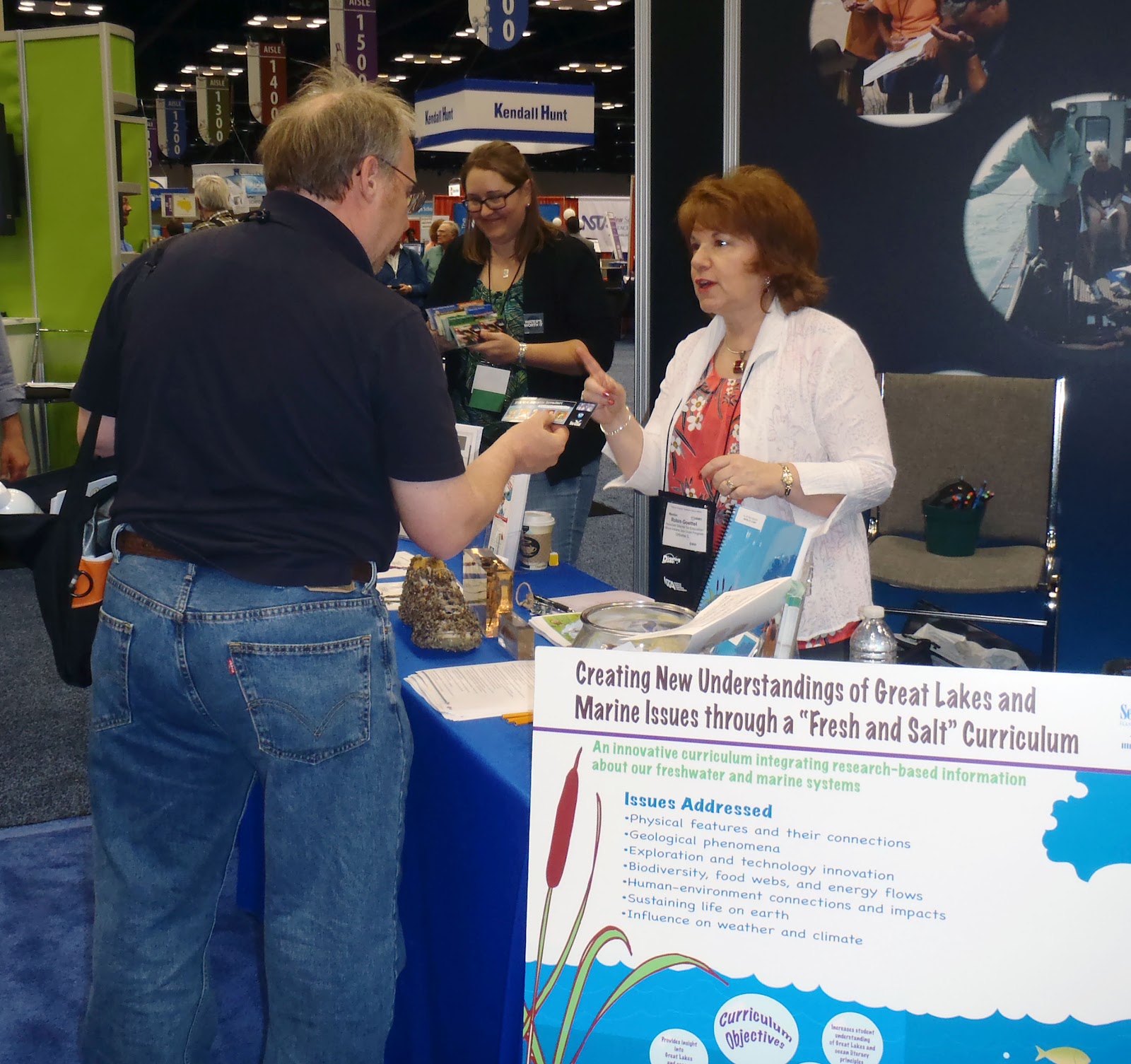
IISG Associate Director for Education Robin Goettel, Education Specialist Terri Hallesy, AIS Specialist Sarah Zack, and AIS Assistant Danielle Hilbrich attended the National Science Teacher Association’s 2012 Conference March 29-31, and got a tremendous response to the educational resources, tips, and information they offered to the many teachers in attendance.
“We had a fabulous turnout of over 5,000 classroom teachers and informal educators at the NOAA-Ecosystems booth,” said Robin Goettel, “which featured our Illinois-Indiana Sea Grant outreach and education resources on Great Lakes aquatic invasive species and marine invaders.”
Visitors learned about how the “Nab the Aquatic Invader” website can be used as an excellent learning tool for grades 4-10, and how the GLRI “Stop Aquatic Hitchhikers” education and outreach initiative informs people what they can do to prevent the spread of aquatic “hitchhikers.” They also distributed brochures on Great Lakes Literacy principles, and CD-ROM copies of the COSEE/Sea Grant “Fresh and Salt” curriculum on important Great Lakes and marine issues.
Danielle adds, “Our table was located in the NOAA booth on a very busy corner in their ecosystem section and had an extensive amount of traffic throughout the conference. Our outreach materials included the brand new “Don’t Let It Loose” poster, which promotes the safe disposal of classroom organisms.”
The “Don’t Let It Loose” poster contains helpful information for teachers about properly disposing of unwanted classroom organisms. Smaller “tip-card” versions of the poster were available too, as well as an adoption pledge containing care tips for students and their families to use when adopting a classroom organism. Some of the highlights at the IISG table were the specimens available for teachers to look at, including a zebra mussel-encrusted shoe, which was a great catalyst to engage teachers in conservation about invasive species.
The response and turnout for the event were fantastic, and the event was instrumental in helping IISG spread the word about these important issues. The booth at the conference would not have been possible without the invitation from the National Oceanic and Atmospheric Association, and information and products provided and developed by U.S. EPA’s Great Lakes Restoration Initiative and NOAA Sea Grant’s Aquatic Invasive Species Program.
The Illinois-Indiana Sea Grant AIS outreach team is part of the Illinois Natural History Survey’s Lake Michigan Biological Station in Zion.
April 9th, 2012 by Irene Miles
Communication is a crucial part of any project, and especially one as significant as cleaning up an ecosystem that has been deemed an Area of Concern. One of those AOCs is the Sheboygan River, and Illinois-Indiana Sea Grant Environmental Social Scientist Caitie McCoy has been very involved in the remediation project, working with and reaching out to the communities that live near and rely on the river in a variety of ways.
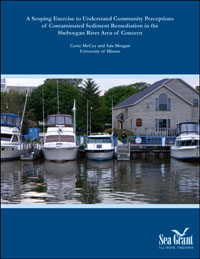
To better understand community views and concerns about the river and the river cleanups going on this summer, several interviews were conducted with local stakeholders. The findings and resulting recommendations are presented in a qualitative study put together by Caitie and Ada Morgan, entitled “A Scoping Exercise to Understand Community Perceptions of Contaminated Sediment Remediation in the Sheboygan River Area of Concern.” You can download and read the entire study here.
April 4th, 2012 by Irene Miles
Our friends at New Jersey Sea Grant have some great tips about safe, clean, environmentally friendly things that every boater can do to help the environment while preparing their watercraft for the season. And while there are some differences in conditions between the east coast and our Midwestern lakes and rivers, there are a number of steps that are universally good for protecting the outdoors.

In the Midwest, most boats spend the winter in storage, and when spring arrives they need fresh oil and hydraulic fluids for a season full of trouble-free operation. As with the oil in your car, keeping those fluids from contaminating the water and the ground is important. Auto parts stores, marine supply shops and garages, and even major retailers throughout Illinois and Indiana will collect used oil and hydraulic fluids for recycling free of charge. Likewise, batteries that have been sitting for extended periods of time may need to be replaced, and the old batteries can be recycled at a number of stores. Many retailers will recycle your old battery for you when you purchase a new one from them.
Boats that have been stored for extended periods will usually need a good cleaning as well before taking them to the water. Before you get out the cleaning supplies or buy new ones, look into the many options available for biodegradable and environmentally friendly cleaning products. There are a wide range of safe and effective products that are natural or biodegradable, and they will keep your boat, trailer, and equipment looking great.
April 2nd, 2012 by Irene Miles
What happens to prescription or over-the-counter medicines that are brought home, but for one reason or another, never get used? Medicines that are flushed or tossed in the trash can end up in lakes, rivers, and even in our drinking water, posing a risk to people, animals, and the environment.
Illinois-Indiana Sea Grant and University of Illinois Extension have developed a new website, www.unwantedmeds.org,
to encourage people to properly dispose of their expired or unneeded medicines.
“This site helps you find a local medicine collection program, provides tips on how to dispose of medicine if there isn’t a collection program nearby, guides communities on how to start a new collection program, and explains why flushing medications down the sink or toilet can be bad for people and the environment,” said Laura Kammin, IISG pollution prevention specialist.
Medicine disposal has come to be an emerging concern in recent years because numerous studies have shown significant traces of pharmaceuticals in U.S. waterways and in drinking water. The long term effects are not known, but scientists have documented impacts to aquatic wildlife.
“The advice used to be to flush unwanted medicines, but it’s clear that flushing medicines or throwing them in the trash contributes to the problem,” said Laura Kammin, IISG pollution prevention specialist.
Right now the best solution is to find a medicine collection program in your area. IISG works with communities to develop local medicine collection programs, some of which are ongoing and some are one-day events. Through workshops and the IISG toolkit, the program provides information and support so that these efforts are safe and successful.
In addition to information on collection programs, www.unwantedmeds.org provides resources for teachers and other educators who want to engage students on this topic, including curricula and examples of service-learning projects.
Contact IISG Pollution Prevention Specialist Laura Kammin for more information on the program, and visit the new website to help protect people, pets, and the environment from expired and unwanted medications.
March 23rd, 2012 by Irene Miles
Mercury content in water is a health hazard for people, animals, and delicate ecosystems, and preventing its release into the water supply is a major concern. A four-year study has found that there are effective and affordable methods currently available to reduce mercury levels in waste water released at a BP refinery near Lake Michigan.
From the Northwest Indiana Times:
“Scientists from Purdue University Calumet and Argonne National Laboratories who examined the issue for more than four years released their findings in a community briefing at the Hammond campus Tuesday morning.
In 2007, BP funded a $5 million grant to the Purdue University Water Institute and Argonne National Laboratories to research technologies that would help the company meet the 1.3 parts per trillion Clean Water Act standard for mercury.”
March 19th, 2012 by Irene Miles
Once in a while a story here in the U.S. becomes even bigger news elsewhere. That happens to be the case with the Asian Carp problem in the Midwest, as this article relates:
“Outside of the Great Lakes and Mississippi River basins, news of this carp-control strategy barely registered with the U.S. public. But on March 6, it hit China and…microbloggers took to the minor news topic with gusto, using it to explore issues ranging from corrupt civil servants to U.S. sovereign debt…
Within a week, netizens posted more than 85,000 tweets, comments on tweets and re-tweets on the carp rampage. By Chinese microblogging standards, that’s actually quite modest. More popular topics can easily generate millions of posts. But such a large amount of commentary regarding an essentially American story is significant.”
Read the complete story to find out why such a localized problem in the U.S. garnered such significant attention on another continent.
March 15th, 2012 by Irene Miles
IISG’s Lawn to Lake Program is focused on helping homeowners, landscapers, gardeners, and others adopt landscaping practices that reduce chemical runoff to local waterways, protecting and preserving those sources of water while maintaining thriving lawns and gardens.
There are a number of ways that everyone can keep local waterways clean while keeping their lawns green, and IISG has developed materials for homeowners, landscapers, and others to learn about how they can get involved.
 “Don’t ‘P’ on your lawn” is a two-sided card (PDF) with healthy lawn tips and info on safe landscaping practices. The title is aimed at getting homeowners to watch out for phosphorus in their fertilizers, because phosphorus can lead to excessive algal blooms in waterways.
March 12th, 2012 by Irene Miles
IISG Environmental Social Scientist Caitie McCoy has been spending a lot of time working with communities, government, Sea Grant programs, and affiliated local and regional organizations to help clean up Great Lakes Areas of Concern (AOCs). Recently she had the opportunity to spend some time visiting with students at two schools in northwest Indiana– sharing several interesting water facts with them, as well as getting them to participate hands-on in gathering data and learning about local water issues. Caitie shared some of her experiences and described the help that she’s had along the way.
“Nishaat Yunus, ORISE Fellow for the Great Lakes National Program Office, and I have been working quite vigorously over the last month with the help of others to create educational programming for students in the Grand Calumet AOC. We’re working with Robin Goettel and Terri Hallesy to package the programming so it will be ready to apply at other Great Lakes Legacy Act (GLLA) sites, hopefully to work in conjunction with Sea Grants in other states.

We visited two schools this week. On Wednesday we went to Hammond Academy of Science and Technology, where we had the chance to talk to and work with about 80 9th grade students from Amanda Miracle’s science classes. We went on a field trip to the Grand Calumet River and took water samples from stretches of the river that have been remediated under GLLA. Anne Remek from Indiana Department of Environmental Management helped lead the field trip. The purpose of the sampling was to monitor water quality; the results will be shared with our EPA and GLLA project partners (IDNR, IDEM, & USFWS). During the 2nd half of the day, students used a water testing kit with 12 analytes (copper, dissolved oxygen, nitrates, etc) to see what the water quality readings were and understand what they meant. We plan to take another field trip to the Grand Calumet River at some point to check out the restoration project and its progress. We will visit the classes at least twice more to do lessons on data analysis, data reporting, and using data to make project-level decisions.
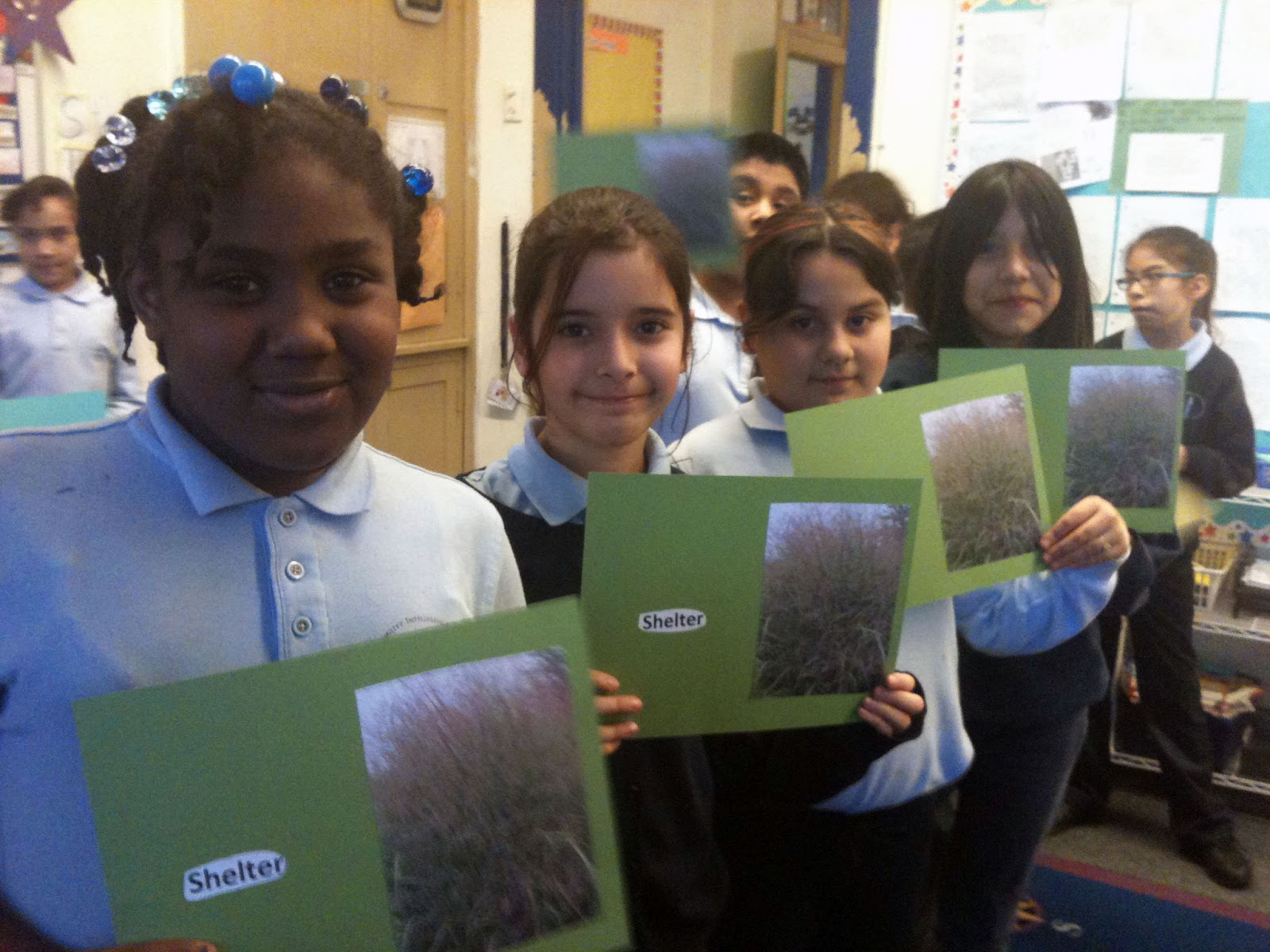
Thursday we headed to East Chicago Lighthouse Charter School, where we got to speak to and teach about 50 4th grade students from Andrea Bock’s science classes. The students are currently growing native plants provided by EPA in their classroom, and they’ve started sprouting! Nishaat and I will be visiting again and taking a field trip to Roxana Marsh when the plants are more fully grown, and students will get to plant the natives that they have been growing on the site. We also had a chance to give an interactive presentation and activity on habitats, and we will visit the classes at least twice more to talk about the cleanup at Roxana Marsh and how to design a habitat.”
February 15th, 2012 by Irene Miles
If you are an aquaculturist who subscribes to the saying, “waste not, want not,” you might want to look into the new farming practice of aquaponics, which combines the soil-less growing technique of hydroponics with aquaculture.
“Aquaponics is great because you are integrating fish production with plant production,” said Kwamena Quagrainie, Illinois-Indiana Sea Grant aquaculture marketing specialist. “You are also making maximum use of limited resources.”
Specifically, the system uses the nutrients that are emitted from fish to nourish plants, creating a habitat that is self-sustainable and eliminating waste. As a result, aquaponics does not require a large amount of space.
“This technique is a great avenue for achieving green infrastructure in urban areas. It can be practiced by individuals or communities for food production,” said Quagrainie. “You could set up an aquaponic system in your own garage or your basement if you wanted to.”
Quagrainie’s interest in aquaponics began a couple years back when he began hearing about it from local producers. He visited AquaRanch Industries, located in Flanagan, Illinois, to learn more about the aquaponic process.
Since 2006, Quagrainie has held aquaponic workshops each year to spotlight the benefits of this process and explain how to set up your own system. Attendees also learn about costs and marketing, as well as visit an aquaponics facility. The next workshop will likely be in the spring. Through Purdue Extension, Quagrainie also developed a video that provides an overview of aquaponics.
“We are trying to target people who are really interested in getting into aquaponics,” Quagrainie said. “We want to reach people who are thinking about sustainability and reducing their carbon footprint.”
“Aquaponics is a fairly new technique,” said Myles Harston, who runs AquaRanch Industries and assists Quagrainie with the workshops. “But it makes sense. The plants feed the fish, the fish feed the plants, and the plants clean up the water for the fish. You can continually reuse water with very little turnover or waste.”
Harston added that an aquaponic facility is very similar to a garden; and the produce grown through this process is very fresh. “Hydroponic tomatoes are not great tasting. They have a kind of sterile taste,” he said. “But an aquaponic tomato tastes just as good as a garden-grown tomato.”
Even though aquaponics is not widely practiced yet, the word has been spreading. A new company in Chicago called 312 Aquaponics opened its doors last year. Brian Watkins, one of the co-founders, said he was partially inspired after attending a seminar by Harston. “When I first started looking into aquaponics, I was really blown away. I kept thinking that this can be very important for the future,” Watkins said.