
IISG education team members Robin Goettel and Terri Hallesy partnered with the Field Museum’s Earth Force Program to work with students and teachers on raising awareness within the Calumet region about the proper disposal of pharmaceuticals and personal care products. Earth Force engages 7th and 8th grade Chicago Public School students in action projects that address environmental issues in their community.
 Windy City Earth Force coordinator Angie Viands invited Terri and Robin to visit classrooms on December 8 and 9 to offer students important information about the pharmaceutical and personal care product disposal issue, and to help teachers and students develop successful community projects. By talking with students about the problems that pharmaceutical and personal care products can create if not properly disposed of, they will be able to develop community-based information projects that will be showcased at a youth summit on May 18, coordinated by Earth Force.
 Participating teachers included Mr. Neely, George Pullman Elementary; Ms. McNeal, Black Elementary School; Ms. Millner, Bennett Elementary; and Ms. Whitehead, Medgar Evers Elementary. Ms. McNeal’s students are members of an after-school science club, while the other teachers instructed formal science classes.
 Terri and Robin provided an overview on the medicine disposal issue, then engaged the students in a Jeopardy game, a vocabulary word scramble game, and a marble labyrinth game called Get Rid of Stuff Sensibly. Activities were selected from IISG’s Medicine Chest, “It’s What You Can’t See” education tabloid from PA Sea Grant, and other curriculum materials.
 Photos:
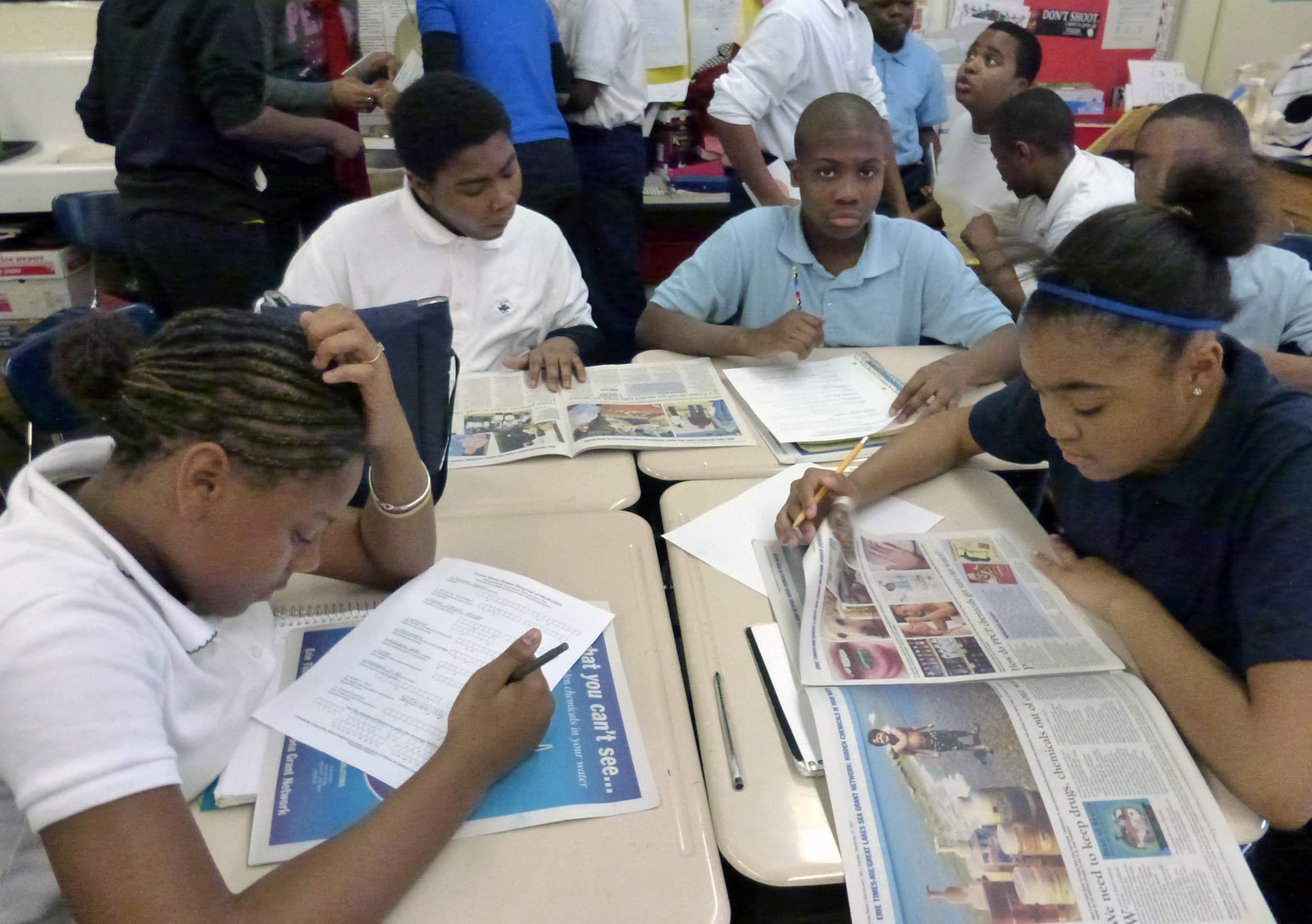
1) Ms. Millner’s students learn about medicine disposal by reading the new Great Lakes Sea Grant education tabloid, “It’s what you can’t see…Learn about hidden chemicals in your water.”
1) Ms. Millner’s students learn about medicine disposal by reading the new Great Lakes Sea Grant education tabloid, “It’s what you can’t see…Learn about hidden chemicals in your water.”
2) Environmental science club members at Black Elementary are fascinated play the GROSS marble game and learn about properly disposing of household items.
3) Ms. Whitehead’s students research unwanted medicines and personal care products to solve a word scramble activity.
This “Undo the Chemical Brew” education project is funded through the Great Lakes Restoration Initiative. Check out the latest information on www.unwantedmeds.org.



