
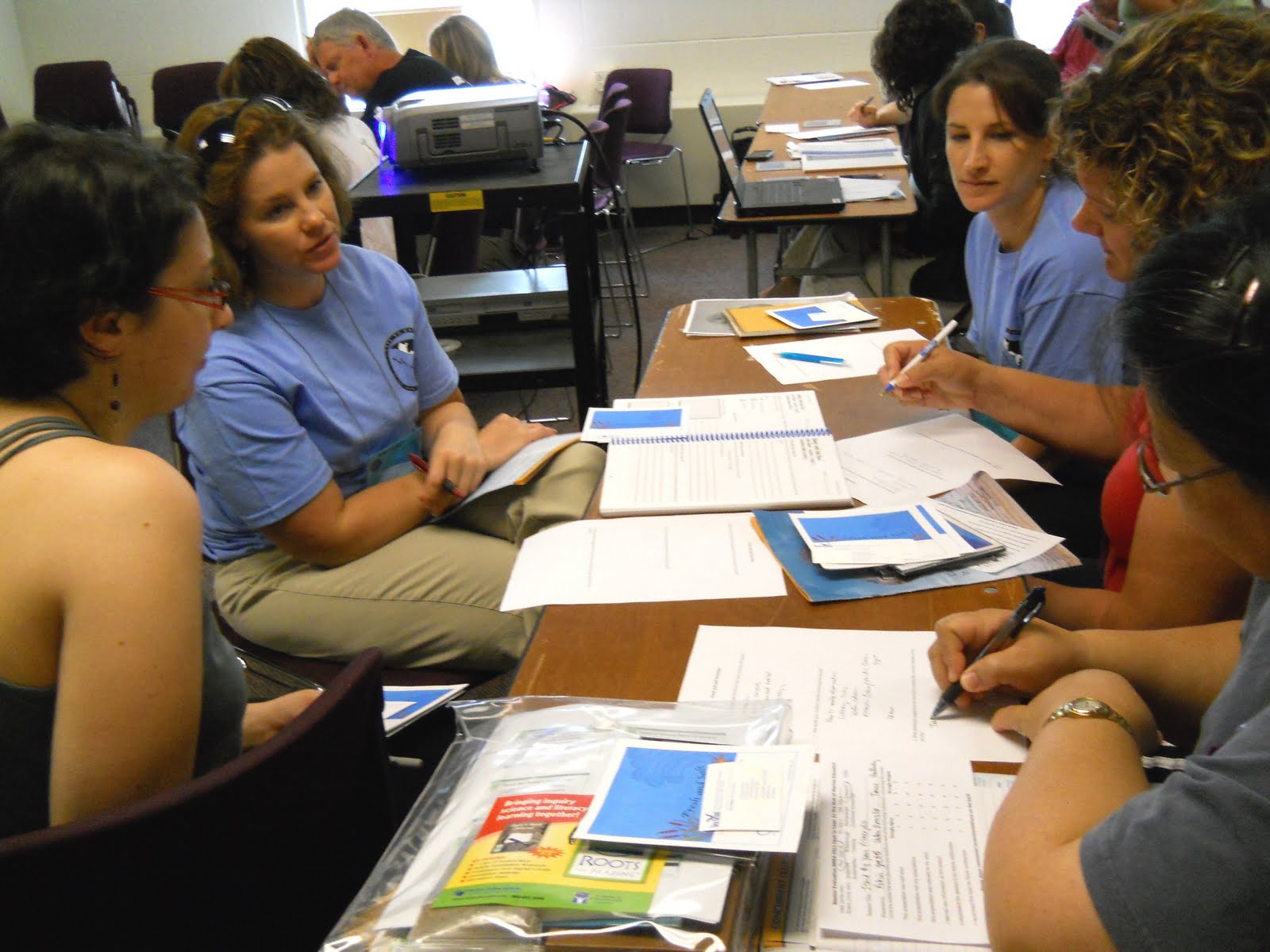
At the recent National Marine Educators Meeting in Boston, Lisa Chizek, a 5th and 6th grade teacher from Iowa joined other teachers to learn about the new curriculum, Fresh and Salt, which connects Great Lakes and ocean sciences. IISG’s Terri Hallesy, education specialist, led this session. Here are some comments from Lisa:

“I am so excited to have these wonderful and effective resources to help connect my students with the Great Lakes and Ocean Literacy Principles. I believe we are so interconnected with the Great Lakes and the ocean that it is very necessary for everyone to become literate about how these wonderful bodies of water affect our planet in so many ways and how we affect them. It is very important to me, as a person who wants my students to be able to understand and think critically about our world, to help my students become literate with these principles.

“Learning about our planet’s great bodies of water is a responsibility of every member of society. Living in land-locked Iowa does not diminish this responsibility or make it irrelevant. We are all interconnected with these bodies of water. I plan to incorporate these wonderful lessons in both my 5th and 6th grade classes.”


IISG Instagram

A flooded street isn't just a local problem. When roads flood, the ripple effects reshape how an entire city moves, and IISG grad student scholar, Tianle Duan, is building the tools to track it in real time.Using remote sensing, aerial imagery, and AI, this Purdue PhD student maps flood impacts on road networks so first responders and city officials can act faster and smarter.🔗 Learn more about Tianle’s research at the link in bio.
Teaching plastic pollution? There’s more to it than the 3 Rs. @NAAEE’s Plastics eeResearch collection pulls together six studies on how to meaningfully educate students, from preschool through middle school, about plastic pollution.Research-backed, classroom-ready, and free to access.🔗 Link in bio📷 Photo credit: NOAA#TeachingTuesday #PlasticPollution #EnvironmentalEducation
Summer on Lake Michigan is the best, and a little prep makes it even better. 🌊☀️Dangerous currents near piers and breakwalls surprise even strong swimmers. Here's what to know:✅ Swim in designated areas↔️ Caught in a current? Swim to the side — not against it — then to shore🆘 In danger? Call for a life ringSave this post and share it with your swim crew. 👇More Lake Michigan safety resources: link in bio 🔗