
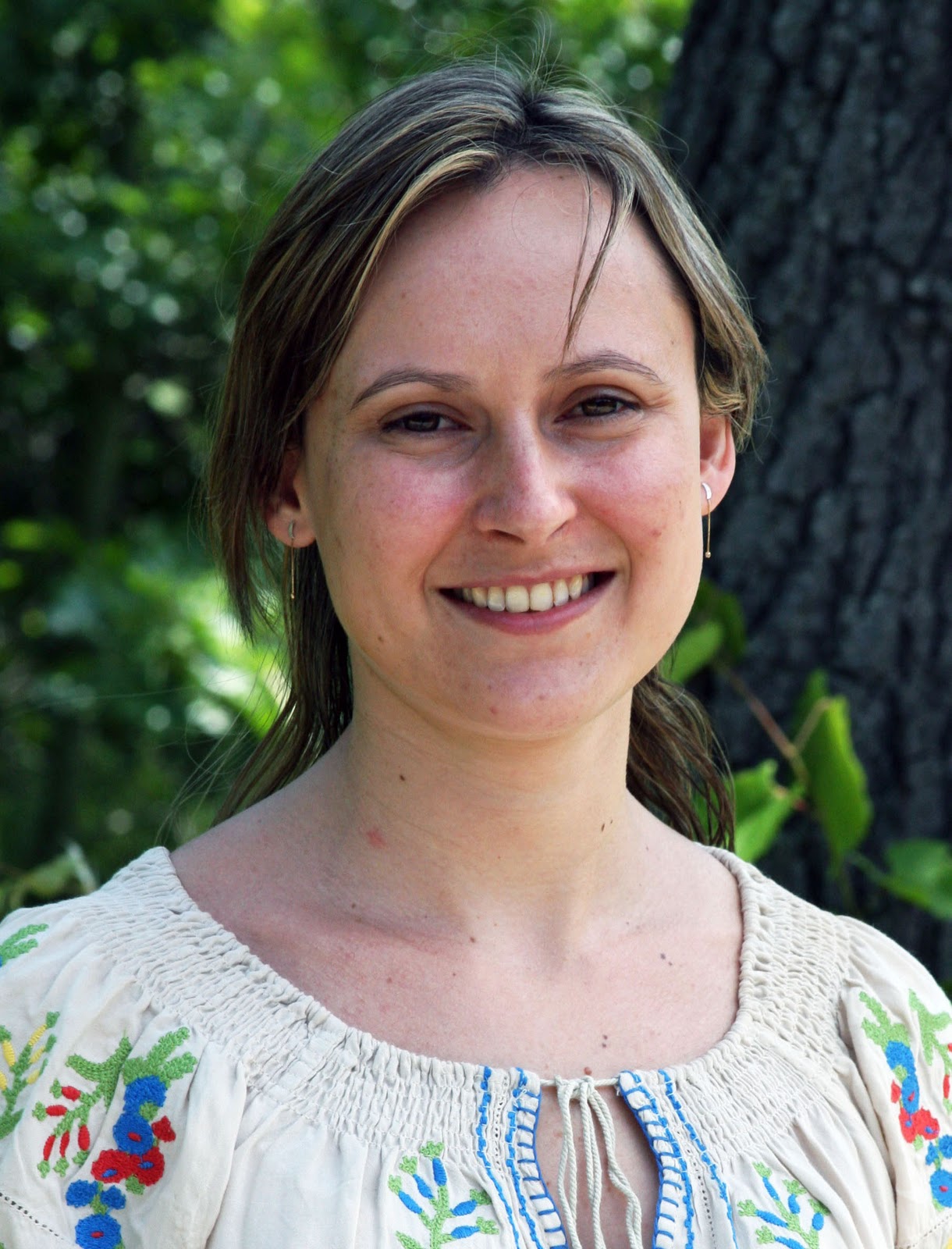
Priscilla Viana is a Knauss Sea Grant fellow in the Division of Ocean Sciences (OCE) at the National Science Foundation. She is involved in several programs related to aquatic sciences, and their interactions with earth and atmosphere.
Here is her latest report:
During the first months of my fellowship, I worked in the Ecology of Infectious Disease (EID) and in the Ocean Acidification (OA) Programs. These activities enhanced my ability to write grant proposals. I have learned how to address the NSF intellectual merit and broader impact criteria, how panelists and program officers evaluate a proposal and the main components of an awarded proposal.
The EID program is supported by the Biological Sciences and the Geosciences/OCE Directorates of the NSF and by the NIH. I helped in the proposal review process and attended a workshop at Atlantic City, NJ, where principal investigators presented ongoing and past EID project results. This year we reviewed about 70 proposals and 10 grants were awarded with a total investment of about $12 million.
After my first contact with the NSF proposal review process, I worked in the OA Program, which is a new competition supported and managed by the Office of Polar Programs, Directorate for Geosciences, and Directorate for Biological Sciences of the NSF. It was very useful to gain knowledge of all steps related to the implementation of a new program. I participated in the expert panel, responsible for reviewing about 120 proposals, and in the funding decision process. 22 grants were awarded with a total investment of about $24 million.
After the OA program, I became involved in the Interagency Working Group on Ocean Acidification (IWG-OA). The IWG-OA is composed by members of the NSF, as well as from NOAA, U.S. EPA, U.S. FWS, U.S. Navy, Department of State, NASA, USGS and BOEMRE. We are preparing the strategic research plan on OA requested by the Federal Ocean Acidification Research and Monitoring Act of 2009 (FOARAM Act). This report will be submitted to the Committee on Commerce, Science, and Transportation of the Senate, and to the Committee on Science and Technology and the Committee on Natural Resources of the House of Representatives. Its objectives are to understand the current research status, identify gaps that need to be filled and establish near and long term OA monitoring, research and modeling priorities. This strategic plan will also identify technology development and data management needs, assess the socioeconomic impacts of OA and recommend strategies to conserve marine organisms and ecosystems. It has been a very rewarding experience to learn about the role of different agencies and organizations in planning policy initiatives, while also being in contact with academic and agency scientists.
I also worked with my supervisor Phil Taylor (Head of the NSF Ocean Section), NOAA, USGS, BOEMRE and NIH to coordinate the Deepwater Horizon (DWH) Oil Spill Principal Investigator’s Conference held in St. Petersburg on October 5-6, 2010. The meeting was sponsored by the National Science and Technology Council’s Joint Sub-Committee on Ocean Science and Technology (NSTC JSOST). The conference was a joint effort of multidisciplinary parties. Researchers were invited to summarize recent advances from the current studies associated with the DWH spill, to identify research challenges, and to foster collaboration. Agencies actively conducting DWH oil spill related research, monitoring, and sampling, as well as representatives from the NSTC JSOST agencies, focused on identifying in conjunction with researchers short and long term research directions, and on developing recommendations to improve future oil spill response action. More information about this meeting can be found at: http://www.marine.usf.edu/conferences/fio/NSTC-JSOST-PI/
I am starting the ninth month of my fellowship. I have now a better idea of how policy is made and the importance of having scientists contributing to the policy making process. The effective management of marine resources can only be achieved when scientists are included in policy debates and are able to inform policy makers about the importance of their findings. I have gained a broad experience helping to coordinate scientific meetings and helping to set research priorities on ocean acidification and on the DWH oil spill crisis.
Being a Knauss fellow involved in all these different activities has been an exciting and intensive learning experience. This fellowship is certainly enhancing my skill set to address issues of public policy and academic fields.




