
Join IISG in taking a look at some of the projects we’ve been involved in during the past year or two. There have been a number of important initiatives that are already benefiting communities throughout the Great Lakes region, and here is just one example:
Flushing unused medicines is a bad idea. for aquatic wildlife, and for us–these chemicals can end up in local rivers and streams as well as drinking water sources. IISG has been at the forefront in efforts to to raise awareness on this issue and to help communities organize local medicine collection programs.
IISG and the Prescription Pill and Drug Disposal Program created permanent medicine collection programs in several Great Lakes communities, and Sea Grant has purchased 15 medicine collection boxes for communities that now have ongoing pharmaceutical collection programs in Illinois, Indiana, and Wisconsin.
As a result of the program, 15 Great Lakes communities collected 4,600 pounds of medicine in 2010 alone, preventing all of that from entering the water supply and negatively impacting the environment.
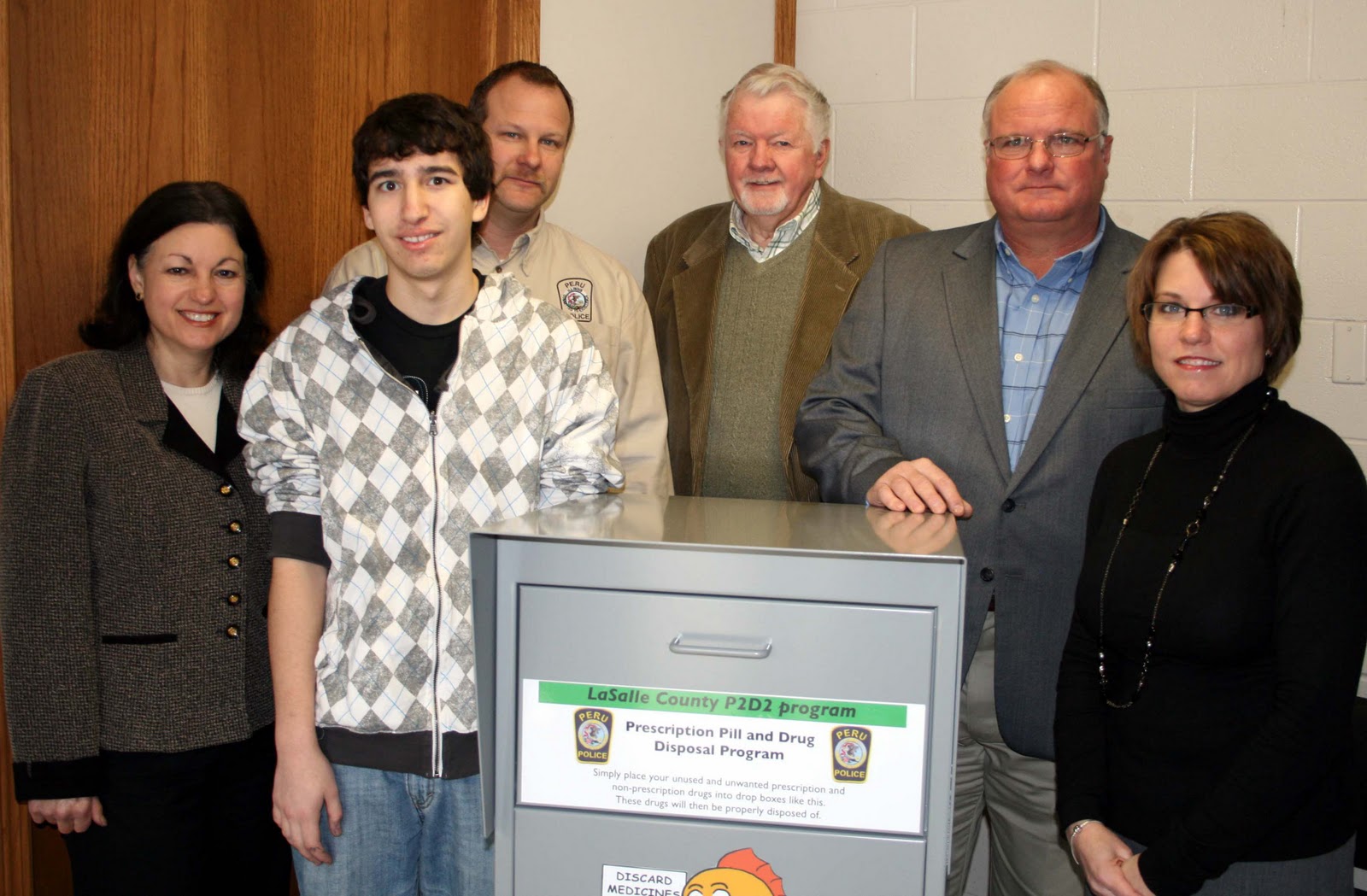
Pictured here is the drop box in Peru, Illinois and the local team that worked to make it happen. For more information on medicine collection programs and proper disposal of pharmaceuticals, visit the IISG webpage on Safe Disposal of Unwanted Medicines.




