Posted January 3rd, 2013 in Education, Healthy Waters
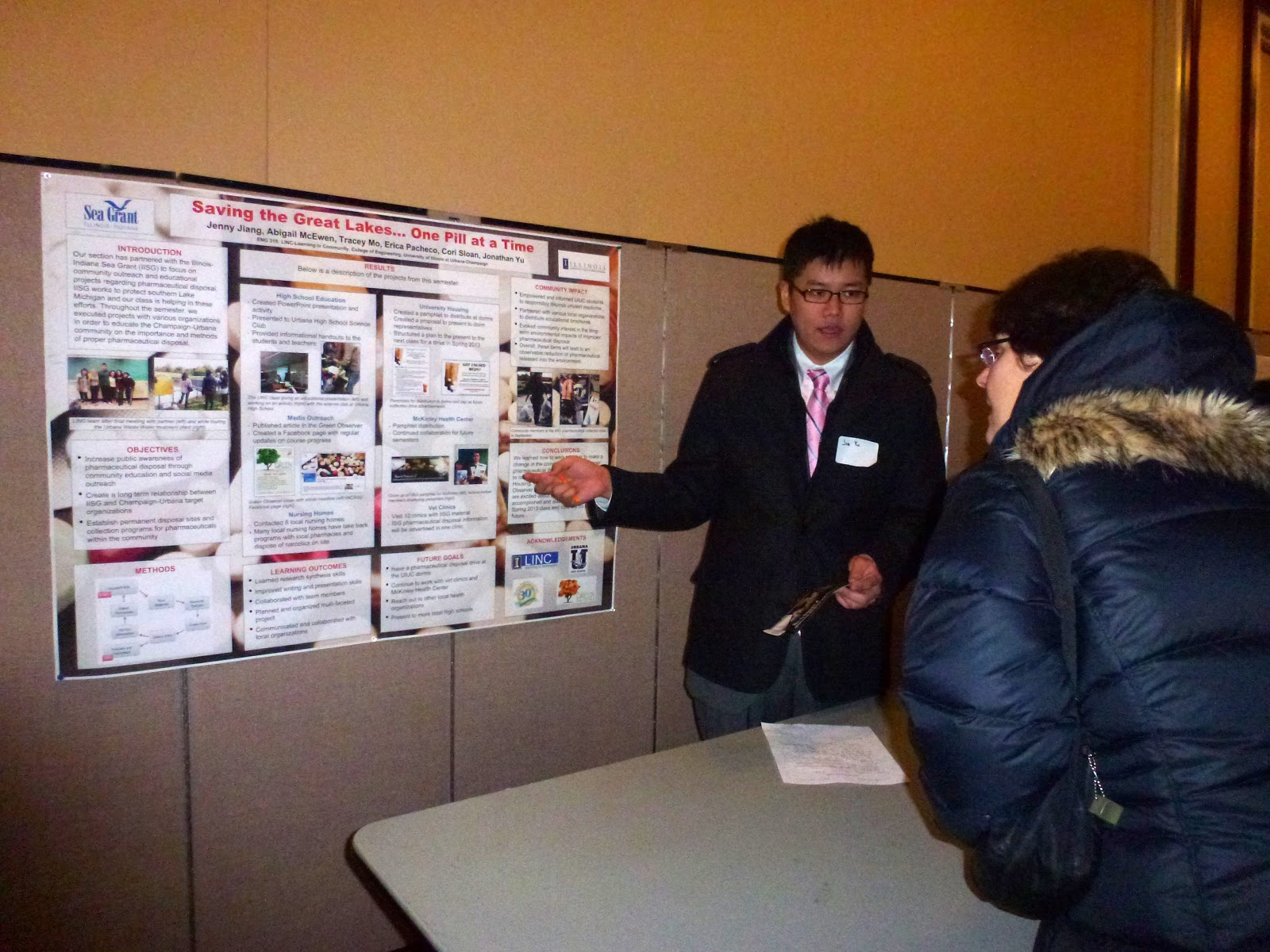 The University of Illinois’ Learning in Community (LINC) program provides service-learning opportunities for students to gain hands-on experience in a variety of fields while earning course credit towards their degree. The program also gives various departments and units at the University a chance to expand their mission and get students involved in critical issues.
 This past fall term, the LINC Program offered a Sea Grant-focused course for eight University of Illinois students where they learned about environmental threats to local and regional waterways. They designed and executed projects based on what they had learned about proper disposal of unwanted medicines.
At the conclusion of the course, students developed five activities focused on water issues, informing a larger audience about their importance and local impacts.
The projects included:
– A presentation and activity for Urbana High School’s science club students
– An article in the Green Observer and accompanying Facebook page about the importance of proper disposal of pharmaceuticals
– Placement of brochures at the McKinley Health Center in coordination with the Directors of Health Education and the Pharmacy
– A plan to spread the message about proper medicine disposal at student dormitories and to involve students in medicine collection events in 2013
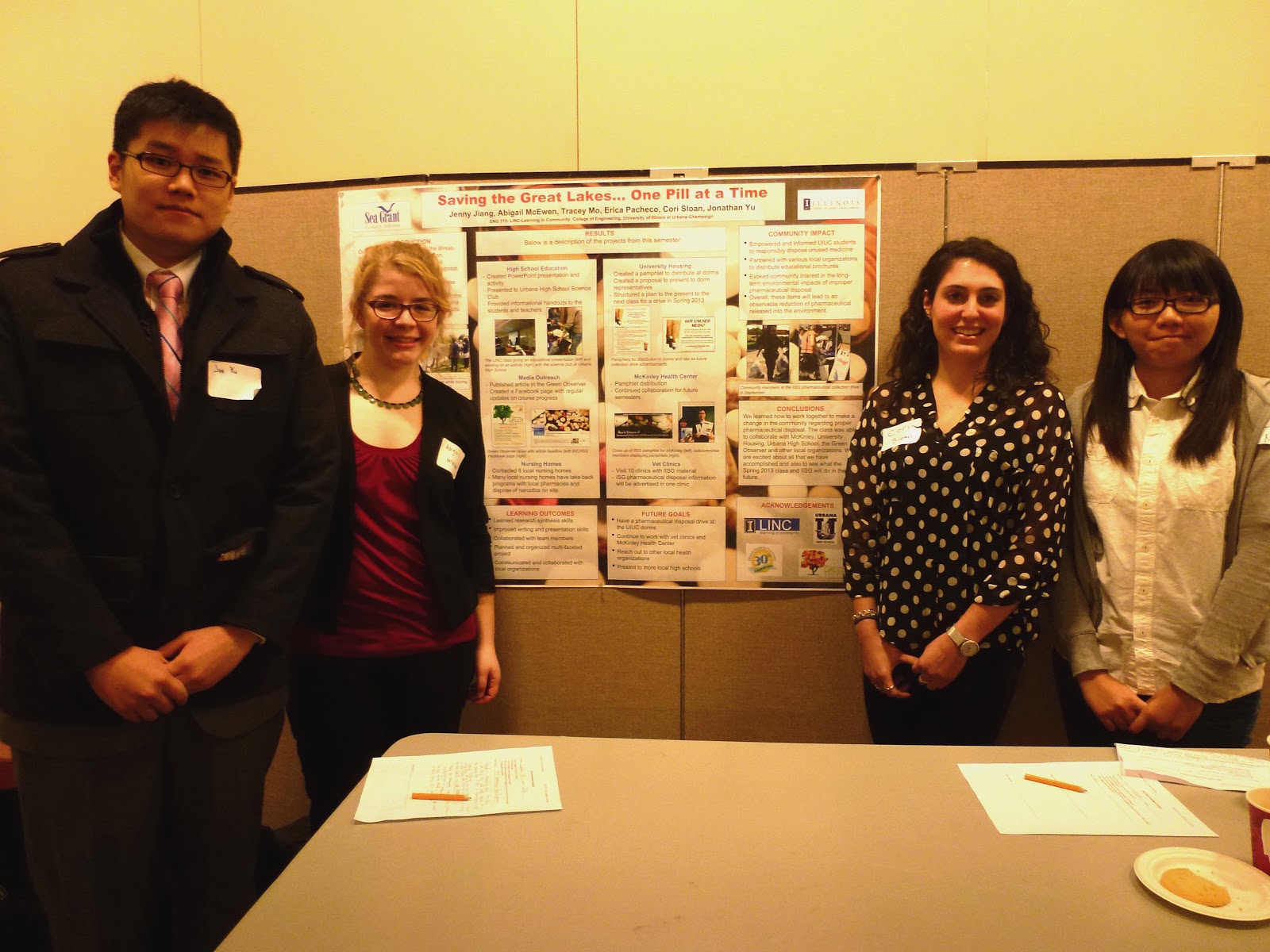
The course and projects that resulted informed current University of Illinois students about important environmental issues, while giving them experience collaborating with each other, working with local organizations and businesses, and performing outreach to share the information they learned with residents of Champaign-Urbana.