Aquaculture and aquaponics operations in Illinois and Indiana produce a wide variety of high-value seafood and vegetable products. Despite this, the vast majority of local chefs and restaurants are unaware that these products are being produced locally, so they still rely on frozen or fresh processed seafood, according to Illinois-Indiana Sea Grant Aquaculture Specialist Andrew Coursey.
Coursey wants that to change. Aquaculture operations in Indiana produce large quantities of food fish, and these products are then shipped to large metropolitan areas with live fish markets. “The farm-raised seafood market is established and successful,” said Coursey, “but it’s not connecting these aquaculture products to local markets where there could be high demand.”
This summer, Coursey conducted a tour of aquaculture facilities with 16 representatives from Purdue University Hospitality and Tourism Management, Purdue Dining and Catering, and local restaurants from the Lafayette, Indiana, area. The tour was used to educate chefs and dining executives on how fish and vegetables are produced using aquaculture and aquaponics practices, and to showcase high quality products that are produced locally.
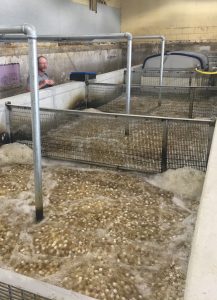
Bob Rode, aquaculture research lab manager for the Purdue University Department of Forestry and Natural Resources, takes a close look at the biofilters at Meador Farms in Cutler, Indiana. Recirculating aquaculture systems require the breakdown of waste products produced by fish (toxic ammonia) into non-toxic ammonia nitrate by culturing nitrifying bacteria in a biofilter, which provides an ideal environment for bacterial growth. (Photo: Illinois-Indiana Sea Grant/Andrew Coursey)
The group visited three local aquaculture facilities to see tilapia, barramundi, largemouth bass, Pacific white shrimp, red claw crayfish and aquaponics products operations. They then gathered at the Purdue Animal Sciences Research and Education Center for presentations by producers, aquaculture discussions, and a question and answer session. Representatives from producers throughout the state were in attendance, including White Creek Farms of Indiana, Falling Waters Farm, Sweetwater Springs Fish Farm, RDM Shrimp, Tippco Fish and Meador Farms.
Producer presentations covered a range of topics, including aquaponics, rainbow trout, tilapia, barramundi, largemouth bass, and hybrid striped bass. “Great discussions about recirculating aquaculture, aquaponics and fish processing occurred during this meeting and were beneficial to all groups in attendance,” said Coursey.
Aquaculture is the fastest growing food production industry in the world and a major industry in the United States, and aquaponics is also gaining traction. Aquaponics combines farming fish with growing plants hydroponically. Water is used in a closed system for producing both.
The tour was meant to connect food buyers and chefs with producers, educate chefs and producers about aquaculture and aquaponics, and generate interest in purchasing from local processing facilities. Presentations and aquaculture site visits provided information to both chefs and food buyers, while subsequent discussions allowed chefs to provide feedback to producers that will help them better market aquaculture products locally.
For more information, visit our aquaculture page or contact Andrew Coursey at acourse@purdue.edu or (765)494-9416.