Another school year is coming to a close, and teachers across the country are beginning to pack up their classrooms for the summer. Books are being packed away, wall decorations are coming down, and classroom plants and animals are moving to a new home. And where that new home is can have large and lasting environmental impacts.
Common classroom pets like goldfish, bullfrogs, and red-eared slider turtles can become invasive if released into local rivers, lakes, and ponds. Many aquarium plants also pose a threat to nearby aquatic habitats. These invaders can crowd out native species, degrade water quality, introduce diseases, and limit recreation. Once established, aquatic invasive species are extremely difficult to control—Florida alone spends millions each year trying to control the aquarium plant hydrilla.
Teachers and students can help protect our waterways from the harmful effects of aquatic invasive species with a few simple steps. While you’re in the market for a classroom pet, look for native and non-invasive species. Knowing the scientific names will make this easier.
When the time comes to dispose of plants, seal them in a plastic bag and throw them in the trash. Fish, reptiles, and other animals should be returned to the seller or given to a friend or fellow teacher who has pledged not to release unwanted pets. If a new home can’t be found, ask a veterinarian about other options. And be sure to sterilize any water before pouring it down the toilet or sink.
Learn more about aquatic invasive species and what you can do to curb their spread at www.TakeAim.org.
During the summer of 2014 sixteen science teachers from all around the Great Lakes region spent a week on board the U.S. E.P.A ship R/V Lake Guardian on Lake Erie as part of the Shipboard and Shoreline Science Workshop. Sponsored by the Center for Great Lakes Literacy, Ohio Sea Grant, Pennsylvania Sea Grant, and the U. S. Environmental Protection Agency, teachers were connected with scientists in first hand explorations of the ecology, geology, and bio-geochemical processes of Lake Erie.
Fifth grade middle school science teacher David Murduck was introduced to many ideas for his classroom and field activities from his experience on the research ship:

Although I knew the experience on the
R/V Guardian was going to be amazing, I never dreamed that the workshop would have such an impact on my students. Towards the beginning of the school year my class spends a lot of time learning about the importance of qualitative and quantitative observation. This year my students were able to apply their understanding of metric measurement while learning about the Great Lakes. Students were engaged in an activity where they had to use yarn to outline, label, and organize the shorelines of the Great Lakes to scale. After graphing the shoreline metric distances, students compared the total shoreline distances of the Great Lakes to the U.S. shoreline along the Atlantic Ocean, Pacific Ocean, and the Gulf of Mexico. Students then compared and contrasted the size of the Great Lakes to the total volume of water each lake holds, the metric mass of commercial fish caught, and the human population surrounding each Great Lake. This activity enabled me to reinforce the importance of metric measurement as we used metric rulers, triple-beam balances, and graduated cylinders in class. This also set the stage for in-depth discussion of the Great Lakes and the problems they face.
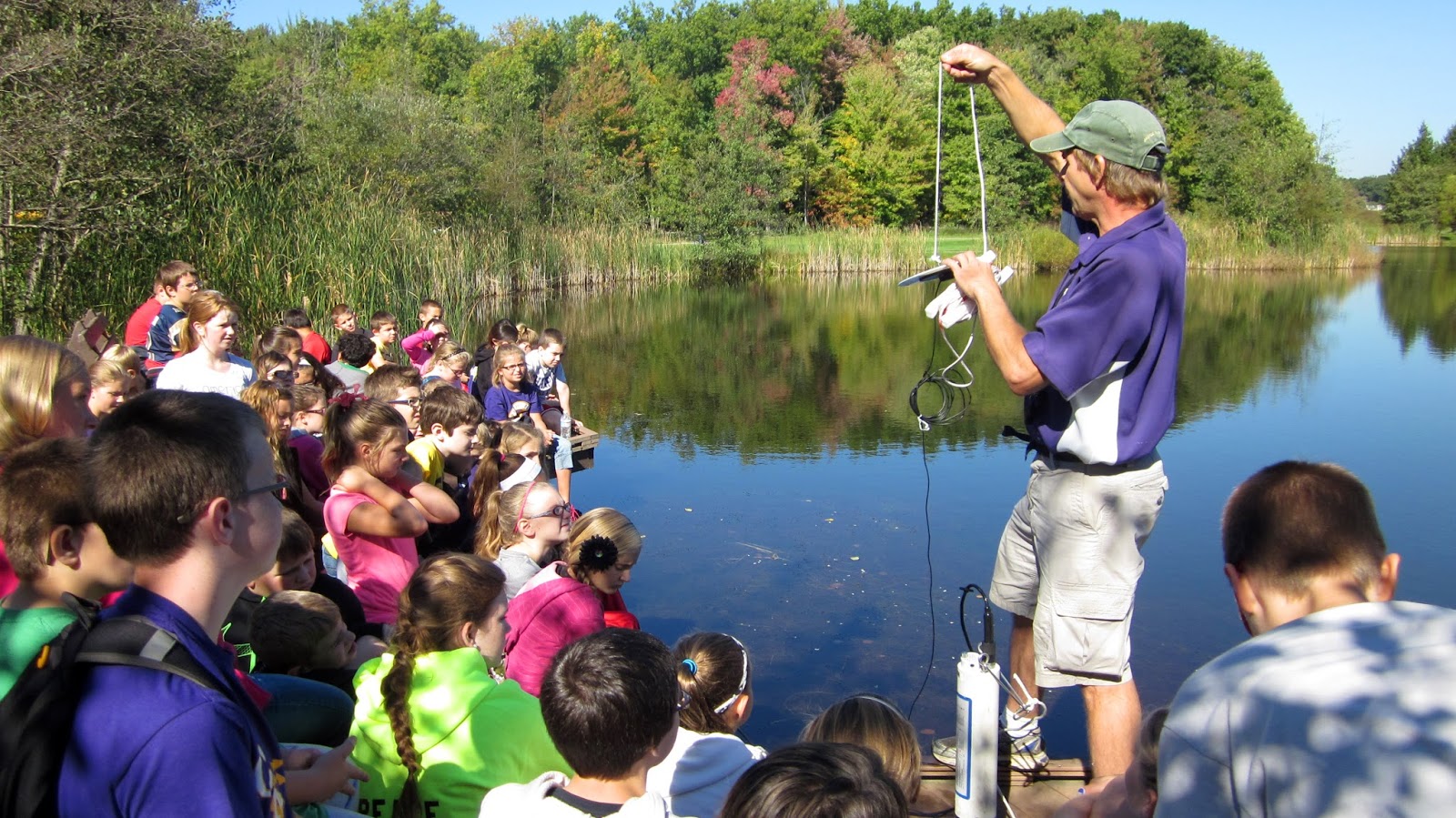
As the year progressed, students learned more about the Great Lakes, and specifically the Lake Erie watershed that they live in. Students learned about research that scientists aboard the R/V Guardian were completing. Research included a study of native and invasive species by Ruth Briland of The Ohio State University, a study of the presence of plastics by Sam Mason from State University of New York, and a study of chemicals and E. coli bacteria by Steve Mauro from Gannon University. This led to a better understanding of the importance of water quality. Macro-invertebrate studies and the use of water quality monitoring equipment lent for use by the U.S. Environmental Protection Agency allowed real-world application as students studied water in local tributaries of the Lake Erie watershed.
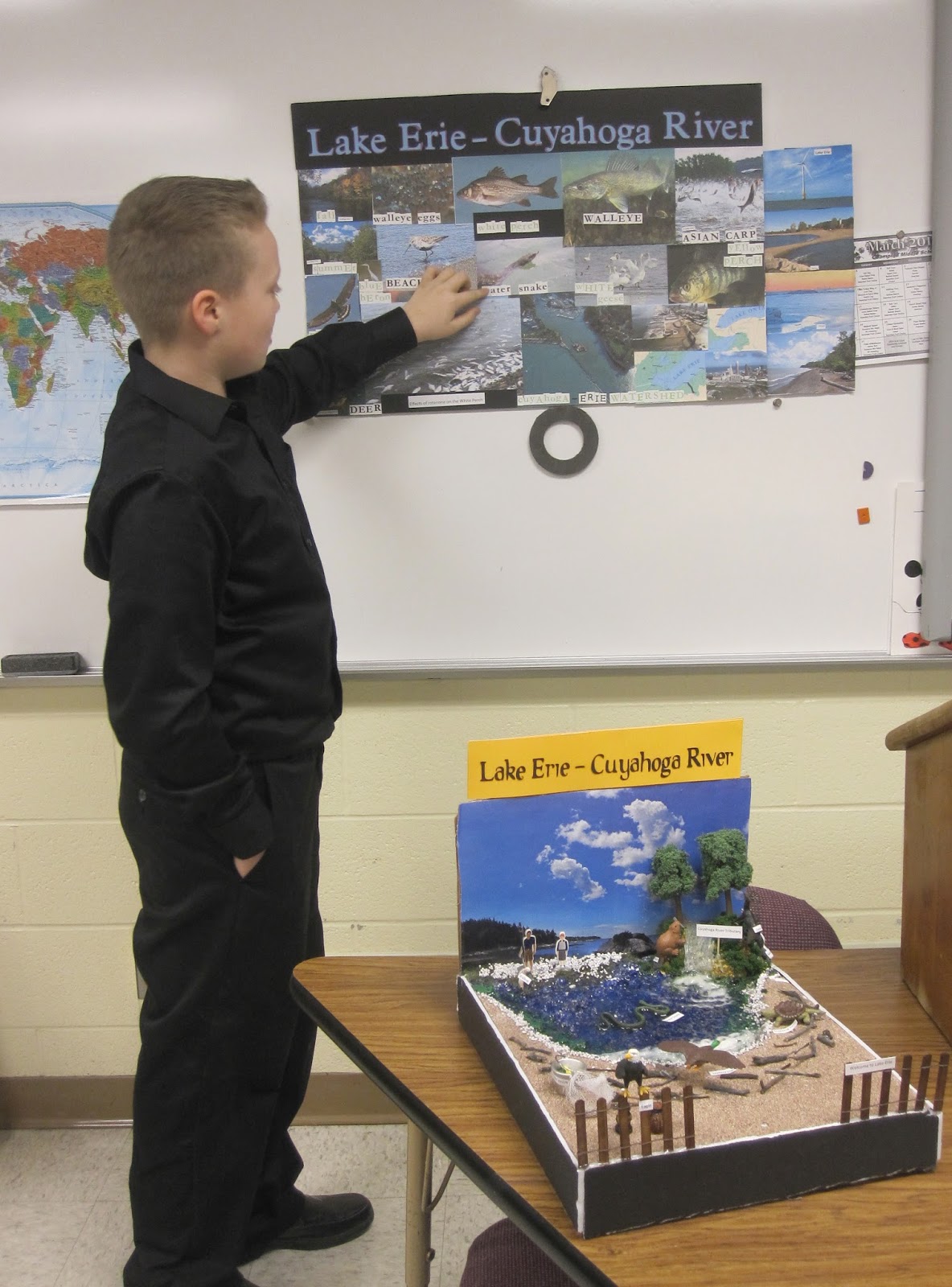
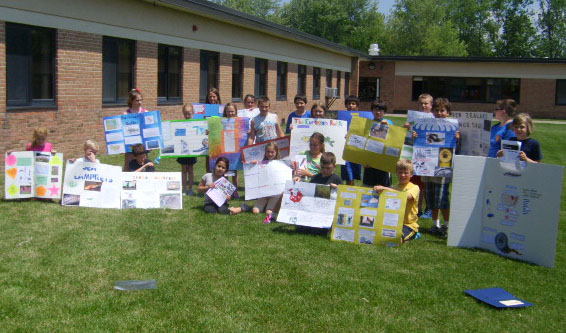
Follow-up allowed students to complete individual in-depth research related to invasive species of the Great Lakes. This information was presented with the use of visual projects such as PowerPoint, dioramas, or posters in class.
Students then applied what they had learned throughout the year by participating in an important stewardship project. With a unique partnership between our school and the Cuyahoga Valley National Park, students planted native oak trees for the park. Park ranger John DeMuth came to each 5thgrade science class and discussed how the invasive Privot plant forces out native plants along the Cuyahoga River. He explained that native plants have deeper root systems that hold the soil more securely and slow erosion of the river banks. He also explained that unlike the past when pollution was the main
problem in the Cuyahoga River watershed, invasive species are now the real concern.
In culmination, with the help of high school horticulture students from the Trumbull County Technical and Career Center and park rangers from the Cuyahoga Valley National Park, my students learned teamwork as they used gloves, eye protection, and loppers supplied by the national park to cut and stack the invasive plants along the river bank. National park employees later use controlled use of herbicides on the stumps to kill the plants. What an amazing year!
Our education team is at it again! Allison Neubauer wrote in with this exciting announcement:
 Teachers across the Great Lakes region—have we got a treat for you! You can now explore creative projects from all-star educators to spark new ideas and read important tips for getting your students involved in the effort to “nab” local aquatic invaders.
The IISG education team has been working hard to compile model projects that successfully tie together AIS education and community stewardship. Our revamped Nab the Aquatic Invader! website will help you up your game—and the new-and-improved Top Desk Administrator is your one-stop-shop for project ideas.
Community stewardship projects like the ones highlighted here are an exceptional tool for pushing students beyond rote memorization and providing them with an opportunity to apply their knowledge in ways that have positive impacts on their communities.
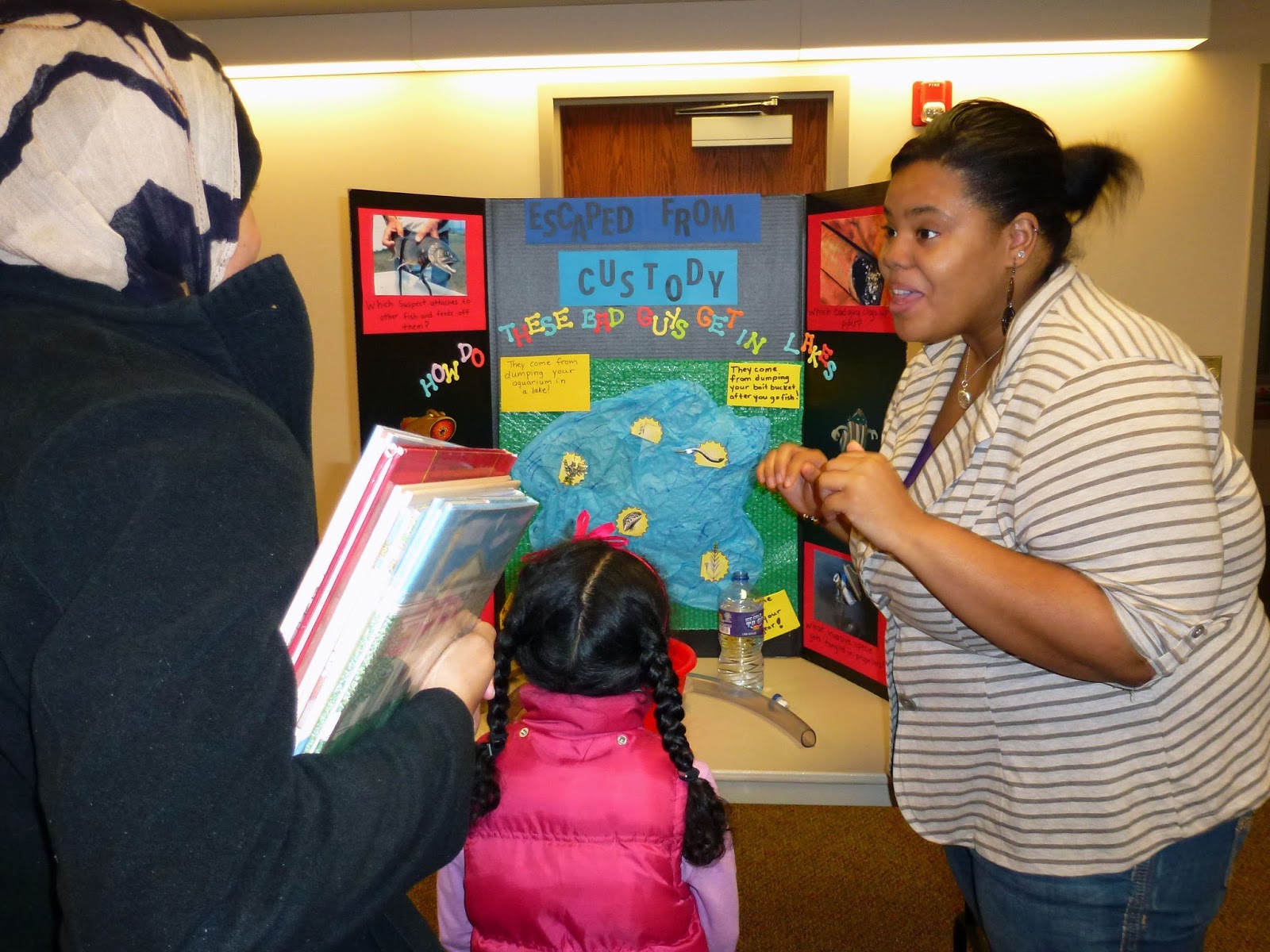
Preview outstanding examples of student work, ranging from fun informational activity books to catchy musical compilations. When you’re done perusing, read the summary reports written by the teachers responsible for these successful activities for information on how to plan and implement similar projects in your own classroom.
The Nab the Aquatic Invader! website is the place for the latest and greatest invasive species project models, information, and activities.