Dig it and forget it—that’s one of the biggest appeals of woodchip bioreactors, one of many nitrogen-reducing practices recommended in the Illinois Nutrient Loss Reduction Strategy.
The bacteria living in these long, narrow trenches remove nitrogen carried through farm tile lines through a process known as denitrificaiton. The result is an average annual nitrogen reduction of 25 percent for roughly 10 years—and with minimal maintenance for the farmer.
But don’t just take our word for it. Hear what University of Illinois researchers Mark David and Laura Christianson had to say about this conservation agriculture practice this video.
The Paul A. Funk Recognition Award provides a personal award to the winner as well as funds for their department to use in support of their work benefiting natural resources and human environmental systems.
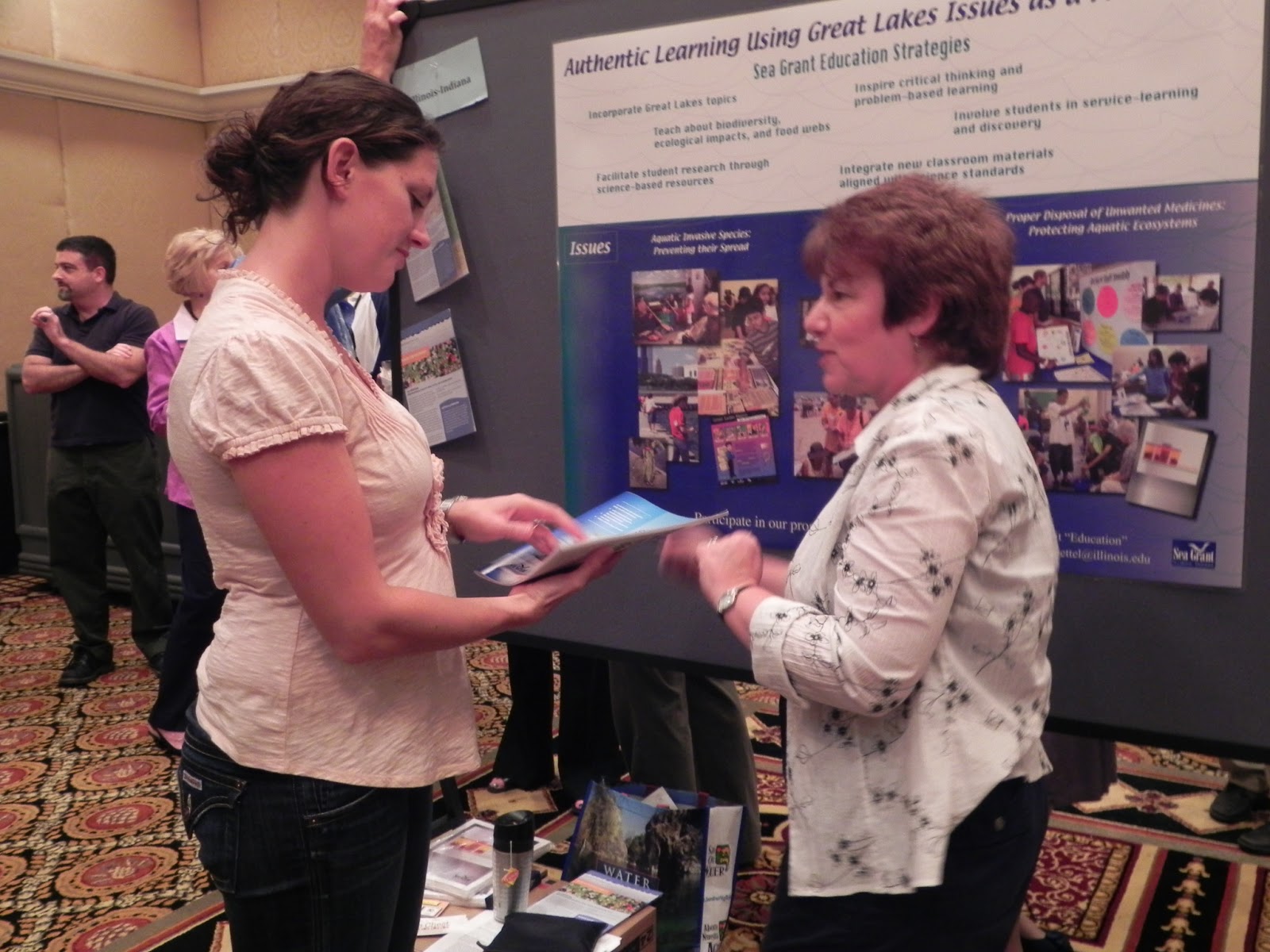
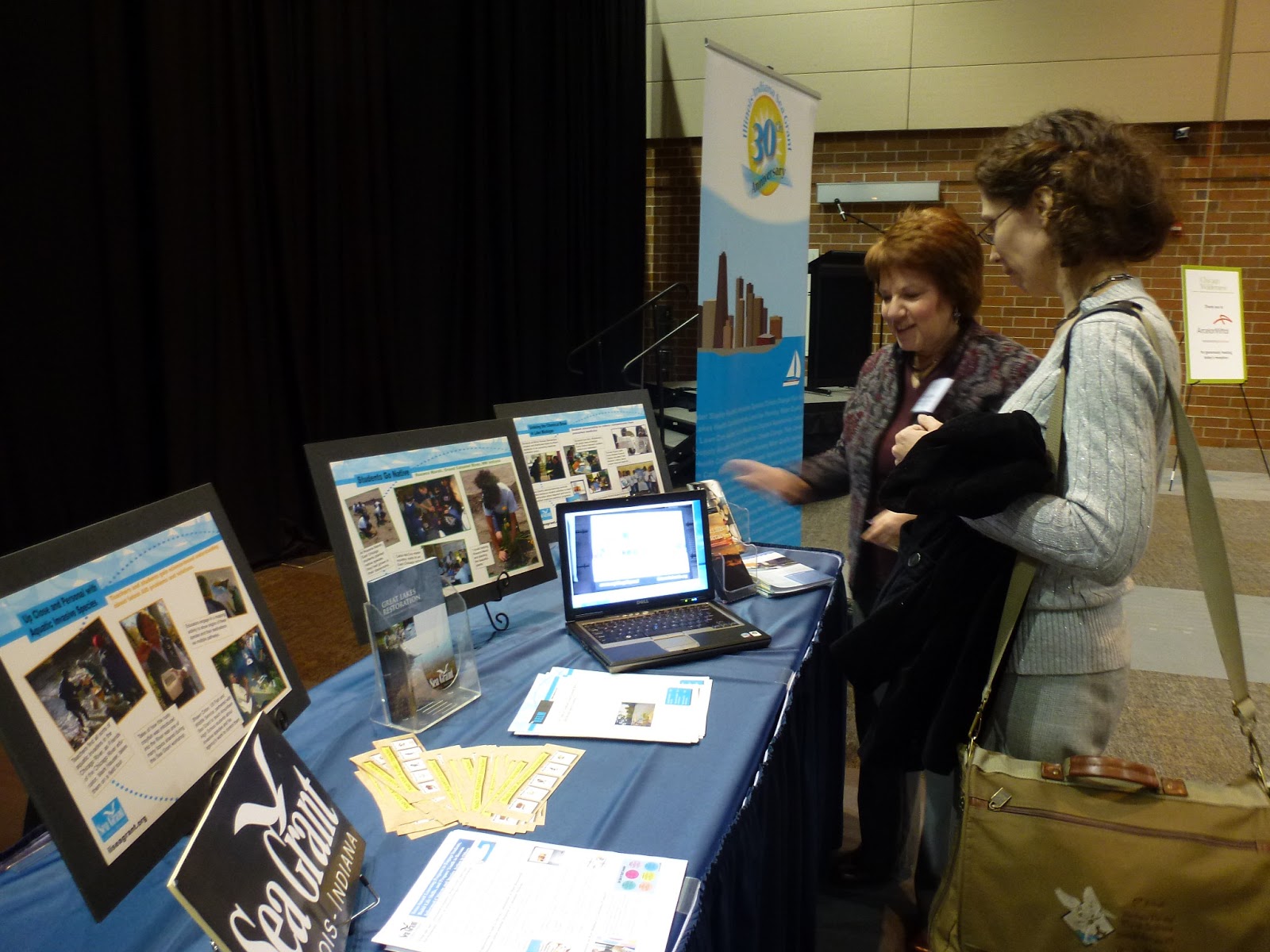
This year, Illinois-Indiana Sea Grant’s Robin Goettel won the award for her extensive educational outreach work, including the creation of numerous curricula for science teachers and others. In particular, the Fresh and Salt curriculum, the Greatest of the Great Lakes collection of model lessons, and The Medicine Chest have helped to inform, engage, and education over 100,000 students about environmental science related to the Great Lakes.
Robin isn’t afraid to get totally immersed in her environmental education work either, as this excerpt from her nomination proves:
“No description of Robin would be complete without a mention of Zelda the zebra mussel, a ‘spokesmussel,’ as Robin describes her. Zelda is a costume that Robin is not afraid to pull out at public events. While maybe not quite ready for Disneyworld, Zelda draws a crowd. People start with a laugh, are compelled to ask questions, and end up with a better understanding of invasive species for the unconventional approach.”
Those examples don’t begin to touch on the work that Robin has engaged in throughout her many years with the program–from direct engagement with students of all grade levels, to educational displays at some of the Midwest’s biggest events, to forging partnerships with other environmental organizations to better educate, inform, and engage people in protecting and preserving natural resources.
Robin’s many years of work on environmental issues, and her dedication to fostering ever higher levels of science education for students of all ages, make her a terrific and very deserving choice for this award.
What does a career in natural resources look like?
This month, a group of 4-H youth joined us at Martell Forest to find out! From tree climbing and birding to creating scent traps and dissecting owl pellets, participants spent three days exploring the many ways people work with and protect our natural resources.
Thanks to everyone who joined us! We can’t wait to see where your adventures take you next!