August 5th, 2013 by Irene Miles
A new interview series takes readers behind the scenes of the latest research on pharmaceutical and personal care products (PPCP). In UpClose, researchers working in the Great Lakes region talk about where these contaminants come from, what they mean for aquatic habitats, and how they can be effectively managed. With its focus on making science accessible and providing practical management solutions, each edition gives you a unique look at an emerging ecological threat.
Illinois-Indiana Sea Grant kicked off the series with a conversation with Timothy Strathmann, an environmental engineer at University of Illinois Urbana-Champaign. Later editions featured the work of Maria Sepulveda, a toxicologist at Purdue University, and John Kelly, a microbiologist at Loyola University Chicago. Each interview targets a different component of PPCP research—everything from what happens to pharmaceuticals when water is treated to what bacterial resistance could mean for other aquatic wildlife living in urban rivers. Readers also get an insider’s view of the complex, and sometimes tricky, process of conducting field studies and the potential implications of research on industries and regulations.
In upcoming editions, Ball State’s Melody Bernot will explain the surprising roles location and season play in pharmaceutical pollution, and Rebecca Klaper at the University of Wisconsin-Milwaukee will talk about how research into the effects of these contaminants could lead to changes in how they are made, used, and treated.
All UpClose editions are available in print and online. For print copies, contact Susan White. For more information about PPCP pollution and what you can do to reduce its impacts, visit www.unwantedmeds.org.
July 26th, 2013 by Irene Miles
A House panel has suggested some deep cuts to Great Lakes programs including the Great Lakes Restoration Initiative, but a number of congressional members are ready to oppose such cuts and continue the restoration and protection work on each of the Lakes.
From Crain’s Detroit Business:
“Federal programs designed to make headway on some of the Great Lakes’ most longstanding ecological problems, from harbors caked with toxic sludge to the threat of an Asian carp attack, would lose about 80 percent of their funding under a spending plan approved Tuesday by a Republican-controlled U.S. House panel…
After an initial $475 million in 2009, the restoration initiative has gotten about $300 million a year, although this year’s total has fallen to $285 million because of across-the-board cuts. The subcommittee bill would slash the 2014 allocation to just $60 million.
The Great Lakes region historically has received about one-third of the money in the federal loan fund for sewer repairs. Sewer overflows cause local officials to order beach closings each year because of E. coli bacteria contamination. The bill would reduce the fund from just over $1 billion this year to $250 million in 2014…
The restoration initiative has pumped about $1.3 billion into projects across the eight-state region that have helped scrape away contaminated harbor sediments, restored wildlife habitat and sought to curb runoff that causes harmful algae. It also has supported efforts to ward off an invasion by the dreaded Asian carp, which compete with native species for food.”
Read the complete article at the link above for more information about Great Lakes programs and their funding.
July 24th, 2013 by Irene Miles
Senators Mark Kirk (R) and Dick Durbin (D) of Illinois recently passed an amendment that would prevent the Army Corps of Engineers from moving critical invasive species prevention functions out of their current Chicago location .
From CBC News:
“An amendment to the Energy and Water Appropriations bill has passed and prevents the removal of critical functions and staff from the District Office of the U.S. Army Corps of Engineers in Chicago. The Windy City is home of the frontline fight against Asian carp entering the Great Lakes.
Republican Senator Mark Kirk and Senator Richard Durbin, a Democrat, proposed the amendment after U.S. Army Corps of Engineers announced plans to move Chicago district office functions to Detroit.
The senators believe the move, had it been made, would have potentially affected more than 200 employees who oversee projects such as Asian carp electric barriers and Chicago locks and dams designed to keep the invasive species out of the Great Lakes.”
Read the complete article at the link above to learn more.
July 16th, 2013 by Irene Miles
“Thank you for providing an awesome, informative, and very educational workshop,” said one teacher after last month’s B-WET field experience. “It was extremely helpful to me and, as a result, I feel very confident in addressing my students regarding the Great Lakes, knowing that now I have a plethora of resources, information, lessons, etc. at my disposal.”
All of the attendees at this year’s B-WET Field Experiences for Watershed Educators workshop shared similar positive feedback on the experience, and were genuinely excited at the opportunity to expand their science lessons. IISG’s education team led last month’s four-day training for teachers in Illinois and Indiana, where participants gained new hands-on skills and knowledge from invited speakers to take back to their classrooms.
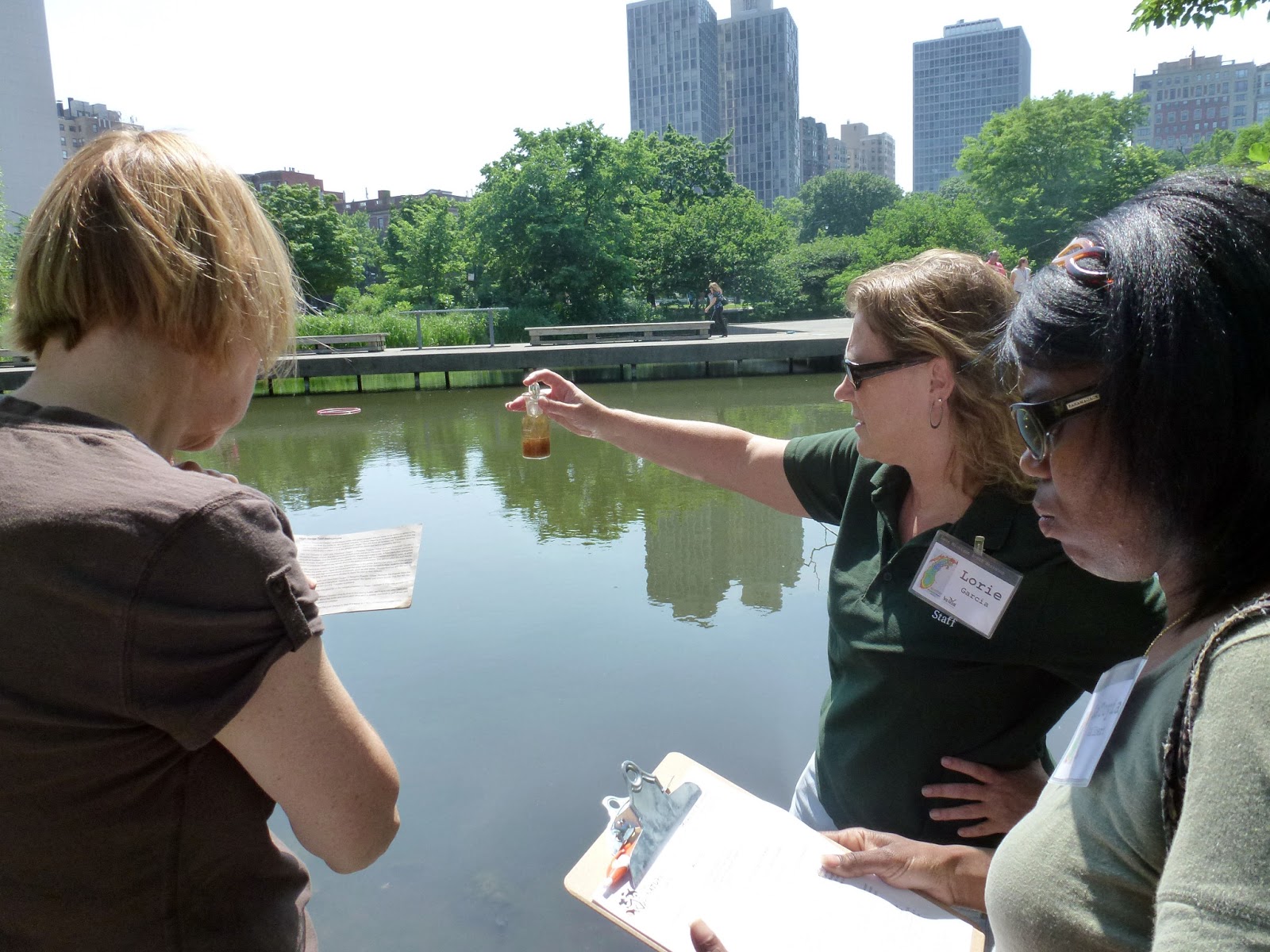
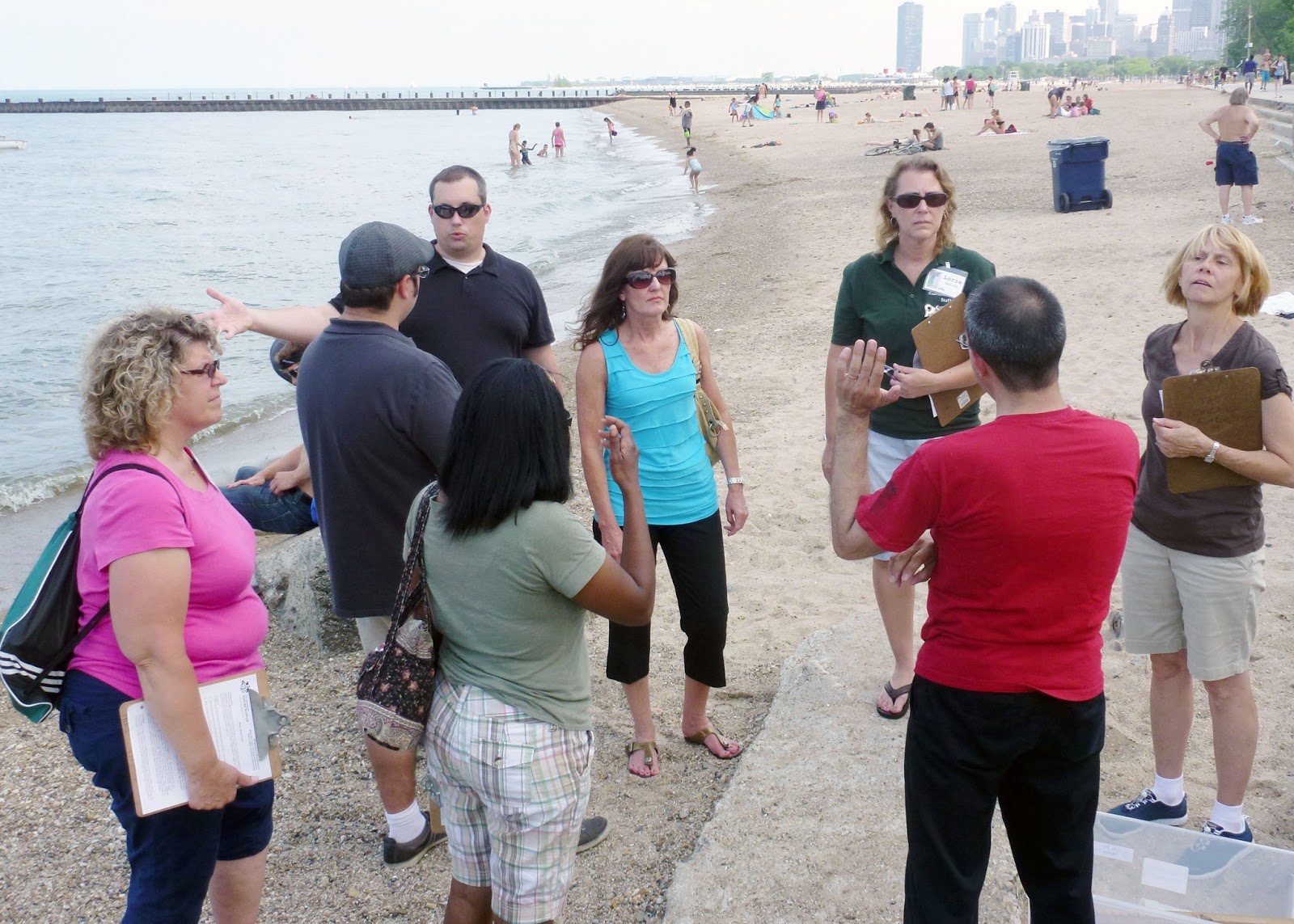
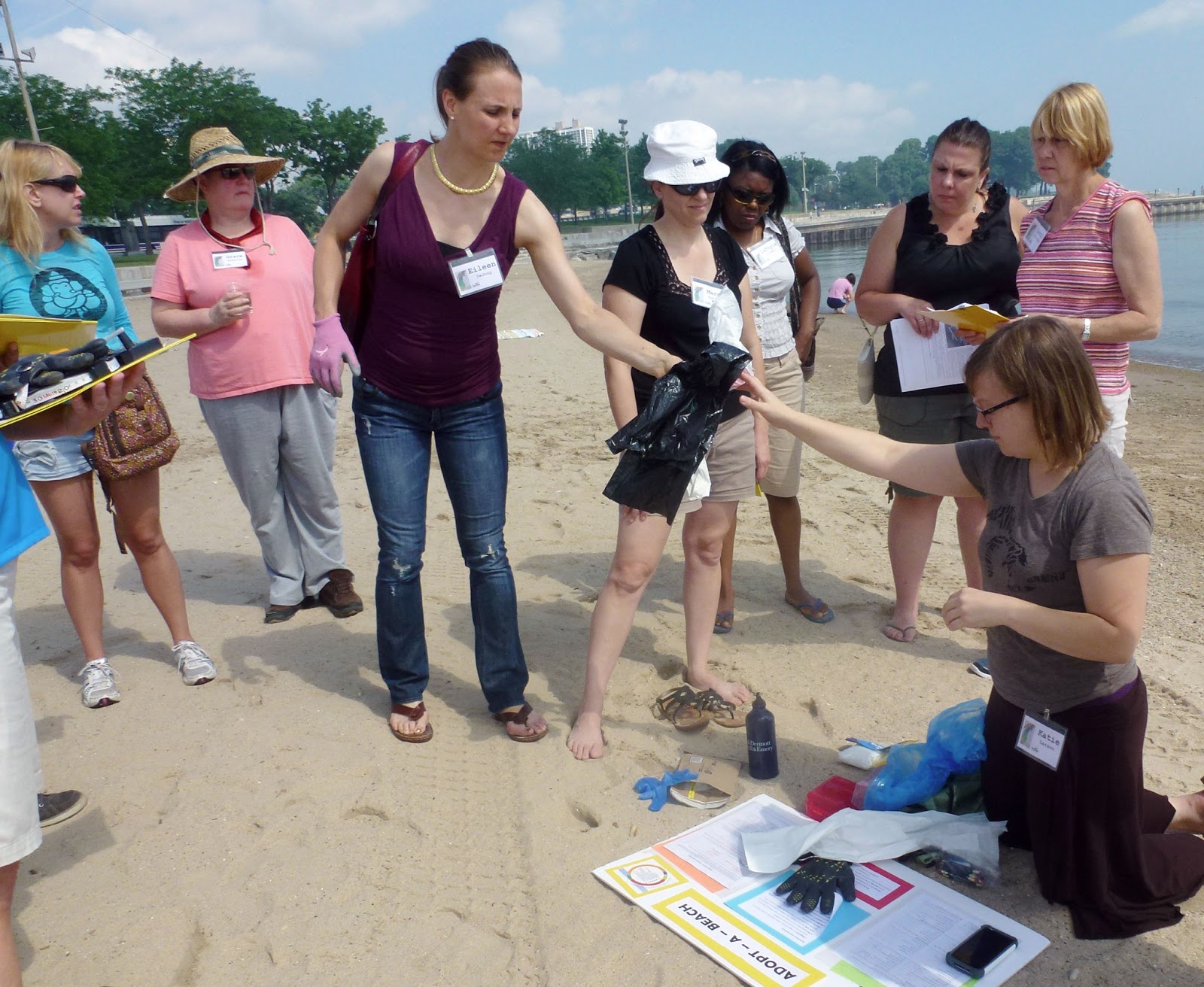
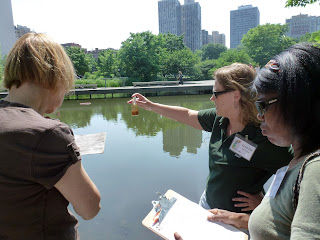 Teachers got to see a number of practices in action, including habitat restoration at Cowles Bog, a remediated and revitalized Roxana Marsh, water quality testing at the Peggy Notebaert Nature Museum pond, and more. They also got their hands dirty planting native species and performing a beach cleanup.
The workshop was designed explicitly to provide educators with a way to connect classroom concepts and scientific principles with real-world examples of watershed stewardship in action. Teachers engaged in fieldwork and collaborated with participating agency and organization educators who shared their program examples. As a result, teachers will be able to offer their students information that complements their science curricula. Additionally, the workshop gave them a chance to brainstorm new activities and lessons they could use with their students this fall.
Terri Hallesy, Illinois-Indiana Sea Grant education specialist explained, “As a result of this workshop, students will develop awareness and understanding about these critical environmental watershed issues based on the teachers’ new understandings. Educators will bring this increased confidence to their students to help excite them about engaging in Great Lakes stewardship.”
Added Rafael Rosa, Vice President of Education at the Peggy Notebaert Nature Museum, “What I was most impressed with was the enthusiasm of the teachers the program attracted. They asked great questions and more importantly were very open to sharing ideas and working with one another. I think I learned as much from them as they did from me.”
Funding was provided through a grant from the NOAA B-WET education program (linked above), and the workshop was made possible with assistance from Indiana Dunes State Park, the Great Lakes Research and Education Center at Indiana Dunes National Lakeshore, and the Alliance for the Great Lakes.
July 15th, 2013 by Irene Miles
The Great Lakes, a source of freshwater for millions in American and Canada, will likely see increased stress as the water is needed for a growing population and a changing climate.
From The Toledo Blade:
“The Lakes’ usage has drawn more attention in recent years from politicians and legal scholars, such as those who attend the University of Toledo College of Law’s renowned Great Lakes water-law conference each fall. They have stated on numerous occasions that Great Lakes water-management laws pale in comparison to those of the American Southwest, where political battles over water rights have been fought for decades.
Scholars believe this region’s legal framework is evolving into a stronger one as water controversies and more political battles heat up, as evidenced by intense negotiations that resulted in the Great Lakes region’s first binding water-management compact.
The Great Lakes region has traditionally been less irrigated than others. But that too is changing.
Michigan and Ohio have had an uptick in irrigation permits the past two years, largely a result of the 2012 drought and concerns over weather becoming more unpredictable because of climate change.”
Read the complete article at the link above, which includes additional information about areas of the U.S. that are already experiencing water shortages or similar issues in the future.
July 10th, 2013 by Irene Miles
From Robin Goettel, IISG associate director for education:
Scientists and teachers had a unique opportunity to interact, network, and connect research with education during The Center for Great Lakes Literacy’s Educator Day at last month’s IAGLR 2013 conference in West Lafayette, Indiana. Among the many goals of the IISG-coordinated session, providing opportunities for teachers to share their science education needs with researchers and identifying ways to incorporate the latest Great Lakes research into their lesson plans were high priorities.
The exchange of ideas was not only productive, but was a welcome and highly valued experience for all of the participants. The feedback received from both researchers and educators was outstanding, and offered a number of suggestions to guide another session like this in the future.
Said one teacher of the event, “I was impressed! My experience with IAGLR exceeded my expectations. I was hoping to simply gather more information to ‘grow’ my Great Lakes curriculum. However, I was able to network with other teachers and scientists which I found so much more valuable than walking away with a stack of Great Lakes lesson plans.”
Another educator was grateful for the opportunity to meet and talk to working researchers. “I am very thankful for the chance to interact with professionals in the field. Not only does attending scientific conferences refresh learned concepts, but allows for new learning, insight, and expansion of awareness. It also provided fresh ideas for project-based learning and the opportunity to network with potential collaborators.”
The participating scientists were also glad to brainstorm ways that their work could be incorporated into classroom lessons.
 “I always enjoy talking with teachers who are ‘in the trenches’ with younger students. They are faced with a different set of challenges (and opportunities) than we have at the college level. It was nice to hear that there are current efforts to better integrate math and science. It was also interesting to hear what teachers introduce in their classrooms to motivate and engage students in STEM areas.”
July 8th, 2013 by Irene Miles
Fifteen educators took to the water yesterday for the annual Shipboard and Shoreline Science Workshop. Scheduled for this week (July 7-13), the workshop offers teachers an opportunity to sail aboard the Lake Guardian on Lake Ontario, conducting a variety of experiments and research processes. This hands-on experience, combined with collaborative meetings with their fellow teachers, will allow each participant to take new information and approaches back to their classrooms.
Among the fifteen participants on the cruise are teachers from Illinois, and two of them wrote in to tell us about what they hope to gain from this week’s experience on Lake Ontario.
Alex Valencic, a fourth-grade teacher at Wiley Elementary school in Urbana, Illinois, looks to bring more information about the interactions between plants, animals, weather, and people to his students and his curricula.
“I’ve taught professionally for five years, first as a substitute teacher and then in my current position for the past two years. My teaching experience involves all of the core subjects, including mathematics, science, literacy, and social studies.
I first learned about the Lake Guardian workshop through a friend who works with the Illinois-Indiana Sea Grant. Some of the major topics of study for fourth graders in Illinois include learning about ecosystems, particularly how plants and animals interact with their environments, weather and global climate, and inquiry-based research. It is my hope that I’ll gain some ‘real-world’ experience studying these issues on Lake Ontario. I would like to integrate the topics into my science curriculum and challenge students to use the information about Lake Ontario to guide their study of Lake Michigan (the Great Lake that borders Illinois). While my students will not be able to go to the Great Lakes to experience the hands-on learning themselves, they will be able to use the resources gained during this workshop in their inquiry projects.”
Jen Slivka, working in the Shedd Aquarium’s learning department, is looking forward to incorporating even more science-based information and research into the exhibits at the aquarium.
“As a learning specialist, I have had the opportunity to coach teachers on inquiry-based science, create professional development sessions, and work closely with teachers on creating stewardship and citizen science programs. I feel very lucky to work with students and teachers of varying backgrounds and pass along my passion for science and education!
Prior to joining the Shedd team, I taught first grade for five years in Plano, IL. My passion for science was ignited when I attended Aurora University to earn my Masters in Teacher Leadership and Elementary Math and Science. My experiences in my graduate work led me to apply for a program through Shedd, called Teacher Field Experience: Biology in the Bahamas. Through this program, I was able to dive deep into marine environments and scientific research, first in Shedd’s classroom, and then firsthand in the Bahamas aboard Shedd’s research vessel, the R/V Coral Reef II. Through hands-on experience, I gained a greater understanding of data collection and analysis, how it applies to current scientific research and how to integrate it into my classroom curriculum. I quickly realized that teachers and educators can benefit greatly from unique professional development experiences and field work. My experiences on the Shedd’s research vessel created a desire in me to continue doing real, hands-on science, and inspire other educators to improve the science they do in their classroom. Last year I was fortunate enough to accept a learning specialist position at Shedd, which allows me the opportunity to connect with teachers all over the city of Chicago.
The Lake Guardian Sea Grant opportunity came at a perfect time. Shedd Aquarium recently unveiled a renovation of our Local Waters exhibit, titled At Home on the Great Lakes. Since Shedd is committed to education and conservation of the Great Lakes, I am thrilled with the opportunity to be able to board a research vessel and explore ecology, geology, geography, weather, and human impacts on Lake Ontario. Even though I was born and raised in Illinois, I feel that I have a lot to learn about the crucial role that the Great Lakes play in our world. I am looking forward to building my knowledge base on the Great Lakes by receiving firsthand experiences on a working research vessel. I am most looking forward to gaining new resources and discovering stewardship opportunities for students and teachers. Once I return, the knowledge and experiences I gain will be shared with the learning department, and will help to shape future programming at Shedd.”
July 2nd, 2013 by Irene Miles
The Great Lakes Ecological and Economic Protection Act was introduced by Senators Carl Levin (D-MI) and Mark Kirk (R-IL), co-chairs of the Senate Great Lakes Task Force, along with Senators Debbie Stabenow (D-MI), Amy Klobuchar (D-MN), Sherrod Brown (D-OH), Richard Durbin (D-IL), Al Franken (D-MN), Charles Schumer (D-NY) and Tammy Baldwin (D-WI).
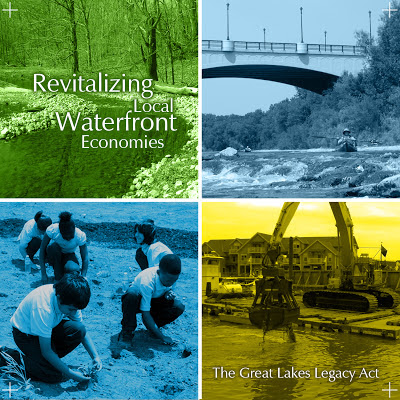 In addition to reauthorizing the Great Lakes Legacy Act, which provides support for communities to clean up waterways that are designated Areas of Concern (AOC) the United States and Canada, the new legislation would continue funding the Great Lakes Restoration Initiative and the EPA Great Lakes National Program Office.
The 10-minute video, produced by Illinois-Indiana Sea Grant and Wisconsin Sea Grant, explores Great Lakes waterways blighted by decades of industrial discharges like heavy metals, oil, and chemicals such as PCBs and PAHs. The 2002 Great Lakes Legacy Act created an initiative to clean up contamination in these AOCs. There are currently 29 AOCs in the United States. The habitat, water, and sediment quality have become severely degraded at these sites.
The video informs anglers, boaters, residents, and local businesses of the benefits that can come from a remediated AOC through the Legacy Act. The procedures and successes are the result of strong partnerships among states, municipalities, non-governmental organizations and businesses. Under this voluntary, collaborative program, the EPA and its non-federal partners have allocated almost $400 million toward sediment remediation.
As of September 2012, the program has removed or capped 2.1 million cubic yards of degraded sediment. But more waterways need to be cleaned up, and community involvement is essential.
Learn more about the Great Lakes Legacy Act at the EPA’s GLLA webpage.
July 1st, 2013 by Irene Miles
Illinois’ beach fronts got a bit of good news last week as a recent report pointed to improving water conditions and reduced contamination.
From The Chicago Tribune:
“The report compiles data on E. coli levels collected by local agencies and submitted to the U.S. EPA. E.coli, which can cause serious illnesses and infection, can be a predictor of other contaminants in the water, said Henry Henderson, Midwest director for NRDC.
 Chicago’s Montrose Dog Beach and Rainbow Beach were the most contaminated beaches along Illinois’ Lake Michigan shoreline, according to the report. A variety of factors can change how a particular beach might test on any given day.
The study also found that Illinois’ 65 Lake Michigan beaches saw a combined 334 closings and swimming advisory days last year, a decrease from 483 combined days in 2011. The majority of those closings and advisories were caused by unknown contamination sources, according to the report.”