
Category:

Aquaculture industry a boon to Indiana economy

August 5th, 2014 by
 

Believe it or not, Indiana is a prime location for aquaculture industries due to its rich supply of raw materials for fish food and access to large markets. And as fish continue to be harvested from oceans and other water bodies at unsustainable rates, the role of aquaculture grows ever more vital. 

 
That’s why IISG and Purdue University Extension have joined forces with the Indiana Soybean Alliance and the Indiana Aquaculture Association to help drive growth in the state’s aquaculture industry. Since 2005, Kwamena Quagrainie, IISG’s aquaculture marketing specialist, has held 40 workshops with over 1,200 participants. He has worked one-on-one, advising potential and ongoing producers throughout the state, and engaged in numerous market studies.
 
This work has led to economic development not just in the aquaculture industry but in a variety of other sectors as well. Research has revealed that farm sales of aquaculture products in Indiana reached about $15 million in 2013, a nearly five-fold increase over 2005. Fish farming in the state supports 280 jobs, 169 directly in the aquaculture industry. Aquaculture generates $3.7 million labor income and $19.5 million added value. The industry output is valued at $23.6 million for a total value of $38 million with other supporting industries. 
 
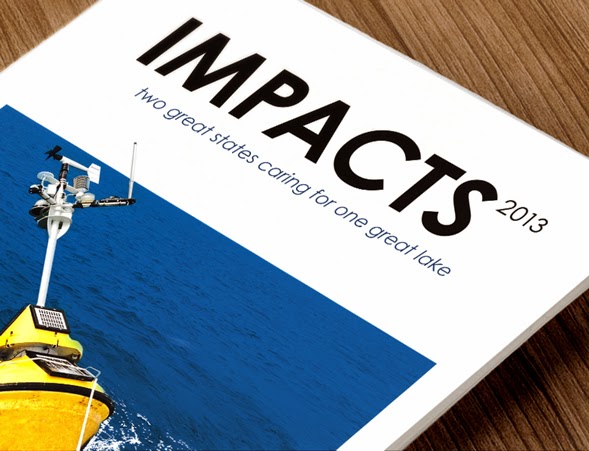
To learn more about how IISG is empowering communities and individuals to strengthen local environments and economies, check out our 2013 program impacts. 
IISG Instagram

Find us at Chicago Comic & Entertainment Expo, March 27–29! We’re linking Subnautica with Great Lakes science through fun, hands‑on activities about food webs, invasive species, and aquaponics.Come geek out with us! 🔗 in bio for event info
Coastal protection is not limited to concrete, rocks, and steel. Coastal protection solutions exist on a spectrum, ranging from softer “green” solutions to harder “gray” structures.Nature-based coastal solutions fall between green and gray techniques, providing multiple benefits to people and habitats.Our three-part video series, Nature-Based Coastal Solutions in the Great Lakes, is now available to watch. Learn how nature-based coastal solutions, including nature-driven and hybrid approaches, can protect shorelines while supporting ecosystems and communities.Watch the 3-part video series at the link in bio.(Photo credit: Liz Spitzer, Illinois State Geological Survey, Coastal Research Group)
Managers and researchers can be faced with a need to classify the risk of new crayfish invaders. Rapid assessment tools, such as the Science-based Tools for Assessing Invasion Risk (STAIR), can assist in this process by providing a streamlined framework for analysis and decision-making.Join us for an ICC webinar with John Bieber from Loyola University Chicago to learn how rapid assessment tools are used to classify invasive species risk and how STAIR can support invasive crayfish management.Learn more at the link in bio.