
Category:

Nearshore buoy coming to Illinois summer 2015

December 2nd, 2014 by

A new environmental sensing buoy will be placed north of Chicago this summer, making it easier than ever for Illinois boaters and beach-goers to spend a fun, safe day on the water. 
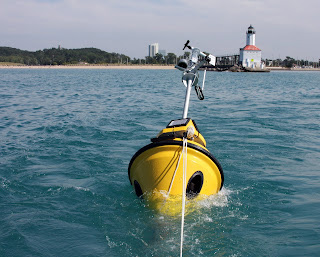
Michigan City Buoy


Like its counterpart in Michigan City, IN, the nearshore buoy will relay information on wave height and direction, wind speed, and air and surface water temperatures in near real time. A webcam will also make it possible to watch changing lake conditions first-hand.

 
This is the newest in a string of nearshore buoys along the Lake Michigan shoreline. In addition to allowing people track waves and temperatures, the data they collect will help officials warn beachgoers when contamination levels may make swimming unsafe. Researchers also rely on the real-time information to manage fisheries, monitor lake currents, and improve hazardous weather predictions.


The Illinois buoy, jointly operated by IISG and LimnoTech, is expected to go online in May. The project is funded by the Great Lakes Observing System through a grant from NOAA Coastal Storms. 

IISG Instagram

There’s still time to register! Educators are invited to join the Great Lakes Region Place-Based Education Institute starting this February and dive into hands-on strategies that connect students with their communities and local environments. Don’t miss this powerful professional learning opportunity!Learn more & register at the link in bio.
🎉 Congratulations to our IISG Knauss Fellowship finalists! We’re proud to announce Anupama Chandroth (@iubloomington) and Laura Gray (@illinois1867) as Illinois-Indiana Sea Grant’s finalists for the 2026 Sea Grant Knauss Fellowship.They’ll join a national cohort of 48 finalists placed in executive and legislative branch offices in Washington, D.C., contributing scientific expertise to federal decision-making on marine, coastal, and Great Lakes issues.Full story at the link in bio.
Ripple Effects is a collection of 8 activities for grades 6–12 that introduces students to aquatic invasive species in the Great Lakes.Through research, reporting, and role-playing games, students will:✅ Explore how non-native species arrived✅ Understand why they threaten native ecosystems✅ Investigate their impact on the Great LakesAligned with Next Generation Science Standards and Great Lakes Literacy Principles, this curriculum is perfect for engaging students in real-world science and stewardship.🔗 visit the link in bio to learn more