
Category:

Keeping Lake Michigan safe for everyone this summer

June 1st, 2012 by
 
Ensuring safety for visitors to Lake Michigan involves several factors, many departments and people, and a terrific amount of work. And still, unless good, accurate information reaches visitors and people who need it, potential problems can’t be avoided. 
 
One such concern each summer season is the presence of rip currents – a strong flow of water under the surface that carries away from the shore. Each year, swimmers and surfers in all major bodies of water can be endangered by the presence of these currents. That is why developing a more accurate and immediate way of warning beachgoers about rip currents is incredibly important, and why the National Weather Service, the U.S. Coast Guard, life guards at several beaches, and other organizations are partnering to develop and share information about rip currents. 
 
From the Northwest Indiana Times: 
“…the National Weather Service’s Chicago office in Romeoville, Ill., and the Northern Indiana office teamed up with beach operators to enhance predicting and warning of rip currents along Lake Michigan’s beaches in an effort to reduce drowning deaths.
 
In addition to modeling to predict rip currents, forecasters now have the help of lifeguards at beaches at Indiana Dunes State Park in Chesterton, Washington Park in Michigan City, Warren Dunes State Park in Sawyer, Mich., and Silver Beach County Park in St. Joseph, Mich. The lifeguards report water conditions twice daily and can see the rip currents in the water from their guard stands.”
Read the complete article here, and find information about rip currents and beach conditions at the Great Lakes Beach Hazards from NOAA. And most importantly, stay safe and have fun this summer at all of the Great Lakes.
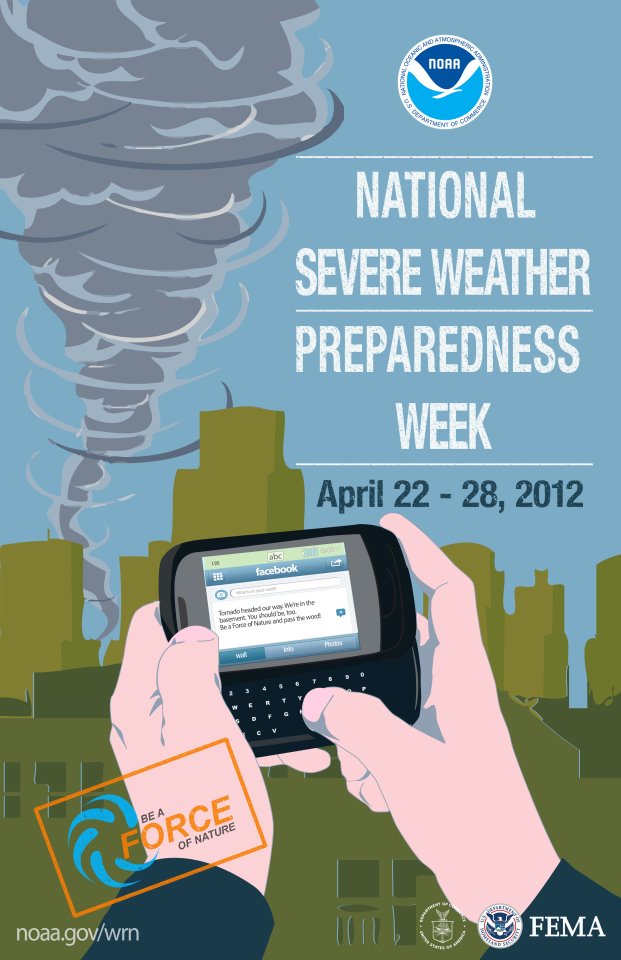

NOAA and FEMA partner to Build a Weather-Ready Nation

April 24th, 2012 by
Natural weather cycles, extreme conditions, and other issues can arise anywhere, and particularly in areas near coastlines. Residents near rivers and lakes are often aware of the potential for season flooding and other weather concerns, but may not be fully prepared for all of the possibilities. Additionally, each area of the country has the potential for unique weather concerns, such as flooding or tornadoes here in the Midwest.
 
As part of a campaign to Build a Weather-Ready Nation, the National Oceanic and Atmospheric Association and the Federal Emergency Management Agency are joining forces with Sea Grant programs across the country. The campaign invites everyone to Be a Force of Nature by taking certain steps that can help you and your community be prepared for inclement weather and the dangers associated with weather events.
 
Some important steps taken now can make a big difference later, including: 
 
Knowing your risk – Being aware of impending weather events and aware of risks associated with areas you live and work in (i.e. potential flooding, tornadoes, strong winds, etc.)
 
Take action – Develop an emergency plan that the whole family knows about. This can include information such as where to meet in the event of an emergency, ways to stay in contact with one another, and other important details. 
 
Be a Force of Nature – Once you have a plan, share the information, resources, and more with friends, family, neighbors, co-workers, and anyone else. You can visit the links above and share information directly from those Facebook pages, as well as spreading the word through other means. Sharing these simple steps with others is one great way to help everyone stay safe.


IISG Instagram

Celebrate Earth Day with freshwater science and good conversation! Join Illinois-Indiana Sea Grant, the Northwestern Center for Water, Loyola University researcher Tim Hoellein, and IISG’s Sarah Zack for Science Sips: Trash Talk about Chicago Waterways. Learn what research reveals about litter and trash in Lake Michigan and Chicago waterways and what we can do to help.Plus, enjoy Great Lakes trivia games!📅 April 22, 2026⏰ 7–9 PM📍 Sketchbook Brewing Company, Evanston Tap RoomCome curious and ready to test your Great Lakes knowledge!
Find us at Chicago Comic & Entertainment Expo, March 27–29! We’re linking Subnautica with Great Lakes science through fun, hands‑on activities about food webs, invasive species, and aquaponics.Come geek out with us! 🔗 in bio for event info
Coastal protection is not limited to concrete, rocks, and steel. Coastal protection solutions exist on a spectrum, ranging from softer “green” solutions to harder “gray” structures.Nature-based coastal solutions fall between green and gray techniques, providing multiple benefits to people and habitats.Our three-part video series, Nature-Based Coastal Solutions in the Great Lakes, is now available to watch. Learn how nature-based coastal solutions, including nature-driven and hybrid approaches, can protect shorelines while supporting ecosystems and communities.Watch the 3-part video series at the link in bio.(Photo credit: Liz Spitzer, Illinois State Geological Survey, Coastal Research Group)