After years of use in many products around our homes, PFAS, known as forever chemicals, have now been found throughout our environment, especially in water bodies. While we are starting to understand the extent of their presence and some potential impacts, it isn’t clear how informed the public is and what the risks actually are for communities and their residents.
PFAS, or per- and polyfluoroalkyl substances, are used in a range of products, including nonstick cookware, water- or stain-resistant clothing or carpeting, cosmetics and even toilet paper. These chemicals have been associated with negative health effects, including a weakened immune system, kidney disease and cancer.
Illinois-Indiana Sea Grant (IISG), with funding from the National Sea Grant Office, selected and supported four research projects that focused on the social impacts of PFAS exposure. IISG identified this knowledge gap through three Great Lakes region PFAS scoping workshops and a follow-up survey. More than 70 representatives from at least 45 federal and state agencies, tribal nations, academic institutions, and consulting firms joined the process.
“There’s a lot of funding available to look at fate and transport or health effects of PFAS exposure, but less is known about what people actually know about PFAS and how it may impact their day-to-day lives, particularly at a local level,” said Sarah Zack, IISG Great Lakes contaminant specialist.
Two of the funded projects gathered information and developed resources that can help in assessing whether to be concerned and one’s ability to take action, and several provided insights into more effective communication with the public about PFAS, including at-risk populations. Each of these projects also has an outreach component in partnership with a Great Lakes Sea Grant program.

At Pennsylvania State University, agricultural economist Ruohao Zhang led an effort to develop an online risk assessment tool to help residents of Michigan, New York and Pennsylvania get a better understanding of their exposure to PFAS related to their location and personal choices. The team created the PFAS Exposure Risk Dashboard, which helps viewers create an individualized exposure risk. The assessment factors include a person’s zip code, in terms of nearby industry and the public water system; where they recreate and how often; and their typical diet. The dashboard is also full of general information to help users understand PFAS, exposure pathways, and actions to reduce exposure.
In another project, to help inform state regulators and communities, the National Sea Grant Law Center (NSGLC) compiled a list of all PFAS-related state laws and regulations in the Great Lakes and Lake Champlain regions. Catherine Janasie, a senior research counsel with NSGLC, also conducted a comparative analysis of these policies and developed case studies exploring policy challenges and opportunities for greater regional consistency.
Because PFAS regulations and standards vary widely across Great Lakes states, comparative legal analysis can help policymakers, agencies, and communities better understand gaps, overlaps, and opportunities for more coordinated regional approaches.
In 2025, NSGLC held a webinar to share project findings with local decision-makers and organizations and Minnesota Sea Grant held a public science event featuring Janasie sharing information from the NSGLC report and local experts who discussed PFAS work in Minnesota.
At the University of Wisconsin-Madison, Lyn van Swol, a communication scientist, and her research team studied internet searches to understand how to better communicate about PFAS. The team’s goal was to help create messages that use language that audiences use and answer the questions they are asking.
They found that nearly half of all PFAS- and water-related searches are about how to filter or remove these chemicals from tap water. This research suggests that public health communicators could improve outreach efforts by addressing what people are concerned about in their internet searches.
 As part of this project, the researchers also analyzed online PFAS information resources for accuracy and balance. They found variability in these sources in terms of whether they describe the PFAS threat alongside actions that a consumer might take to protect their drinking water.
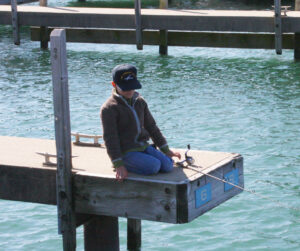
Through a listening session and surveys, Susan Buchanan, a medical doctor and environmental health scientist at the University of Illinois Chicago, and her team engaged with recreational fishers in two communities in Chicago, Illinois and Benton Harbor, Michigan to assess their knowledge about PFAS and related issues and their fish consumption levels. The researchers worked closely with on-the-ground partners in both locations.
The study revealed that participants are fishing year-round in high-risk waters, and many are eating their catch several times a month. Their knowledge about PFAS in local fish is low, so whether they have faith in their information sources can play a role in changing behavior. The researchers found that the participants trust relevant government agency websites (such as the Department of Natural Resources) and the information included with their fishing licenses.
“We were really happy to fund these four projects because learning more about the societal impacts of PFAS contamination will help guide what research needs to be done to protect people’s health,” added Zack.
To learn more about the scoping process and this regional research effort, visit IISG’s website.
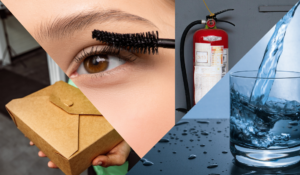
Per- and polyfluoroalkyl substances (PFAS) are a suite of hundreds-to-thousands of manufactured “forever chemicals” that are persistent in nature and toxic to many organisms. Additional chemical precursors, metabolites, or degradates to PFAS and related substances exist in nature and have potential to be toxic to many organisms. While much remains to be learned about the fate and transport of PFAS and related compounds in the environment, people and communities are currently being impacted by the ubiquitous nature of PFAS and related compounds—for example, in drinking water, food, packaging, personal care products, and building materials.
With support from the National Sea Grant Office, the Illinois-Indiana Sea Grant College Program (IISG) has $400,000 to invest in promising research projects relevant to social and economic impacts of PFAS exposure, mitigation, and remediation in the Great Lakes and Lake Champlain regions. For purposes of this competition, “PFAS” refers to any component of the suite of per- and polyfluoralkyl substances and related compounds, including precursors. Work is to be conducted between October 1, 2023 and March 31, 2025. Work can be conducted anywhere in the Great Lakes and Lake Champlain regions so long as it supports the priorities identified in this document. Priorities were identified via a series of scoping activities (3 workshops, 1 survey) in early 2023.
A full report of the scoping effort, which includes additional details on key demographic groups and research needs for the regions, can be found at the project webpage. The full request for proposals including submission guidance is available, but a synopsis is also provided below.
Projects should propose to answer a clear research question or set of related questions, should focus on one or more groups that live, work, and/or recreate in the Great Lakes and Lake Champlain regions, and should demonstrate fit with one or more of the following research priorities. The priorities are not listed in any particular order.
Understanding exposure to PFAS
- Improved understanding of how different groups or communities may be differentially exposed to PFAS, e.g., higher consumption of fish on a regular basis; use of well or other waterways that are not regularly monitored or not currently monitored
- How exposure and consumption to PFAS translates within the context of traditional knowledge
Communicating risks and actions for PFAS
- How to best communicate uncertainty surrounding the scientific knowledge of PFAS and its effects, while also ensuring members of the public, or specific communities (e.g., those at higher risk of PFAS exposure, those more susceptible to effects of PFAS) take appropriate action to keep themselves safe
- How to effectively communicate taking action(s) that are most successful at reducing or preventing PFAS exposure
Economic impacts of PFAS
- What are the economic impacts of PFAS contamination on communities, considering matrices such as drinking water, fish consumption, solid waste application
- Cost-benefit analyses of the most effective and efficient treatment methodologies for PFAS
Policies and regulations for PFAS
- How to implement effective policies and regulations around PFAS including at local, regional, and international levels
- Examination of the potential impacts of total vs. partial bans of PFAS
Prospective PIs must submit a letter of intent at least 4 weeks before the full proposal submission date. Letters of intent should be emailed to iisg@purdue.edu by July 3, 2023.
Applicants who provided a letter of intent on time should submit all proposal materials via https://esg.iiseagrant.org/ by 11:59 p.m. Central time on July 31, 2023. Applications should be submitted to the “Regional PFAS Research Competition.”
Questions about this opportunity should be directed to BOTH Amanpreet Kohli (kohli19@purdue.edu) and Carolyn Foley (cfoley@purdue.edu).
Illinois-Indiana Sea Grant is a partnership between NOAA, University of Illinois Extension, and Purdue University Forestry and Natural Resources, bringing science together with communities for solutions that work. Sea Grant is a network of 34 science, education and outreach programs located in every coastal and Great Lakes state, Lake Champlain, Puerto Rico and Guam.
Contact: Sarah Zack
Chances are good that you’ve heard the term “PFAS” in the news, including that they are “forever chemicals” found at airports and military sites but also in everyday household items like pots and pans, makeup and drinking water. While scientists know that PFAS are per- and polyfluoroalkyl substances, have very strong bonds that allow them to persist in nature, and exist in hundreds of different forms, there is still much to learn.
In 2022, Illinois-Indiana Sea Grant (IISG) was awarded a grant from the National Sea Grant Office to help explore this issue. Specifically, IISG plans to support a Great Lakes and Lake Champlain regional research competition focused on social and economic issues related to PFAS risk, exposure and remediation. But first, the project team sought to review the status of PFAS research knowledge and needs in the Great Lakes and Lake Champlain region. The team hosted three scoping sessions in March 2023, focused on PFAS risk and exposure, PFAS mitigation and remediation, and PFAS governance and prevention.
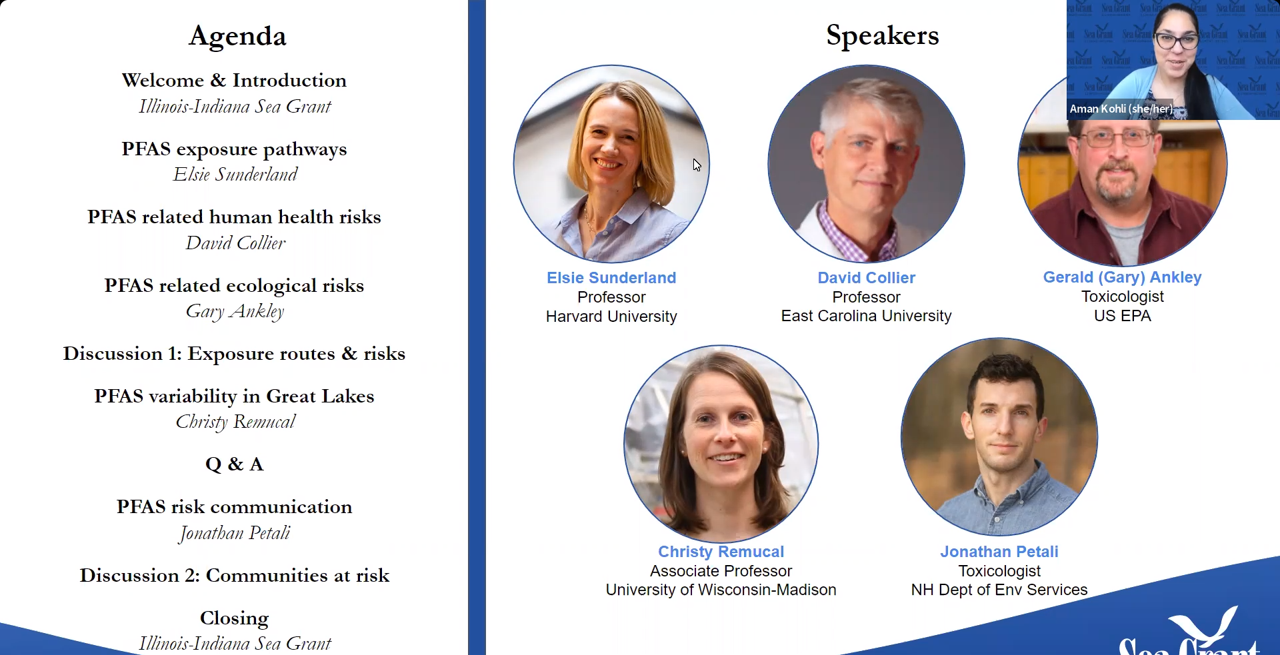
Project Coordinator Aman Kohli reviews the agenda and introduces the speakers during the first session.
More than 60 participants from federal, state, provincial, tribal, consulting and academic institutions joined over the course of the three sessions. Presentations and discussions centered around three main questions:
- Which communities are at risk, and what are their sources and routes of exposure?
- What are the socioeconomic barriers to the adoption and implementation of some of the current/proposed solutions, and what are their alternatives?
- What information is needed to ensure all who live, work and recreate in the Great Lakes region are treated in a just and equitable way with respect to governance and prevention of PFAS contamination and exposure?
Participants shared many thoughts and ideas beyond those that will be incorporated into a Great Lakes and Lake Champlain regional request for research proposals (RFP) to be issued in May 2023. The project team—which includes IISG Director Tomas Höök, IISG Research Coordinator Carolyn Foley, IISG Pollution Prevention Specialist Sarah Zack and Project Coordinator Aman Kohli—plans to issue a publicly available workshop report in spring 2023 that includes ideas shared, research and information needs, and other concepts for further exploring PFAS in the Great Lakes and Lake Champlain region.
If you would like to receive emails related to funding competitions, including when they are open, please subscribe to our research mailing list. *Note that Purdue Mailman services are secure despite some warnings that may pop up.
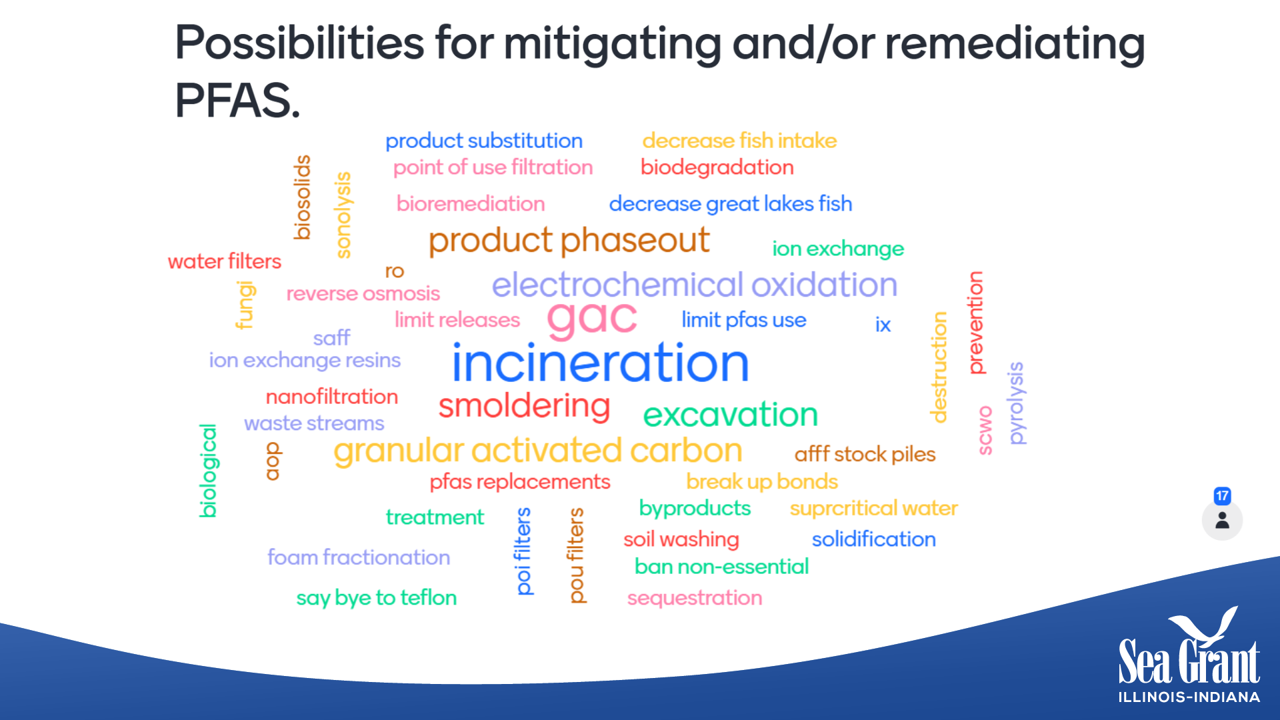
A word cloud generated during an exercise in the second PFAS scoping session.
Illinois-Indiana Sea Grant is a partnership between NOAA, University of Illinois Extension, and Purdue University Forestry and Natural Resources, bringing science together with communities for solutions that work. Sea Grant is a network of 34 science, education and outreach programs located in every coastal and Great Lakes state, Lake Champlain, Puerto Rico and Guam.
Contact: Sarah Zack




